How often should I water a fern? The most accurate answer is: check the plant and its growing medium, not the calendar. A fern in a small terracotta hanging basket on a warm porch may dry much faster than the same species in a large plastic pot indoors. A mounted staghorn fern must be judged differently from a maidenhair fern growing in potting mix.
Quick Answer
For most soil-grown potted ferns, check the potting mix regularly and water when the upper layer has begun to lose moisture while the root zone is still slightly moist. Water slowly and thoroughly until excess drains from the bottom, then empty the saucer or cachepot. Do not leave the roots standing in water.
Some ferns need a narrower moisture range. Maidenhair ferns should not be allowed to dry completely. Rabbit’s foot ferns can tolerate a little more surface drying. Mounted or basket-grown staghorn ferns are epiphytes: soak the root medium and basal fronds, then allow the mounting material to dry somewhat before watering again.[1][5]

Why Ferns Cannot Be Watered by a Fixed Schedule
“Fern” covers plants from very different habitats. Species, root density, pot size, substrate, temperature, humidity, light and airflow all change how quickly moisture is lost.
The container changes drying speed
Terracotta loses moisture through its walls; plastic and glazed pots retain it longer. Small pots and baskets dry quickly, while an oversized pot may stay wet around a small root system. Container size, height and porosity influence drainage and drying.[2]
The root system changes water use
A root-filled fern may use water rapidly. A recent division or small plant in a large pot has fewer roots relative to the wet mix and is easier to overwater.
The substrate changes the result
Fine, compacted mixes stay wet and exclude air; coarser materials drain faster. Fern mix should retain moisture while remaining aerated. See fern soil and fertilizer.
The environment changes every week
Heat, brighter light, wind, fans and low humidity speed drying; cool, dim or humid conditions slow it. Seasonal monitoring must change accordingly.[2]
How to Tell When a Fern Needs Water
A surface check is only one clue. The “top inch” rule is too crude for every fern: shallow pots, large wet-centered pots and mounted epiphytes require different tests.
- Check the active root zone. Use a finger or wooden skewer away from the crown; test deeper and in more than one place in large pots.
- Learn the pot’s weight. Compare it after watering and as it dries, especially for nursery pots and baskets.
- Watch water movement. If water runs down a gap around a shrunken root ball, reapply slowly or use a short bottom soak.[3]
- Use fronds as confirmation. Crisping and severe wilt indicate stress; wilt in wet mix may indicate root damage, not thirst.
Indoor vs. Outdoor Fern Watering
| Situation | What controls drying | When to water | Main risk |
|---|---|---|---|
| Indoor pot | Pot type, room temperature, light, heating or air conditioning, root density | When the species-appropriate portion of the mix begins to dry | Watering again while the center remains wet |
| Outdoor ground | Soil texture, rainfall, tree-root competition, establishment and heat | Deeply when the root zone is drying, especially during establishment or prolonged dry weather | Frequent shallow sprinkling that never reaches roots |
| Outdoor container | Sun exposure, wind, pot size, wall material and drainage | After checking at least daily during hot or windy periods; water only when needed | Unexpectedly rapid drying |
| Hanging basket | Small soil volume and air moving around all sides | As soon as the root ball approaches the species’ lower moisture limit | Drying beyond the point where mix readily absorbs water |
| Mounted epiphyte | Mount material, airflow, humidity, temperature and plant size | After the medium has partly dried; soak thoroughly rather than giving a light splash | Either chronic saturation or an incompletely wetted root pad |
How to Water a Potted Fern Correctly
- Confirm that water is needed. Check the medium, pot weight and recent conditions.
- Water the root zone slowly. Apply water across the potting surface rather than pouring everything in one spot. For a bird’s nest fern, water around the outer potting mix and avoid filling the central crown.[7]
- Continue until drainage begins. The objective is to wet the whole root ball. A small surface splash encourages uneven wetting and may leave lower roots dry.
- Let the pot drain completely. Return it to its saucer or decorative outer pot only after free drainage has slowed.
- Empty collected water. Do not leave the container standing in runoff. Prolonged saturation reduces root-zone oxygen and increases the risk of root rot.[3]
Is Bottom Watering Suitable for Ferns?
Bottom watering can rehydrate a water-repellent root ball. Set a pot with drainage holes in shallow water, remove it after absorption, and drain it. Because repeated bottom watering does not flush salts well, periodically top-water thoroughly. Missouri Extension supports both methods but advises wetting the whole soil mass and discarding leftover water.[4]
Self-Watering Pots
A wick reservoir can suit soil-grown, moisture-loving ferns. Monitor the mix, clean the reservoir, stop refilling if the root zone stays saturated, and occasionally flush from above. It is not the right system for mounted epiphytes.[2]
Indoor Fern Watering
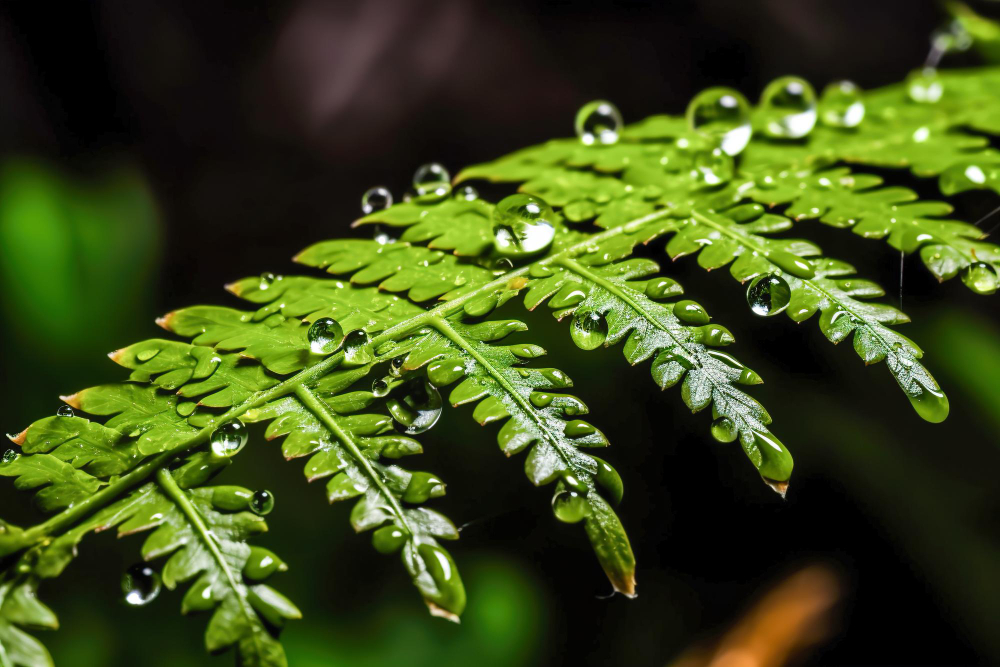
Indoor drying depends on heat, air-conditioning, fans and light. Keep ferns away from direct drafts and review fern light requirements before changing watering alone. Humidity does not replace root moisture: misting cannot substitute for watering and only changes local humidity briefly. Brown tips may involve dry air, salts, roots or irregular watering; see why fern tips turn brown.
Outdoor Fern Watering
Hardy Ferns in the Ground
RHS advises regular watering during the first year; established garden ferns often need extra water mainly in long dry spells, although tree roots can intensify drought.[1] Water the root zone deeply and keep heavy mulch away from the crown.
Outdoor Containers and Hanging Baskets
Hot, windy weather dries outdoor pots quickly. Check Boston fern baskets frequently, but water only after confirming moisture loss. They prefer evenly moist, drained mix, and small containers are difficult in heat.[6]
Watering by Season
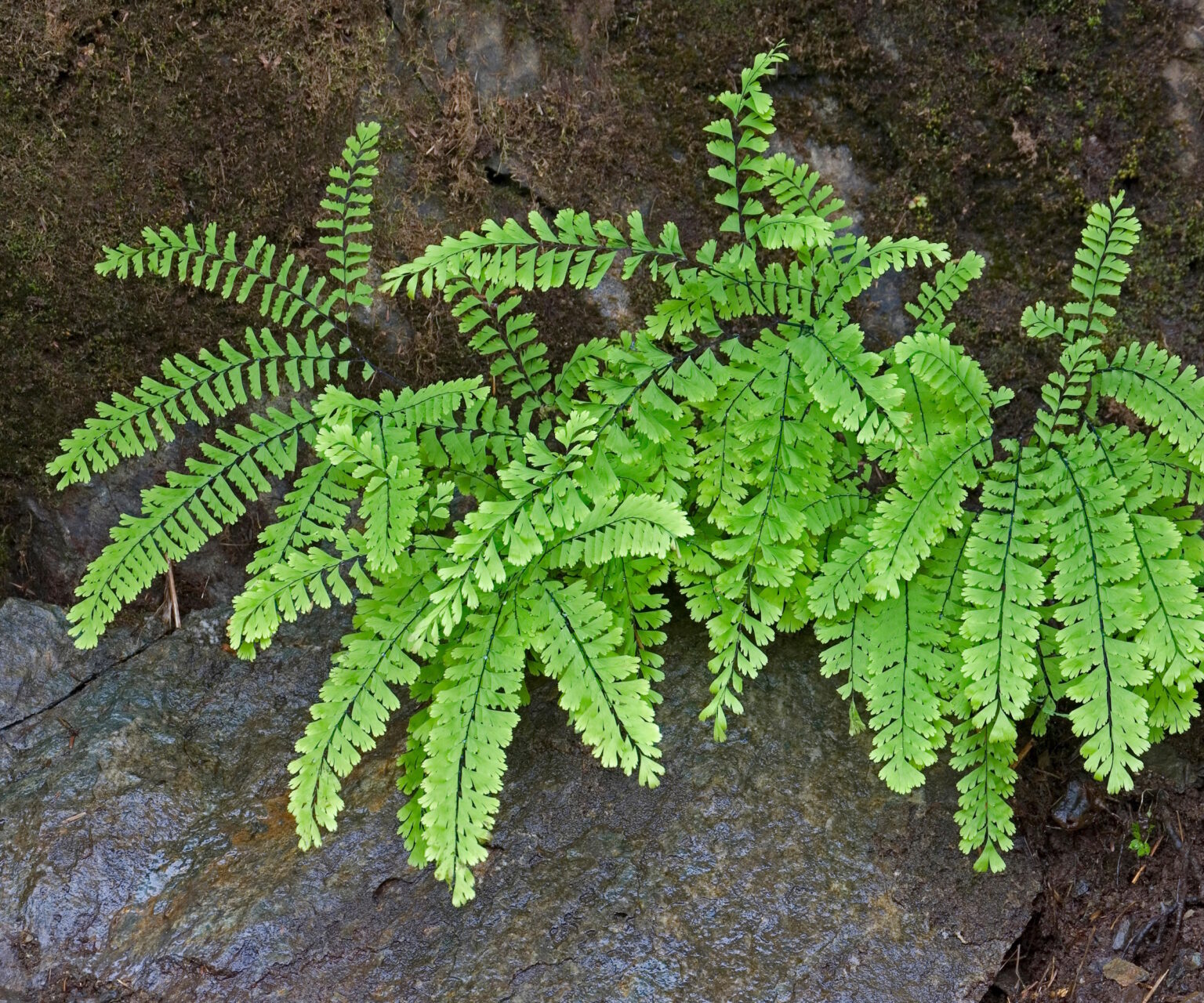
Dormancy differs by species. Base winter watering on actual growth, temperature, light and root-zone moisture, not the season name alone.
Watering Needs by Fern Type
| Fern type | Moisture tendency | How to judge watering | Important caution |
|---|---|---|---|
| Boston fern Nephrolepis exaltata | Prefers consistent moisture in an aerated, well-drained mix | Use pot weight and a deeper mix check; inspect hanging baskets frequently in heat | Do not confuse a dry surface with a fully dry root ball, or keep a dense root ball permanently saturated |
| Maidenhair fern Adiantum spp. | Generally less tolerant of complete drying | Water as the surface begins to dry while moisture remains below; keep conditions steady | Fine fronds can deteriorate rapidly after severe drought, but soggy mix still deprives roots of air[9] |
| Bird’s nest fern Asplenium nidus | Likes moist, porous mix but not standing water | Check the upper mix and pot weight; water around the pot edge | Avoid pouring water into the central rosette, where new fronds emerge[7] |
| Rabbit’s foot fern Davallia spp. | Can accept slightly more surface drying than maidenhair | Let the uppermost layer begin to dry, then water thoroughly | Keep the furry rhizomes at the surface and never bury them in wet mix[8] |
| Staghorn fern Platycerium spp. | Epiphytic; needs thorough wetting plus excellent aeration | Soak the moss/root pad and basal fronds, then allow some drying before repeating | Do not apply ordinary “top inch of soil” advice to a mounted plant; chronic wetness promotes rot[5] |
| Hardy outdoor ferns | Varies by species; many prefer humus-rich, moist but drained soil | Judge the actual garden root zone, rainfall, establishment and competition from trees | Do not assume “shade” means soil stays moist; dry shade can be highly competitive[10] |
See the detailed guides to Boston fern and maidenhair fern.
Overwatered vs. Underwatered Fern
| Clue | More consistent with underwatering | More consistent with overwatering or root trouble |
|---|---|---|
| Potting mix | Dry through much of the root zone; may shrink from pot edge | Remains wet for an unusually long time; may smell sour |
| Pot weight | Noticeably lighter than after watering | Still heavy several days after watering |
| Fronds | Limp, dull, crisping margins, brittle leaflets or shedding after drought | Yellowing, soft decline, wilt despite wet mix, dark tissue near crown |
| Roots | Dry, firm or desiccated rather than soft | Brown to black, soft, mushy or easily stripped from the inner core |
| First action | Rehydrate the entire root ball and correct the cause of rapid drying | Stop adding water, inspect drainage and roots, and correct saturated conditions |
Water Quality and Salt Buildup
Most drinkable municipal or well water works for many houseplants, but hard water can leave deposits and sodium-softened water can add salts. Iowa State Extension recommends leaching and repotting when salts or metals accumulate.[3]
- Use tap water unless repeated symptoms remain after moisture, light, fertilizer and roots are checked.
- For sensitive plants or high-mineral water, consider rain, distilled or suitable filtered water.
- Standing water overnight does not remove dissolved mineral salts.
- Flush mix periodically from above; white crust signals a need to review water and fertilizer.
Newly Purchased, Repotted or Divided Ferns
A new fern may arrive in unfamiliar substrate and a hidden nursery pot. Check the root ball and observe its drying rate before setting a routine. After repotting, water thoroughly, then wait for the appropriate moisture threshold; do not keep an oversized pot continuously wet. Fresh divisions need even moisture while roots re-establish, with adequate aeration.[12]
Travel and Short-Term Watering Arrangements
- Water before leaving only if the fern is ready; do not saturate wet mix “just in case.”
- Move baskets away from hot glass, vents and wind while retaining suitable light.
- Test any wick or reservoir in advance.
- Ask a sitter to check moisture and pot weight, not follow a date alone.
Common Fern Watering Mistakes
- Using one weekday or one rule for every fern.
- Giving small surface splashes or leaving runoff beneath the pot.
- Assuming shade always means moist soil.
- Misting instead of watering roots.
- Adding water whenever fronds yellow or droop.
- Ignoring light problems; see fern leaves curling.
Simple Fern Watering Decision Tree
- Mounted epiphyte? Assess moss or bark; soak when partly dry.
- No drainage? Use a draining inner pot or repot.
- Root zone wet and pot heavy? Do not water; review light, temperature, pot size and drainage.
- Species at its lower moisture limit? Maidenhair: before full drying. Boston or bird’s nest: as the upper mix dries. Rabbit’s foot: after slightly more surface drying. Hardy fern: check root-depth soil.
- Mix repelling water? Apply slowly in stages or bottom-soak briefly, then drain.
- Water trapped below? Empty it and note the drying interval.
Frequently Asked Questions
How often should I water a fern indoors?
Check root-zone moisture and pot weight. Warm, bright, dry rooms need more frequent checks than cool, dim or humid rooms.
How much water do ferns need?
Use enough to moisten the whole root ball and produce drainage. Fixed volumes do not fit every pot.
Should I water a fern every day?
Not automatically. Hot outdoor baskets may sometimes need it; many indoor pots do not. Check first.
Can ferns dry out between waterings?
Usually not completely. Maidenhair is less forgiving, rabbit’s foot tolerates more surface drying, and staghorn media should partly dry between soakings.
Is bottom watering good for ferns?
It can rehydrate dry mix. Drain afterward and periodically top-water to leach salts.
Do ferns like self-watering pots?
Some soil-grown ferns do. Keep the mix aerated, clean the reservoir and monitor moisture. Mounted epiphytes need another method.
Why is my fern drooping when the soil is wet?
Inspect for poor aeration or root rot before adding water; temperature, light or transplant stress may also contribute.
Does misting count as watering a fern?
No. It does not hydrate the root zone, and its humidity effect is temporary.
References
- Royal Horticultural Society: How to Grow Ferns
- Virginia Cooperative Extension: Properly Watering Container Houseplants
- Iowa State University Extension: How to Care for Houseplants
- University of Missouri Extension: Caring for Houseplants
- University of Wisconsin–Madison Extension: Staghorn Fern
- University of Wisconsin–Madison Extension: Boston Fern
- Clemson Cooperative Extension: Bird’s Nest Fern
- Clemson Cooperative Extension: Rabbit’s Foot Fern
- NC State Extension: Adiantum raddianum
- Clemson Cooperative Extension: Hardy Ferns
- University of Maryland Extension: Root Rots of Indoor Plants
- University of Connecticut Home & Garden Education Center: Growing Indoor Ferns