
Quick Answer
A Boston fern needs medium to bright indirect light indoors, shade or filtered light outside, and potting mix that remains evenly moist without staying saturated. Water thoroughly when the surface of the mix begins to feel dry, then let excess water drain. Keep the plant away from hot radiators, cold drafts, intense afternoon sun, and standing water.
Humidity helps prevent crispy tips, but frequent leaf misting is not a reliable substitute for correct watering or a room humidifier. Boston fern is frost-tender, so plants grown outside seasonally should be brought indoors before cold weather. Occasional older yellow or brown fronds are normal; widespread decline usually points to a problem with moisture, light, temperature, roots, or pests.
Boston Fern at a Glance
| Botanical name | Nephrolepis exaltata (L.) Schott. The classic cultivated Boston fern is generally written Nephrolepis exaltata ‘Bostoniensis’. |
|---|---|
| Common names | Boston fern, Boston sword fern, and sword fern. “Sword fern” is an ambiguous common name also used for other fern species. |
| Plant type | Evergreen, frost-tender tropical to subtropical fern grown as a houseplant or seasonal outdoor container plant. |
| Typical growth habit | A clumping crown of long, pinnate fronds that rise and then arch downward. Thin runners, or stolons, may spread from the plant and form rooted offsets. |
| Light | Medium to bright indirect light indoors; filtered light, full shade, or partial shade outdoors. Protect from intense midday and afternoon sun. |
| Water | Keep the potting mix evenly moist, not permanently wet. Water thoroughly when the surface begins to dry, and empty water that collects in the saucer. |
| Humidity | Prefers humid air. Correct watering and a room humidifier are more effective than occasional misting when indoor air is dry. |
| Temperature | Normal, stable indoor temperatures are generally suitable. Keep away from heating vents and cold drafts. Seasonal outdoor plants should be protected or moved indoors when temperatures fall into the low 40s°F. |
| Soil | Organic, moisture-retentive, porous potting mix with reliable drainage. |
| Propagation | Division of an established plant or separation of rooted plants produced along runners. |
| Pet safety | Listed by the ASPCA as non-toxic to cats and dogs. Plant chewing can still cause digestive irritation. |
| Outdoor considerations | Hardy only in very mild climates, commonly described as USDA Zones 9–11. Elsewhere, grow it outside after frost danger has passed and bring it indoors before cold weather. |
What Is a Boston Fern?
The Boston fern is a cultivated form of Nephrolepis exaltata, a fern species native across parts of the southeastern United States, Mexico, Central America, the Caribbean, and South America. Plants of the World Online currently accepts Nephrolepis exaltata (L.) Schott as the species name.[1]
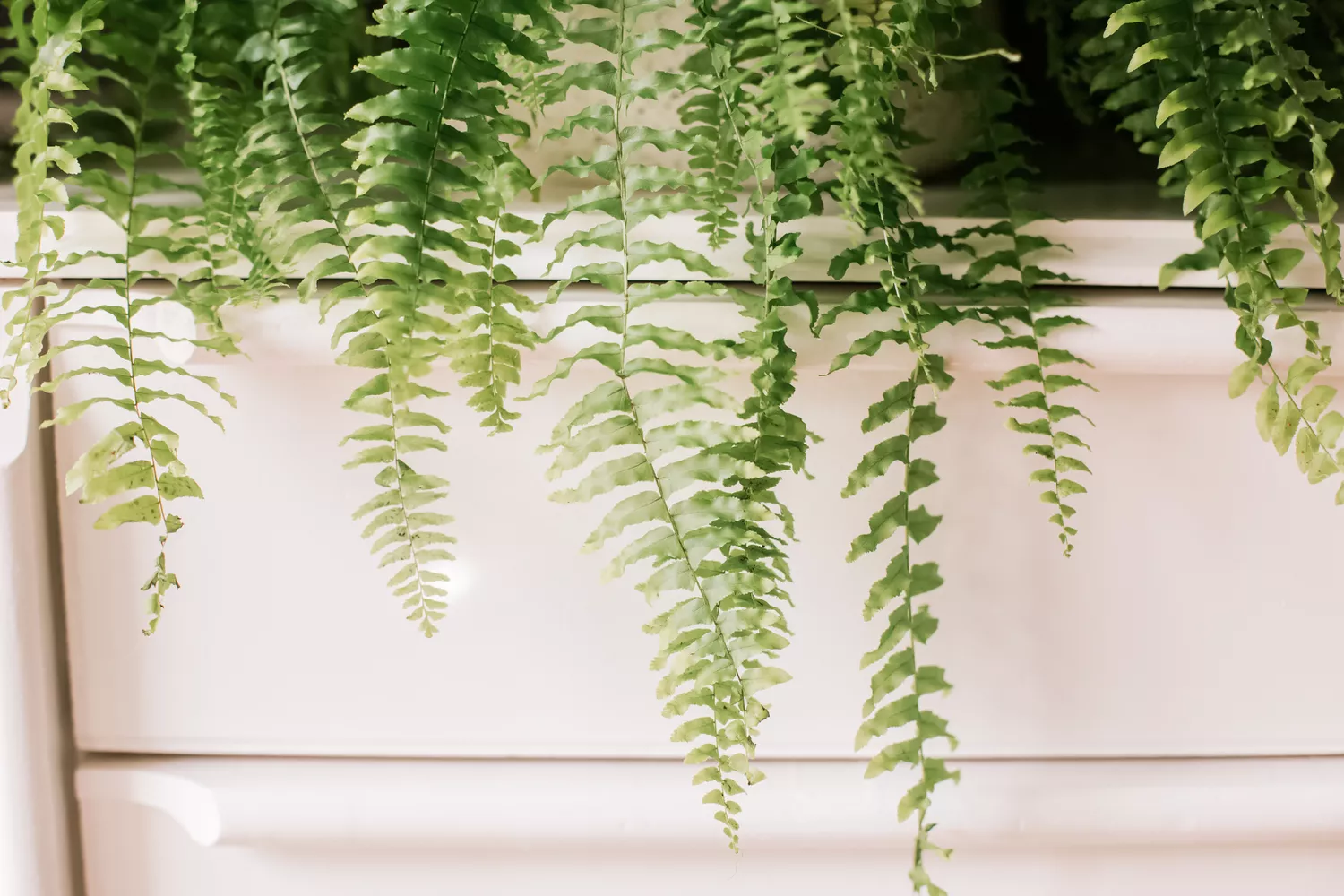
The classic Boston form is recognized by its long, light- to medium-green fronds. Each frond is divided into many small leaflets, or pinnae. The fronds emerge more upright from a central crown and gradually arch or droop as they lengthen. This fountain-like form is why Boston ferns are frequently sold in hanging baskets and elevated containers.
The plant may also produce narrow runners called stolons. Where a runner contacts moist potting mix, it can form roots and a new crown. These runners are useful for propagation and should not automatically be mistaken for dried stems or roots escaping from the pot.[3]
Boston Fern vs. Sword Fern
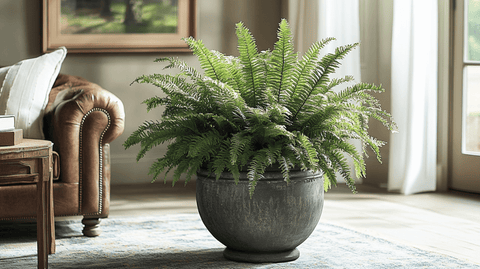
Boston fern and sword fern are related terms, but they are not always interchangeable. Nephrolepis exaltata is widely called sword fern because of its long, narrow fronds. Boston fern is a distinctive cultivated form of that species, traditionally called ‘Bostoniensis’.
| Term | What it usually means | How to distinguish it |
|---|---|---|
| Boston fern | The arching cultivated form of Nephrolepis exaltata, usually written ‘Bostoniensis’, plus closely related ornamental selections sold under the Boston fern name. | Long fronds arch noticeably and are commonly displayed in hanging baskets. |
| Nephrolepis exaltata | The accepted botanical species that includes the Boston fern lineage. | The species name is broader than one cultivar or ornamental form. |
| Sword fern | A common name applied to N. exaltata and also to unrelated ferns, including some hardy garden species. | Check the botanical name rather than relying only on “sword fern” on a label. |
Older references frequently write the plant as Nephrolepis exaltata var. bostoniensis. Modern horticultural references commonly use the cultivar format N. exaltata ‘Bostoniensis’, while Kew treats the formally published variety name as a synonym rather than an independently accepted botanical variety.[2]
Boston Fern Light Requirements
Indoors, place a Boston fern where it receives medium to bright indirect light. An east-facing window is often suitable because it provides gentle morning light. Near a south- or west-facing window, move the plant back from the glass or filter the light with a sheer curtain. University Extension guidance notes that tropical indoor ferns perform poorly in genuinely dark locations, even though they are often marketed as low-light plants.[4]
Direct sun is not automatically harmful, but intensity and duration matter. Brief, mild morning sun may be tolerated. Several hours of strong midday or afternoon sun can bleach, scorch, or crisp the leaflets, especially when the plant is behind hot glass or its roots are becoming dry.
Too little light produces a different pattern: new growth may be thin, sparse, pale, or stretched, and the potting mix may remain wet for too long. Adjust the position gradually rather than moving a shade-grown fern directly into strong sunlight. See the separate guide to fern sunlight and direct light for window placement and light troubleshooting.
How to Water a Boston Fern
Boston fern watering should be based on the potting mix and growing environment, not a fixed weekly schedule. The goal is to prevent the root ball from drying completely while still allowing air to remain around the roots.
- Check the surface. Feel the upper layer of potting mix. Water when it has begun to feel dry rather than while it is still saturated.
- Check below the surface. If the top looks dry but the mix just beneath it is still very wet, wait and check again later.
- Water the entire root ball. Apply room-temperature or lukewarm water until excess begins to drain from the bottom of the pot.
- Let the pot drain. Do not leave the container standing in a full saucer or watertight decorative pot.
- Check again as conditions change. Heat, wind, brighter light, active growth, small pots, and hanging baskets all increase water use.
An outdoor hanging basket may need checking much more often than the same plant indoors. Air circulates around every side of the container, and wind can remove moisture quickly. A fern on a hot porch can therefore dry substantially faster than a plant on an indoor stand.
Conversely, a fern in cool winter conditions, lower light, or a large nonporous pot may use water slowly. Continuing a summer watering routine through winter can keep the roots too wet. For a more detailed decision process, see how often to water a fern.
Humidity
Boston ferns are adapted to humid growing conditions, and dry indoor air commonly contributes to brown tips, brittle pinnae, and increased shedding. Winter heating is a frequent cause because warm air moving from radiators, fireplaces, or HVAC vents dries both the foliage and potting mix.
High humidity requirements do not mean the leaves must be sprayed several times a day. Occasional misting raises humidity only briefly. University of Minnesota Extension describes misting as relatively ineffective and notes that repeatedly wet foliage can increase the likelihood of leaf-spot problems.[4]
Better options include running a room humidifier, moving the plant away from heating vents, grouping compatible plants without crowding them, and making sure the root ball is watered correctly. A pebble tray may create a slightly moister microclimate immediately around the pot, but it will not humidify an entire room.
Do not respond to dry air by keeping the soil permanently saturated. Root moisture and atmospheric humidity are separate factors: a fern can have waterlogged roots and still develop crispy foliage in dry heated air.
Temperature
Stable household temperatures are generally suitable for Boston fern indoor care. The plant dislikes abrupt changes, cold drafts, hot dry airflow, and contact with very cold window glass. It is an evergreen tropical or subtropical fern rather than a cold-hardy woodland fern.
University of Wisconsin–Madison advises moving seasonal outdoor plants indoors or protecting them when temperatures dip into the low 40s°F. The same source describes Boston fern as hardy in USDA Zones 9–11, meaning that permanent outdoor cultivation is limited to relatively mild climates.[3]
Do not use the winter behavior of hardy garden ferns as a model for Boston fern. Many temperate garden ferns naturally die back or enter winter dormancy outdoors. Boston fern is frost-tender and may be damaged or killed by freezing conditions.
Potting Mix and Drainage
Use a potting mix that holds useful moisture but still drains and contains air spaces. A suitable mix is organic and porous rather than dense, muddy, or compacted. Commercial indoor-plant potting mix can work if it drains freely; additional coarse material may be needed if the product collapses or stays saturated for long periods.
The container must have functional drainage holes. Plastic and glazed pots lose moisture more slowly than unglazed terracotta, which can be useful for a moisture-loving fern. However, no pot material compensates for blocked drainage, an oversized container, or a decorative cachepot filled with runoff.
Replace potting mix that has become compacted, sour-smelling, slow to drain, or difficult to rewet evenly. Compacted mix can appear dry at the surface while remaining saturated around the lower roots.
Fertilizing
Boston ferns have modest fertilizer needs. Feed only while the plant is actively producing healthy new fronds, using a balanced houseplant fertilizer at a reduced strength according to its label. University Extension sources recommend restrained feeding because excess fertilizer can cause browning that begins at the frond tips.[3][4]
Reduce or pause feeding when winter light is low, growth has slowed, the plant is stressed, or the potting mix is already heavily fertilized. Fertilizer cannot correct inadequate light, root rot, dry air, or irregular watering. Applying more fertilizer to a declining plant may increase root injury through salt accumulation.
Pruning and Removing Old Fronds
Remove completely brown, broken, or yellowing old fronds by cutting them near the base with clean scissors or pruners. Avoid cutting into the central crown where new fiddleheads emerge. Removing dead material improves appearance and makes it easier to inspect the plant for pests.
A few aging outer fronds naturally decline as they are replaced. This does not mean the entire fern is dying. Concern is warranted when many fronds deteriorate at once, new growth is failing, or the crown and roots show signs of rot.
Do not repeatedly trim only the brown ends without addressing the cause. Cosmetic trimming may improve appearance, but new tips will continue to brown if the plant remains too dry, overfertilized, sun-scorched, or exposed to heated air.
Repotting
Repot when roots and crowns densely fill the container, water runs past the root ball without soaking it, the mix has broken down, or the plant dries so quickly that normal watering is difficult. Spring or the beginning of active growth is generally the easiest time because the fern can recover under improving light.
Choose a container only modestly larger than the root mass. A greatly oversized pot holds more wet mix around the roots and increases the risk of poor aeration. Set the crown at approximately the same level it occupied before, water thoroughly, and keep the newly repotted fern out of intense sun while it reestablishes.
Large, crowded plants can be divided instead of moved into an increasingly large container. See the complete guide to repotting ferns.
Propagation by Division and Runners
Division
Division is the most practical way for home growers to propagate a mature Boston fern. It also preserves the characteristics of a named cultivar more reliably than growing from spores.
- Water the plant before dividing so the root ball is hydrated but not dripping wet.
- Remove it from the pot and identify natural groups of crowns and roots.
- Pull the sections apart gently or cut through a dense root ball with a clean, sharp knife.
- Keep healthy roots and several living fronds or growing points with each division.
- Pot each section in fresh, moisture-retentive but well-drained mix.
- Water thoroughly and keep the divisions in bright indirect light while new roots establish.
Very small divisions dry quickly and recover more slowly, so beginners usually have better results making a few substantial sections rather than many tiny pieces. More detail is available in how to divide ferns.
Runners and Rooted Offsets
A Boston fern may send thin runners over the edge of its pot. A runner can be guided onto moist potting mix in a small neighboring container and held in contact with the surface. Once the new crown has produced its own roots and active growth, separate it from the parent runner.
Propagation from spores is possible, but it is slower and more technically demanding. Seed-grown or spore-grown descendants of named ornamental forms may not reproduce the parent plant’s exact appearance. Division and rooted runners are therefore the more useful methods for most home growers.[9]
Growing Boston Fern Outdoors
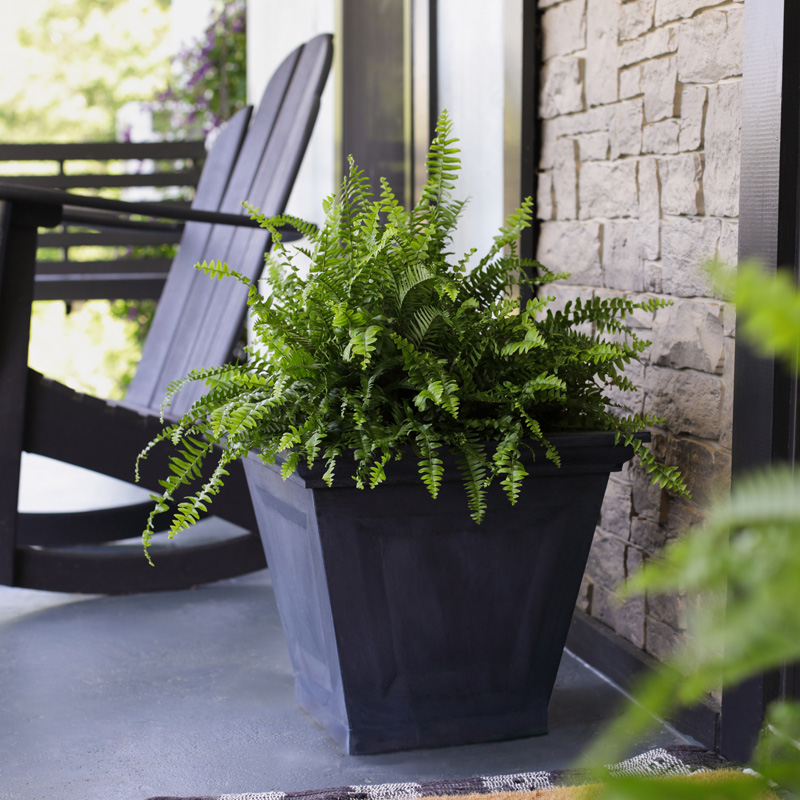
Boston fern can be an excellent warm-season porch, patio, or shade-container plant. Wait until frost danger has passed and cold nights have ended before moving an indoor-grown plant outside. Acclimate it gradually, beginning in a deeply shaded, sheltered location before exposing it to brighter filtered light.
Choose a site with shade or gentle filtered light. Strong afternoon sun can scorch the foliage, while wind increases water loss from both the fronds and the container. Hanging baskets are particularly vulnerable because warm air circulates around the entire pot.
Check outdoor containers frequently during hot or windy weather. Water thoroughly as the surface begins to dry rather than giving small daily splashes. If the root ball has become extremely dry and pulled away from the sides of the basket, apply water slowly in several passes so the mix can absorb it.
In Zones 9–11, Boston fern may survive outdoors as a perennial where local winter conditions remain suitable. Hardiness-zone labels are not guarantees: exposure, wind, duration of cold, soil drainage, and local microclimate can all affect survival. In colder regions, treat the plant as a seasonal container specimen or overwinter it indoors.
Seasonal Boston Fern Care
Spring
Increase watering as new growth and daylight increase. Repot or divide crowded plants before vigorous growth. Move indoor plants outside only after cold conditions have passed, and acclimate them gradually to outdoor light.
Summer
Protect from harsh sun and drying wind. Check hanging baskets frequently because they may dry rapidly. Feed lightly only if the plant is actively growing and otherwise healthy.
Fall
Inspect outdoor plants for pests well before cold weather. Begin adapting the plant to lower indoor light and bring it inside before temperatures fall into a damaging range.
Winter
Keep the plant away from radiators and heating vents. Water according to soil condition rather than the summer schedule. Expect slower growth and possibly some older-frond shedding as indoor light and humidity decline.
Bringing a Boston Fern Indoors for Winter
Do not wait until a frost warning to begin the move. A fern transferred suddenly from a bright, humid porch into a warm, dry, dim room may shed many leaflets even if it is not dying.
- Inspect the undersides of fronds, stems, crown, pot rim, and drainage area for scale, mealybugs, mites, slugs, or other hitchhikers.
- Remove dead fronds, fallen debris, weeds, and decaying material from the pot.
- Rinse the foliage gently if needed and allow it to drain in a shaded location.
- Quarantine the fern away from established houseplants for a monitoring period.
- Move it to progressively lower outdoor light before placing it indoors.
- Choose the brightest suitable indirect-light location available inside.
- Keep it away from heating vents and check the potting mix more often during the first weeks.
University of Minnesota Extension recommends inspecting plants for insects or disease before bringing them indoors and isolating them from established houseplants in case pests were missed.[8]
Some shedding after the move can result from lower light, lower humidity, changed watering, or temperature adjustment. Remove dead material and stabilize the environment before assuming the plant is lost. General seasonal guidance is available in the indoor fern care guide.
Common Boston Fern Problems
| Symptom | Likely causes | What to check first |
|---|---|---|
| Older outer fronds turn yellow | Normal aging, recent environmental change, or minor moisture stress | Whether new central growth remains healthy |
| Many fronds turn yellow | Waterlogged mix, poor drainage, low light, root stress, or overfertilization | Moisture below the surface, drainage holes, root condition, and recent feeding |
| Brown crispy tips | Dry air, incomplete watering, fertilizer salts, hot airflow, or sun scorch | Heating vents, soil moisture pattern, fertilizer history, and direct sun exposure |
| Leaflets drop | Dry root ball, abrupt indoor move, hot dry air, low light, or pest pressure | Recent location changes and moisture throughout the root ball |
| Fern wilts in dry mix | Underwatering or a root ball that repels water | Whether water is soaking the center or running down the pot sides |
| Fern wilts in wet mix | Root damage, oxygen-starved roots, or root rot | Odor, root color and firmness, drainage, and pot size |
| Sticky foliage or raised bumps | Scale insects or other sap-feeding pests | Frond undersides, stems, and the crown |
| Fine webbing or stippling | Mites, especially in hot dry conditions | Undersides of leaflets and nearby plants |
Yellow Fronds
One or two older outer fronds may yellow naturally. Widespread yellowing is more significant, especially when the potting mix remains wet for many days. Check drainage, light, recent fertilizer applications, and whether the root ball has become compacted.
Do not automatically add water to a yellow fern. Yellowing can occur when roots are too wet and unable to function normally. Use the symptom pattern and soil condition together. See why fern leaves turn yellow for a more detailed diagnosis.
Brown or Crispy Tips
Brown tips most often reflect moisture stress at the edges of the frond. Possible causes include dry heated air, allowing the root ball to dry too far, uneven watering, direct sun, excess fertilizer, or accumulated salts.
Check whether browning appeared after the heating system started, after feeding, or after moving the fern to a brighter window. Correct the cause before trimming damaged tissue. Brown areas will not become green again, but healthy new growth can replace them. See the guide to brown tips on fern leaves.
Leaf Drop
Boston ferns naturally shed some individual leaflets and old fronds. Heavy shedding commonly follows a dry root ball or a sudden change from humid outdoor conditions to a warm indoor room. Low winter light and hot air near the ceiling can worsen the problem.
Move the plant away from heat, provide suitable indirect light, stabilize watering, and avoid heavy fertilizer while it is stressed. Look for living green fiddleheads or firm crown tissue before discarding a plant that has lost much of its foliage.
Wilting
A fern that wilts in dry mix usually needs a thorough watering. If water runs immediately around the root ball and out of the pot, apply it slowly in repeated passes so the center becomes evenly moist.
Wilting in wet soil is more serious. Roots need oxygen as well as moisture. When the mix is saturated, compacted, or sour-smelling, stop watering on schedule and inspect the drainage and roots.
Root Rot
Suspect root rot when the plant wilts or yellows despite wet potting mix, drainage is slow, and roots are dark, soft, or foul-smelling rather than firm. Remove the plant from the pot, cut away clearly rotten material with sanitized tools, and repot the viable portion into fresh, well-aerated mix in a clean container with drainage.
Severe crown rot may not be recoverable. Prevention is more reliable than treatment: use a correctly sized pot, allow drainage, empty saucers, and check moisture below the surface before watering.
Pests
Scale insects and mealybugs are recognized indoor pests of Boston fern, while slugs may damage outdoor plants.[3] Mites may also become troublesome where air is hot and dry.
Isolate an affected plant and identify the pest before treating it. Remove heavily infested or dead fronds, rinse pests away where practical, and use only products labeled for the pest and for indoor ornamental plants. Test soaps or oils on a small section first because delicate fern foliage can be damaged by concentrated sprays or treatment in hot, bright conditions.
Is Boston Fern Safe for Cats?
The ASPCA lists Boston fern as non-toxic to both cats and dogs.[6] This classification applies to a correctly identified Boston fern, not every plant sold with “fern” in its common name. Some fern-like plants are not true ferns and may have different safety profiles.
Non-toxic does not mean edible. Chewing substantial amounts of any fibrous plant material may cause vomiting or gastrointestinal upset. Keep the plant out of reach if a pet repeatedly damages or consumes it, and contact a veterinarian when an animal develops concerning symptoms. See which ferns are toxic to cats for species-specific identification guidance.
Boston Fern Care FAQ
How often should I water a Boston fern?
Water when the surface of the potting mix begins to feel dry, then soak the root ball thoroughly and let it drain. Do not use a fixed weekly frequency. Outdoor baskets in heat and wind may need checking very frequently, while an indoor fern in cool winter conditions may dry much more slowly.
Can a Boston fern grow in low light?
It can tolerate filtered light, but a genuinely dark room is unsuitable. Too little light leads to weak growth and causes the potting mix to dry slowly. Medium to bright indirect light is a better target.
Should I mist my Boston fern every day?
Daily misting is not necessary and has only a temporary effect on surrounding humidity. Concentrate first on correct root watering and protection from heating vents. Use a room humidifier when indoor air is persistently dry.
Why is my Boston fern turning brown indoors?
Common causes include dry heated air, an incompletely watered root ball, excess fertilizer, salt buildup, intense direct sun, or a recent move indoors. Check the environment and soil before assuming the plant needs more water.
Can Boston fern survive winter outside?
Only in relatively mild climates. Boston fern is commonly listed for Zones 9–11 and is frost-tender. In colder areas, bring container plants indoors before temperatures fall into the low 40s°F rather than treating them like hardy garden ferns.
Should I cut a Boston fern back for winter?
There is no universal need to cut a healthy plant to a fixed height. Remove dead and badly damaged fronds, inspect for pests, and retain healthy foliage when overwintering the fern as a houseplant. More substantial cutting may be appropriate for a badly damaged plant, but it should not replace suitable light, moisture, and temperature.
Can a Boston fern recover after drying out?
It may recover if the crown and roots remain alive. Rehydrate the root ball thoroughly, allow excess water to drain, remove dead fronds, and provide stable indirect light. Do not compensate with constant saturation or heavy fertilizer.
Is a Boston fern the same as a hardy sword fern?
No. Boston fern is a frost-tender form of Nephrolepis exaltata. “Sword fern” is also used for unrelated hardy garden ferns. Always confirm the botanical name before applying winter or outdoor-care advice.
References
- Royal Botanic Gardens, Kew. “Nephrolepis exaltata (L.) Schott.” Plants of the World Online. View source.
- Royal Botanic Gardens, Kew. “Nephrolepis exaltata var. bostoniensis Davenp.” Plants of the World Online. View source.
- Mahr, Susan. “Boston Fern, Nephrolepis exaltata var. Bostoniensis.” University of Wisconsin–Madison Division of Extension, revised October 27, 2025. View source.
- University of Minnesota Extension. “Growing Tropical Ferns Indoors.” View source.
- Royal Horticultural Society. “Nephrolepis exaltata ‘Bostoniensis’.” View source.
- ASPCA Animal Poison Control Center. “Boston Fern.” View source.
- Cummings, Bryan E., and Michael S. Waring. “Potted Plants Do Not Improve Indoor Air Quality: A Review and Analysis of Reported VOC Removal Efficiencies.” Journal of Exposure Science & Environmental Epidemiology, 2020. View source.
- University of Minnesota Extension. “September Garden Checklist.” View source.
- Iowa State University Extension and Outreach. “How to Propagate Houseplants by Division and Offsets.” View source.