Fern Light Guide
Do Ferns Need Direct Sunlight?
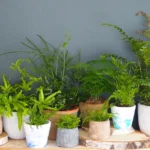
Most common indoor ferns prefer bright, indirect or filtered light—not a dark room and not hours of harsh afternoon sun. The best exposure depends on the species, window, season and how gradually the plant has adapted.
Quick Answer
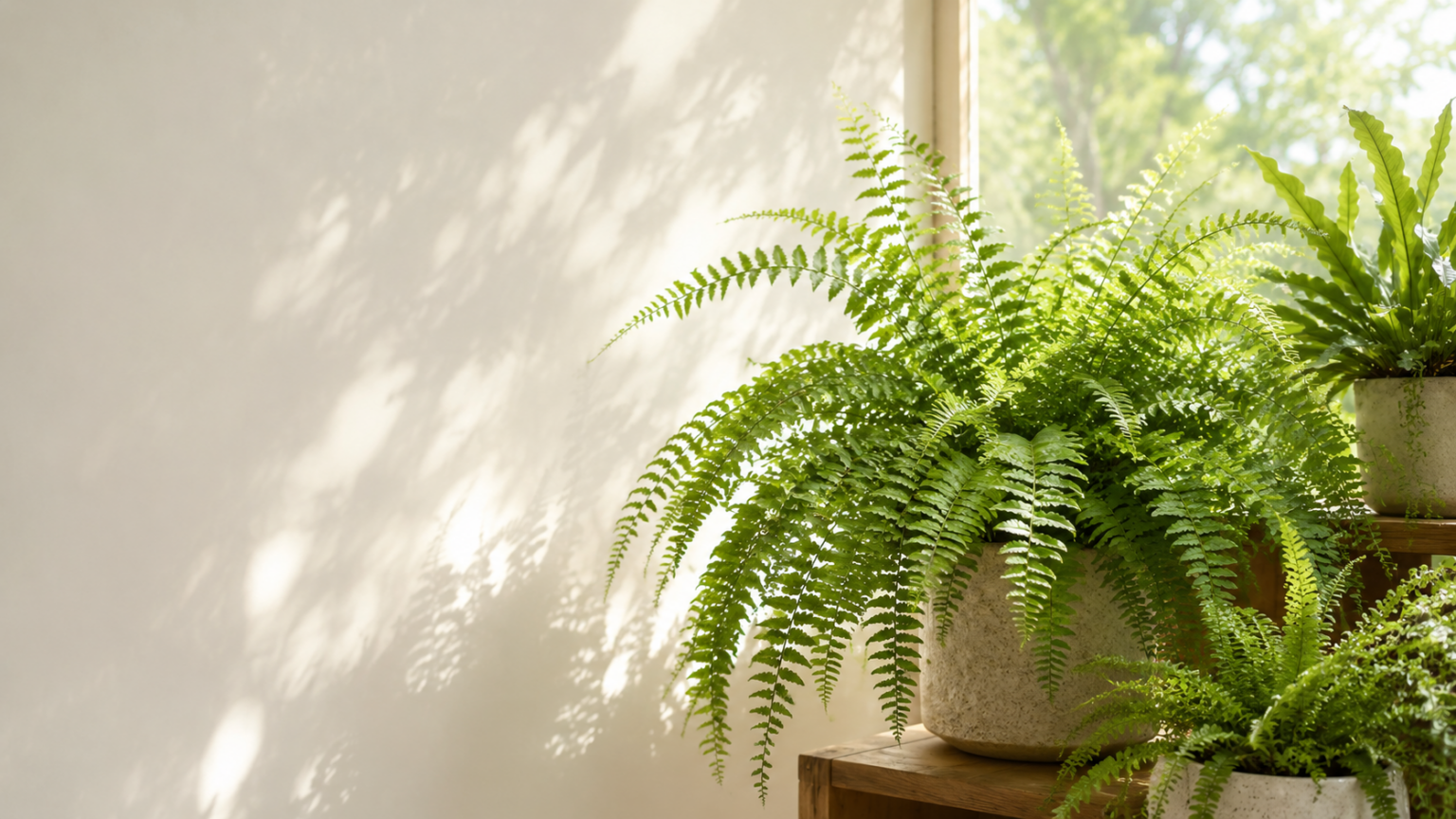
Most ferns do not need strong direct sunlight. Common houseplant ferns usually grow best in medium to bright indirect light, filtered light, or a position with gentle morning sun and protection from hot afternoon rays. Outdoors, many ferns are woodland plants suited to light shade or dappled shade.
“Shade” does not mean complete darkness. Ferns still need usable light for photosynthesis. A windowless room can support a fern only when an appropriate grow light supplies enough light.
Do Ferns Need Direct Sunlight?
For most commonly grown indoor ferns, direct sun is optional rather than essential. Their ideal location is usually bright enough to support steady new fronds but protected from prolonged, intense sun that can bleach or scorch delicate foliage. University of Minnesota Extension places tropical indoor ferns in medium light, such as an east-facing window or near a west- or south-facing window but outside the strongest direct beam.
That does not mean every fern must be kept in dim shade. Ferns occupy many habitats, and their light tolerance varies by species. Some accept a little early sun, staghorn ferns can receive filtered sun, and certain hardy garden ferns tolerate sunnier positions when the soil stays reliably moist. The plant label and scientific name are more useful than the word “fern” alone.
Light exposure also works together with temperature and moisture. The same direct beam may be mild on a cool winter morning but damaging beside hot glass on a summer afternoon. Judge the whole setting rather than using a simple “sun” or “no sun” rule.
What “Bright Indirect Light” Actually Means
Bright indirect light is strong daylight that reaches the fern without the sun shining directly onto its fronds for a prolonged period. The plant may sit beside a bright window, behind a sheer curtain, just outside the path of a sunbeam, or under an open tree canopy.
Glass type, insect screens, curtains, roof overhangs, nearby buildings, trees, weather, season, latitude and distance from the window all change the light that reaches a leaf. Light usually drops quickly as a fern moves farther from the window.
| Light term | What it looks like | Typical fern use | Main caution |
|---|---|---|---|
| Direct light | Sun rays strike the fronds and usually create a defined shadow. | Brief, gentle morning sun may suit some established ferns. | Hot midday or afternoon sun can bleach and scorch foliage. |
| Bright indirect light | Strong daylight with no prolonged direct beam on the plant. | A reliable target for many tropical houseplant ferns. | A bright-looking room may still be too dim far from the window. |
| Filtered light | Sunlight passes through a sheer curtain, foliage, shade cloth or similar screen. | Useful near stronger windows and for staghorn or Boston ferns. | A heavy curtain may reduce light too much rather than simply soften it. |
| Dappled shade | Moving patches of sun and shade beneath an open canopy. | Closely matches the woodland setting preferred by many outdoor ferns. | Conditions change as the sun moves and deciduous trees leaf out. |
| Deep shade | No or very little direct sun, but still some diffuse sky or reflected light. | Suitable for selected shade-tolerant garden ferns. | Deep outdoor shade is brighter than a windowless indoor corner. |
Best Window Direction for Indoor Ferns
The table assumes the Northern Hemisphere; broadly reverse north and south in the Southern Hemisphere.
| Window | Usual light pattern | Starting placement | Adjust when |
|---|---|---|---|
| East-facing | Gentle morning sun followed by indirect light. | Near the window; use a sheer curtain if summer rays become strong. | Move slightly back if exposed fronds fade, dry or develop pale patches. |
| West-facing | Brighter, warmer afternoon light. | Beside the window, behind a sheer curtain, or back from the direct beam. | Increase protection during hot months or where glass becomes very warm. |
| South-facing | Often the strongest and longest daylight in the Northern Hemisphere. | Use filtered light or place the fern outside the direct sun path. | Bring it closer in darker winter conditions; pull it back as spring light intensifies. |
| North-facing | Mostly indirect light, often cooler and weaker. | Keep the fern relatively close to an unobstructed window. | Add a grow light if growth becomes sparse or stalls, especially in winter. |
Why “three feet from a window” is not a universal rule
Low-emissivity coatings, tinted glass, insect screens, curtains, exterior trees and roof overhangs can substantially change the light reaching a fern. Observe the actual sun path at the plant’s height during several times of day instead of relying only on distance.
Morning Sun vs. Afternoon Sun
Morning sun
Early sun is generally cooler and less stressful than late-day sun. Many established ferns can handle a short period of morning light, especially through glass, a sheer curtain or an open canopy. An east-facing position is therefore often a practical starting point.
Afternoon sun
West-facing and exposed outdoor sites can combine strong radiation with high air and leaf temperatures. Sensitive fronds may bleach, develop tan patches or crisp rapidly. Filter this light or move the plant outside the beam unless the species is known to tolerate sun.
Winter sun is often lower and weaker, while long summer days can make the same window much more intense. University of Minnesota Extension advises moving tropical ferns closer to west or south windows during short winter days, then filtering those windows as days lengthen and burning becomes more likely.
Signs of Too Much Light vs. Too Little Light
Brown tips can also result from dry air or water stress, and yellow fronds can have several causes. Check which side is damaged, whether the plant moved recently and how quickly the pot dries.
| Clue | Too much light | Too little light |
|---|---|---|
| Color | Bleached, washed-out, pale yellow or tan areas, often on the window-facing side. | Dull color with weak new growth; the plant may remain green but stop filling out. |
| Frond texture | Crisp margins, dry patches or brittle tissue after direct exposure. | Thin, soft, stretched or widely spaced new fronds. |
| Growth habit | Fronds may curl away from the hot window or collapse during peak sun. | Growth leans toward the window and the center becomes sparse. |
| Pot behavior | The growing medium dries much faster after the move to stronger light. | The growing medium stays wet longer because growth and water use slow. |
| Best first step | Filter the direct beam or shift the fern to bright indirect light. | Move closer to a usable daylight source or add an appropriate grow light. |
For a broader diagnosis, see why fern leaves turn yellow and what causes brown fern tips. Those pages cover non-light causes without turning this guide into a general care manual.
Can Ferns Grow in Deep Shade?
Some outdoor ferns grow in deep shade, but deep shade is not total darkness. A site beneath evergreen trees or on the shaded side of a building may receive little direct sun while still receiving diffuse skylight, reflected light and brief seasonal light. RHS guidance distinguishes this from dappled shade, where light filters through a more open canopy.
Indoors, a dark corner several rooms away from a window is usually much dimmer than outdoor shade. Tropical ferns may survive for a time but grow poorly, produce fewer fronds and remain wet too long. A room without usable daylight needs a grow light rather than a claim that the fern “likes darkness.”
Outdoor Fern Light Requirements
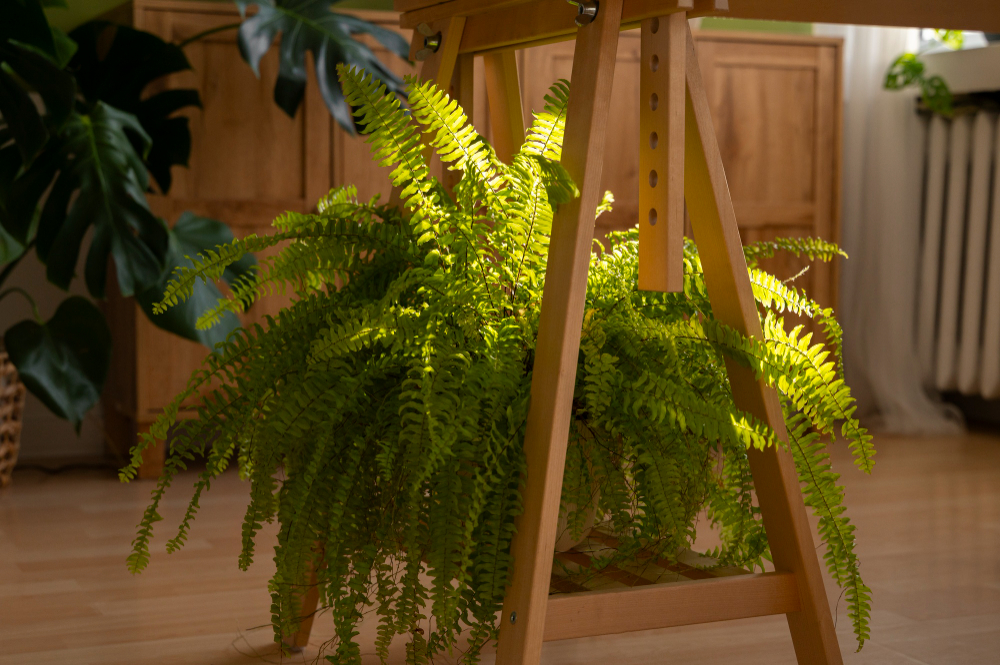
Many garden ferns evolved in woodland understories or along shaded banks. Light or dappled shade often gives them enough energy without exposing fronds to the heat and rapid drying of an open site. Under deciduous trees, spring light may be brighter before the canopy fills in and softer during summer.
RHS guidance notes that most ferns prefer light or dappled shade and that many can tolerate some sun when moisture is adequate. This is an important exception to the idea that all ferns must remain in darkness. Some Dryopteris types, including male fern and certain scaly male fern selections, are more sun-tolerant than delicate houseplant ferns, although summer sun can still scorch foliage if the soil becomes dry.
Choose the site by species, climate and moisture availability. Morning sun with afternoon shade is safer than a reflective west-facing wall. Newly purchased indoor ferns should not be placed directly into outdoor sun, because outdoor light is usually far stronger than the light they received inside.
For non-light requirements, use the dedicated outdoor fern care guide. Indoor placement, humidity and routine care are covered separately in indoor fern care.
Grow Lights for Ferns
Grow lights can supplement winter daylight or light a windowless room. LEDs are commonly practical because they are efficient, available in broad spectra and generally produce less radiant heat than incandescent or high-intensity discharge lamps.
Do not choose a lamp by wattage alone. Watts describe electrical power use, not the amount of plant-usable light reaching the fronds. If the manufacturer provides a PPFD map, use the reading at the fern canopy and at your intended distance. PPFD falls as the plant moves farther from the fixture, while heat risk increases when a hot lamp is too close.
There is no single correct lamp distance or daily runtime for every fern and every fixture. A small desk grow light and a high-output panel cannot share the same instructions. Start with the manufacturer’s foliage-plant guidance, include existing daylight, use a timer for consistency, preserve a daily dark period and adjust gradually from the plant’s response.
Grow light selection checklist
- Spectrum: Choose white or balanced full-spectrum light, or a mixed or blue-rich spectrum suitable for foliage plants.
- Output: Look for usable coverage or PPFD information at specified distances, not marketing watts alone.
- Coverage: Make sure the entire fern crown receives light rather than illuminating only one small patch.
- Distance control: Use an adjustable fixture so intensity can change as the fern grows.
- Heat: Check leaf temperature and ventilation, especially with lamps that produce substantial heat.
- Timer: Keep the schedule consistent while accounting for natural daylight in the room.
- Plant response: Watch new fronds for bleaching, curling, stretching or weak growth before increasing intensity.
Light Requirements by Fern Type
Confirm the scientific name because common names can cover different species.
| Fern type | Preferred light | Direct sun tolerance | Practical placement |
|---|---|---|---|
|
Boston fern Nephrolepis exaltata | Bright indirect to medium light. | Brief gentle sun may be tolerated after acclimation; avoid strong hot sun. | East window or near a brighter west or south window outside the direct beam. |
|
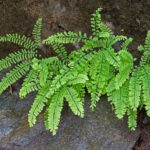
Maidenhair fern Adiantum spp. | Bright indirect or carefully filtered light. | Delicate indoor types scorch readily; outdoor species vary. | Bright east or north exposure, or filtered light near a stronger window. |
|
Bird’s nest fern Asplenium nidus | Bright light to light shade. | Too much sun can yellow foliage or suppress growth. | Near a bright north or east window, or protected from direct midday sun. |
|
Staghorn fern Platycerium bifurcatum | Bright indirect light with filtered sun. | Can accept some filtered or carefully acclimated direct light; avoid exposed full sun indoors. | Bright wall, covered porch or position receiving open, filtered light. |
|
Sun-tolerant hardy garden ferns Some Dryopteris types | Light shade to sun, depending on the exact species or cultivar. | More tolerant when established in cool, moisture-retentive soil. | Morning sun or sunnier beds where soil does not dry out; follow the plant label. |
How to Move a Fern to Brighter Light Safely
- Record the current exposure. Note whether the plant receives direct sun, filtered sun or only diffuse light.
- Move one light zone at a time. Shift from a dark corner to bright indirect light before introducing any direct sun.
- Use the gentlest period first. Begin with filtered or early-morning light rather than hot afternoon exposure.
- Increase exposure gradually. Allow several days to a couple of weeks for adjustment, depending on the change and the plant’s reaction.
- Inspect the exposed side. New pale or tan patches indicate that the increase was too fast or too intense.
- Change one variable at a time. Avoid simultaneously repotting, relocating and changing the watering routine unless necessary.
Scorched tissue does not recover. Evaluate the new position by watching undamaged fronds and the quality of subsequent growth. Because brighter light can increase water use, check the pot more often without turning this into a fixed watering schedule. See how often to water a fern for a separate moisture guide.
Frequently Asked Questions
Do ferns need sunlight?
Yes. Ferns need light for photosynthesis, but many common species do not need strong direct sun. Bright indirect, filtered or dappled light is often the best starting point.
How much sun do ferns need?
There is no universal number for all ferns. Many indoor species need no prolonged direct sun, while some tolerate gentle morning light. Certain hardy garden ferns accept more sun when moisture and climate are suitable.
Can ferns grow in shade?
Yes. Many outdoor ferns grow well in light, dappled or deep shade. Shade still contains diffuse and reflected light; it does not mean a completely dark location.
What is the best window for a fern?
An east-facing window is often a practical choice for tropical indoor ferns. A bright north window may work, while south and west windows usually need distance from the direct beam or a sheer curtain during stronger seasons.
Can a Boston fern take direct sunlight?
A Boston fern may tolerate brief, gentle or filtered sun after gradual acclimation, but strong midday and afternoon sun can scorch its fronds. Bright indirect light is safer indoors.
Can ferns live in a room with no windows?
Only if an appropriate grow light supplies sufficient plant-usable light. Ordinary ceiling lights are often designed for human visibility and may not provide adequate intensity at the fern canopy.
How do I know whether my fern has sunburn?
Look for bleached, pale tan or crisp patches concentrated on the side facing the window or sun. Sudden damage soon after relocation strengthens the case for sunburn, although water and heat stress can overlap.
Do grow lights work for ferns?
Yes. A suitable grow light can supplement weak daylight or replace a window, but its spectrum, output, coverage, distance, heat and schedule must match the space and plant. Follow fixture data and adjust from new growth rather than using one universal setup.
References
- Royal Horticultural Society: How to Grow Ferns
- Royal Horticultural Society: Shade Gardening
- Royal Horticultural Society: Choosing the Best Houseplants
- University of Minnesota Extension: Growing Tropical Ferns Indoors
- University of Minnesota Extension: Lighting for Indoor Plants
- University of Minnesota Extension: When Houseplants Go Outside
- NC State Extension: Nephrolepis exaltata
- NC State Extension: Asplenium nidus
- Royal Horticultural Society: Adiantum raddianum
- Missouri Botanical Garden: Platycerium bifurcatum
- University of Wisconsin Horticulture: Staghorn Fern
- Royal Horticultural Society: How to Grow Dryopteris