If you have just brought home a new fern and placed it in a pretty pot, one question may come up almost immediately: do indoor ferns need drainage holes?
The simple answer is yes—indoor ferns do best in pots with drainage holes. Ferns love moisture, but they do not like sitting in water. That is the part many beginners get wrong. A fern wants evenly moist soil, not a swamp at the bottom of the pot.
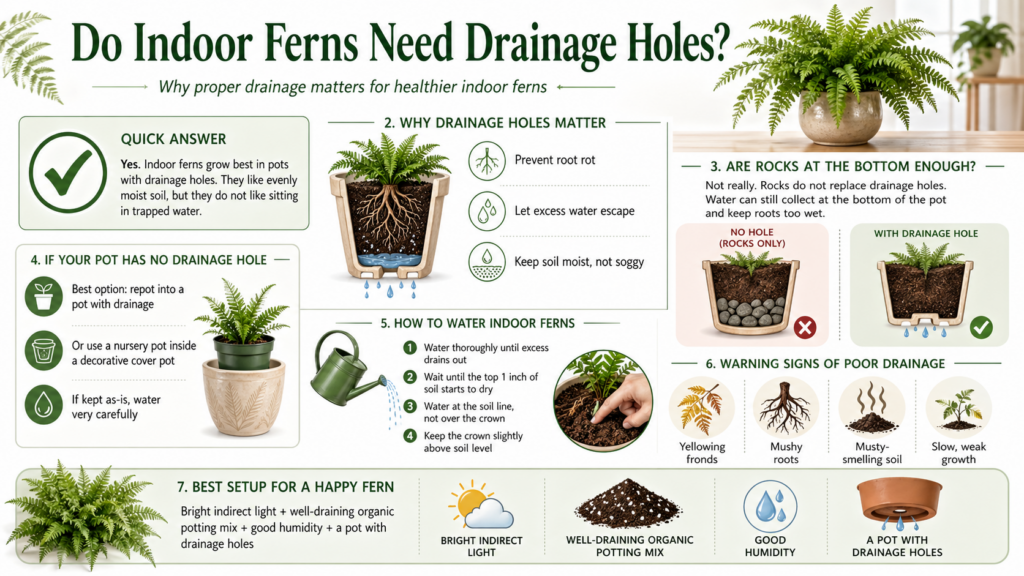
This matters even more if your pot has no drainage hole and you added rocks at the bottom. While that may feel like a good solution, rocks do not truly replace proper drainage. They may create a small space for water to collect, but the water still has nowhere to escape. Over time, that trapped moisture can lead to root rot, yellowing leaves, and a fern that slowly declines.
Let’s walk through what your fern actually needs, how to water it correctly, and what to do if your current pot has no drainage hole.
Do Indoor Ferns Need Drainage Holes?
Yes, indoor ferns need drainage holes because their roots require moisture and oxygen at the same time. When excess water cannot leave the pot, the lower part of the soil stays wet for too long. Fern roots may then become soft, damaged, or rotten.
This is especially important for ferns such as bird’s nest ferns, Boston ferns, maidenhair ferns, button ferns, and autumn ferns. They enjoy humidity and consistent moisture, but they are still vulnerable to waterlogged soil.
A drainage hole allows extra water to escape after watering. This gives you a much safer watering routine: you can water the soil thoroughly, let the excess drain out, and then wait until the top inch of soil begins to dry before watering again.
Are Rocks at the Bottom of the Pot Enough?
Not really. Adding rocks to the bottom of a pot without a drainage hole is a common trick, but it does not solve the main problem.
The water still remains inside the container. Instead of draining away, it simply collects below the soil. If you accidentally water too much, the roots may eventually reach that wet layer, or the soil may stay too damp from the bottom upward.
For indoor ferns, this can become a slow problem. At first, the fern may look fine. Then you may notice:
- Yellowing fronds
- Soft or mushy roots
- A musty smell from the soil
- Brown tips or weak growth
- Soil that stays wet for many days
If you love the decorative pot, the better method is to use it as a cover pot. Keep the fern in a plastic nursery pot with drainage holes, then place that pot inside the decorative container. After watering, remove the inner pot, let it drain fully, and then place it back.
What to Do If Your Fern Pot Has No Drainage Hole
If your fern is already planted in a pot without drainage, you have a few options.
The best choice is to repot it into a container with drainage holes. Choose a pot that is only slightly larger than the root ball, because an oversized pot can hold too much moisture.
If you do not want to change the pot, you can drill a drainage hole if the material allows it. Ceramic, plastic, and terracotta pots can often be drilled carefully with the right bit.
If you cannot repot or drill right now, water very carefully. Add small amounts of water at a time and check the soil moisture before watering again. The risk is that it is hard to know how much water is sitting at the bottom, so this should be a short-term solution rather than a long-term care plan.
How to Water Indoor Ferns Properly
Ferns prefer soil that stays lightly moist, but never soggy. The best method is to water deeply when needed, not to give tiny splashes every day.
Check the top inch of soil with your finger. If it feels slightly dry, it is usually time to water. If it still feels damp, wait a little longer.
When your fern is in a pot with drainage holes, water until you see water coming out of the bottom. This helps the entire root system receive moisture evenly. After that, let the pot drain completely and never allow it to sit in a saucer full of water.
For a pot without drainage, you need to be much more conservative. Water lightly and slowly, then wait to see how the soil responds. Still, this is not ideal for long-term fern health.
Keep the Crown Above the Soil
When repotting your fern, pay attention to the crown. The crown is the central area where the fronds emerge.
Do not bury this part too deeply. If the crown sits below the soil level, water can collect around it and cause rot. This is especially important for bird’s nest ferns, which have a central rosette shape.
A good rule is simple: the crown should sit just above the soil surface, not hidden under the potting mix.
Best Soil for Indoor Ferns
Indoor ferns like soil that holds moisture but still drains well. A compost-rich organic potting mix is a good starting point. You can also improve drainage by adding perlite, fine bark, or a small amount of coarse sand, depending on the fern type.
Avoid heavy garden soil. It can compact inside a pot, hold too much water, and suffocate the roots.
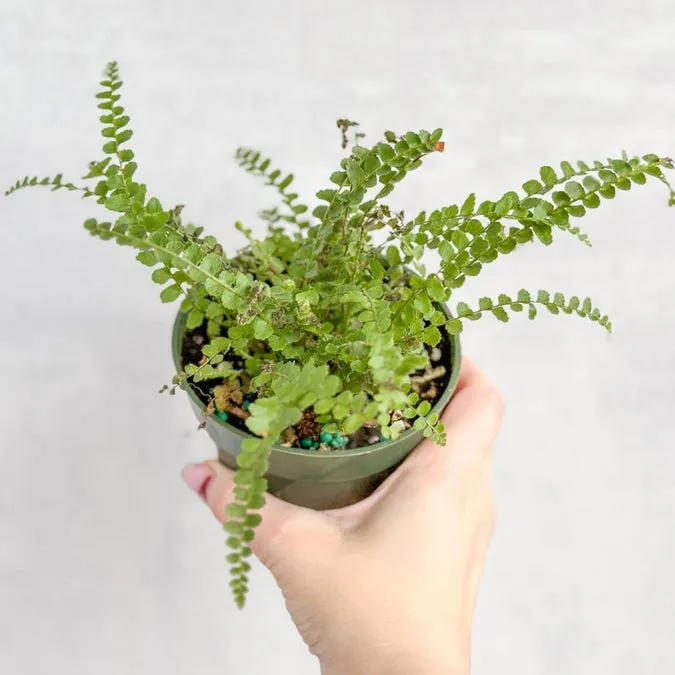
The ideal fern soil should feel soft, airy, and slightly moisture-retentive. Think of a forest floor: damp, rich, and breathable.
Light, Humidity, and Temperature Matter Too
Drainage is important, but it is only one part of indoor fern care.
Most indoor ferns prefer bright, indirect light. Direct afternoon sun can burn the fronds and create crispy brown tips. A spot near a window with filtered light is usually better than harsh direct sun.
Humidity also matters. Ferns naturally enjoy moist air, so dry indoor rooms can stress them. If your fern has crispy edges even though the soil is moist, the air may be too dry. A humidifier, pebble tray, or grouping plants together can help.
For temperature, most indoor ferns are comfortable around 65°F to 75°F. Keep them away from cold drafts, heating vents, and air conditioners that dry the air quickly.
Common Signs Your Fern Has a Drainage Problem
A fern with poor drainage often shows warning signs before it fully declines.
Yellow leaves may mean the soil is staying too wet. Brown crispy tips can come from dry air, too much direct sun, or inconsistent watering. A sour smell from the soil is a bigger warning sign and may suggest root rot.
If the pot feels heavy for many days after watering, that usually means the soil is holding too much moisture. In that case, check the drainage, reduce watering, and consider repotting into a better container.
Should You Fertilize Indoor Ferns?
Indoor ferns are not heavy feeders. During spring and summer, you can use a balanced houseplant fertilizer at half strength every four to six weeks. Avoid over-fertilizing, because fern roots can be sensitive.
In fall and winter, growth naturally slows down. You can usually skip fertilizer during this period and focus on steady moisture, good light, and humidity.
Final Thoughts: Drainage Holes Make Fern Care Much Easier
So, do indoor ferns need drainage holes? For healthy long-term growth, yes. A pot with drainage holes gives you much better control over watering and helps prevent root rot.
Ferns love moisture, but they do not want their roots trapped in standing water. If your current pot has no drainage hole, consider repotting the fern, drilling a hole, or using a nursery pot inside a decorative cover pot.
Once you get drainage right, fern care becomes much less mysterious. Give your fern indirect light, evenly moist soil, good humidity, and a breathable potting mix, and it has a much better chance of staying lush, green, and beautiful indoors.
FAQ
Do indoor ferns need drainage holes?
Yes. Indoor ferns grow best in pots with drainage holes because excess water needs a way to escape. Without drainage, water can collect at the bottom of the pot and cause root rot.
Can a fern survive in a pot without drainage holes?
A fern may survive for a while in a pot without drainage holes, but it is risky. You must water very carefully, and even then, trapped water can still damage the roots over time.
Are rocks enough for drainage in a fern pot?
No. Rocks at the bottom of a pot do not replace a drainage hole. They may create space for water to collect, but the water still stays inside the container.
How often should I water an indoor fern?
Water when the top inch of soil feels slightly dry. Ferns like consistently moist soil, but they should not sit in soggy soil.
What is the best pot for an indoor fern?
The best pot for an indoor fern is one with drainage holes. A plastic nursery pot inside a decorative cover pot is also a good option because it combines function and style.
Why are my fern leaves turning yellow?
Yellowing leaves often mean overwatering or poor drainage. Check whether the soil is staying wet for too long and make sure the pot allows excess water to escape.
Should I mist my indoor fern?
Misting can temporarily increase moisture around the leaves, but it does not replace proper humidity. A humidifier or pebble tray is usually more effective for dry indoor air.
What soil is best for indoor ferns?
Indoor ferns prefer rich, moisture-retentive but well-draining soil. A compost-rich potting mix with added perlite or bark can work well.