
Practical Houseplant Guide
Indoor Fern Care: How to Grow Healthy Ferns Indoors
Indoor ferns are not all the same. A Boston fern, maidenhair fern, bird’s nest fern and staghorn fern can differ in light tolerance, root structure, watering needs and preferred growing medium. Start with the plant’s identity, then adjust its care to the room and season.
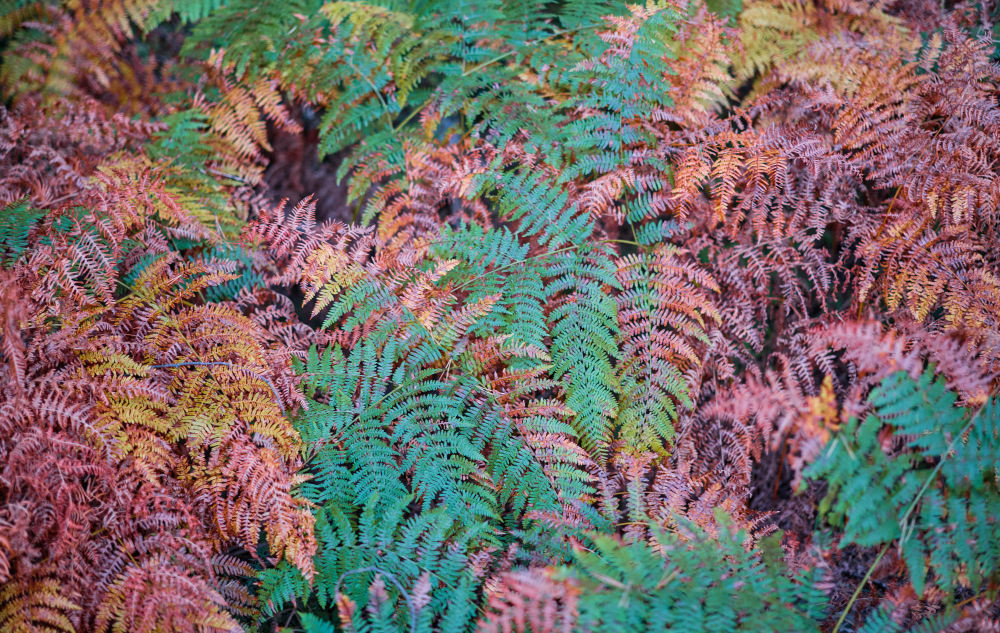
How do you care for an indoor fern?
Most commonly grown indoor ferns need suitable filtered light, a well-drained growing medium, careful watering and protection from dry air or abrupt environmental changes. Exact requirements vary by species, so identify the fern before following detailed care instructions.
Identify Your Fern Before Changing Its Care
“Indoor fern” is not a botanical name. It is a broad description covering many unrelated species that happen to be grown inside homes, offices, conservatories and glass cabinets.
Different ferns may have central crowns, compact clumps, creeping rhizomes or epiphytic root systems. Their fronds can be thin and delicate, thick and leathery, finely divided or broad and undivided. These structural differences affect how quickly the plant loses water and how its roots should be potted.
Before changing the care routine, confirm:
- The common name on the nursery label.
- The scientific name, when available.
- Whether the plant is a true fern.
- Whether it is terrestrial or epiphytic.
- Whether it has a named cultivar.
- Whether it grows from a crown, clump or creeping rhizome.
Plants such as Asparagus setaceus are flowering plants with fern-like foliage. They should not be placed in a table of true indoor ferns, and their care or pet-safety information should not be assumed to match Boston fern or other true ferns.
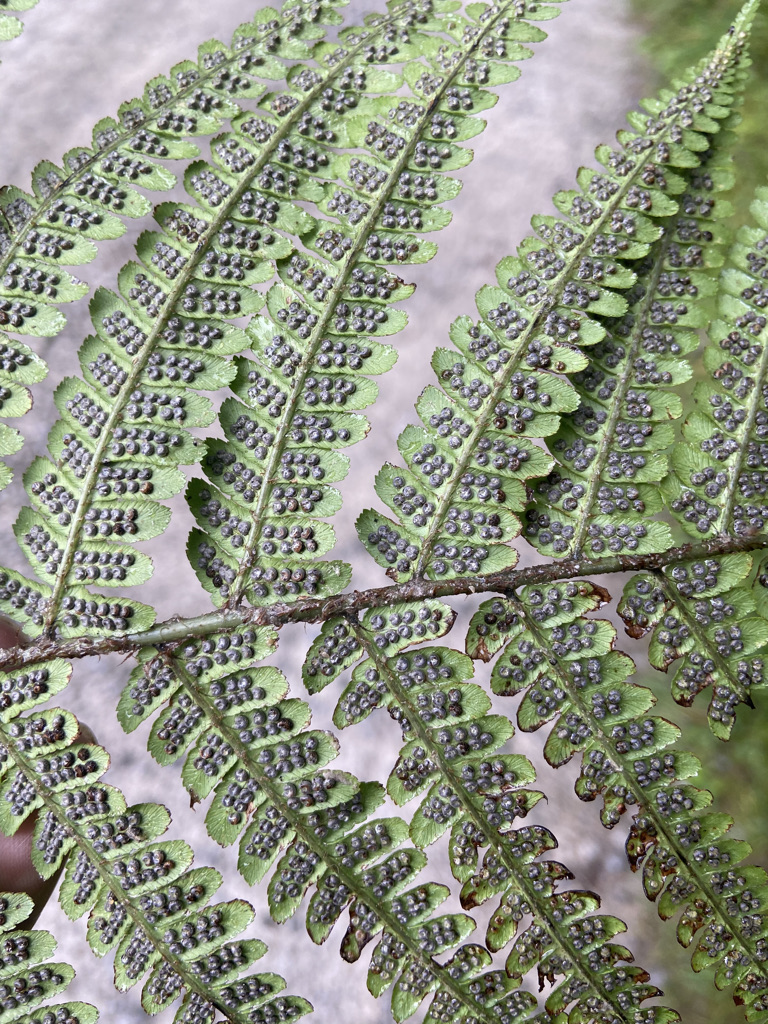
Brown dots beneath a frond may be normal
Many mature fern fronds develop sori on their undersides. Sori contain groups of sporangia involved in spore production. Their shape and arrangement vary by species.
Regular, organized rows of sori are not the same as scale insects, dirt or leaf disease. When identification is uncertain, examine the pattern and compare it with reliable information for the species.
For help comparing growth habits and common names, use the guide to different types of ferns.
Indoor Fern Care at a Glance
| Care factor | Practical starting point | Important qualification |
|---|---|---|
| Light | Many commonly grown indoor ferns prefer bright to medium filtered light. | Appropriate intensity depends on the species, window, season, latitude and distance from the glass. |
| Water | Check the growing medium and pot weight rather than following a fixed weekly calendar. | Moisture requirements differ between terrestrial, epiphytic and creeping-rhizome ferns. |
| Humidity | Measure suspected dry air with a hygrometer and improve it when the species needs more humidity. | Occasional misting does not maintain stable room humidity. |
| Temperature | Protect tender houseplant ferns from frost, direct heat, cold drafts and abrupt changes. | Do not apply one temperature range to every fern. |
| Growing medium | Use a medium that balances useful moisture retention with drainage and root aeration. | Terrestrial and epiphytic ferns may need different materials and structures. |
| Container | Use a pot with drainage holes and empty collected water from saucers or cachepots. | An oversized container may remain wet for too long. |
| Fertilizer | Consider feeding only while the plant is actively growing and receiving adequate light. | Follow the fertilizer label and species-specific guidance rather than a universal schedule. |
| Repotting | Repot when roots are crowded, drainage has declined or the growing medium has deteriorated. | Repotting does not have to occur every year. |
| Warning signs | Brown tips, yellow fronds, curling and wilting may each have several possible causes. | Check the roots, moisture, light and recent changes before diagnosing the problem. |
Are All Ferns Suitable for Growing Indoors?
Not every outdoor fern is suitable for year-round indoor cultivation. Many garden ferns are temperate plants with seasonal growth and dormancy patterns. Keeping them continuously warm inside does not automatically turn them into evergreen tropical houseplants.
Ferns commonly sold as houseplants are often tropical or subtropical species, but even these plants vary considerably. Delicate, finely divided fronds may lose moisture faster than thicker or more leathery foliage. This is a useful selection clue, but it is not an absolute rule.
Choosing a species that already fits the home is usually more practical than attempting to transform a dark, dry or drafty room into a greenhouse.
Indoor Ferns for Different Homes
Retail common names are not always precise. Confirm the scientific name and cultivar on the plant label before applying detailed species instructions.
| Common name | Scientific name | Growth habit | Main care consideration |
|---|---|---|---|
| Boston fern | Nephrolepis exaltata ‘Bostoniensis’ and related cultivars | Arching, finely divided fronds from a spreading plant | Consistent root-zone moisture, useful light and protection from dry moving air |
| Bird’s nest fern | Asplenium nidus and related cultivated forms | Epiphytic rosette with broad, undivided fronds | An airy medium, suitable filtered light and careful management around the central growing area |
| Blue star fern | Phlebodium aureum ‘Blue Star’ | Creeping, scaly surface rhizomes with blue-green divided fronds | Avoid burying the surface rhizomes too deeply or keeping a dense medium continuously saturated |
| Rabbit’s foot fern | Davallia fejeensis | Fine fronds arising from furry creeping rhizomes | Provide an open medium and leave naturally exposed rhizomes near the surface |
| Cretan brake fern | Pteris cretica | Upright fronds from a compact or short-rhizome plant | Balance reliable moisture with drainage and adequate filtered light |
| Delta maidenhair fern | Adiantum raddianum | Fine leaflets on dark, slender stalks | Usually less tolerant of dry air and an accidentally dried root zone than thicker-leaved ferns |
| Staghorn fern | Platycerium bifurcatum | Epiphytic fern with shield fronds and branching fertile fronds | May be mounted or grown in an open medium and should not be treated like an ordinary terrestrial fern |
Boston Fern
Use this page only for its general place among indoor ferns. For detailed species care, read the Boston fern care guide.
Maidenhair Fern
Delicate maidenhair foliage is often less forgiving of dry conditions. See the maidenhair fern care guide.
Staghorn Fern
Its epiphytic structure requires a different approach to mounting, watering and root aeration. Read the staghorn fern care guide.
How Much Light Do Indoor Ferns Need?
Many tropical ferns grown as houseplants perform well in bright to medium filtered light. This does not mean they should be placed in a dark corner, and it does not mean every moment of direct sunlight is harmful.
Useful indoor positions
- An east-facing window may provide useful, relatively gentle morning light.
- A south- or west-facing window can work when strong sunlight is filtered or the plant is placed farther from the glass.
- A north-facing window may be sufficient for some species, but the result depends on window size, season, latitude and outdoor obstructions.
- A bathroom is useful only when it also provides enough light.
Light behind window glass differs from outdoor sunlight. The same window may provide weak light during winter and intense heat or glare during summer. Move plants gradually when seasonal light changes.
Possible signs of insufficient light
- Growth slows during the expected growing season.
- New growth appears sparse, weak or stretched.
- Fronds lean strongly toward the window.
- The growing medium remains wet much longer than expected.
Possible signs of excessive light
- Pale or bleached areas on exposed fronds.
- Dry, sharply defined scorch patches.
- Browning concentrated on the side facing the window.
- Very rapid moisture loss combined with heat near the glass.
A grow light can supplement weak natural light, but there is no universal wattage, distance or daily duration for every fern. Follow the fixture manufacturer’s coverage information and adjust gradually according to the plant’s response.
For a more detailed explanation, read how direct sun, filtered light and window direction affect ferns .
How to Water an Indoor Fern
Do not water every indoor fern according to a fixed calendar. Water use changes with the species, pot size, drainage, growing medium, light level, temperature, humidity, season and amount of active growth.
Check the growing medium before watering. A finger test can help assess the upper layer, but pot weight and the time the medium has taken to dry are also useful. A small pot in warm, bright conditions may dry quickly, while an oversized pot in low light may remain wet for a long time.
- Check the growing medium rather than relying on the day of the week.
- Apply water evenly across the root zone instead of giving a small splash to one area.
- Continue until excess water begins to leave the drainage holes.
- Allow the pot to drain and empty water held in the saucer or decorative cachepot.
- Check the medium again before the next watering.
Fern roots require oxygen as well as water. A medium can be usefully moist without remaining waterlogged. Prolonged saturation can damage roots and produce symptoms that resemble underwatering.
Do not use wilted fronds as the only watering signal. A fern may wilt because its root zone is dry, but it can also wilt when damaged roots are sitting in persistently wet material. Check the pot before adding more water.
Blue star fern, rabbit’s foot fern and staghorn fern have structures that differ from an ordinary terrestrial root ball. Their exposed rhizomes or mounted roots may require different watering methods.
Water use often decreases when winter light and growth decline, but a plant near a heating vent may dry faster. Reassess the actual medium rather than automatically continuing the summer schedule.
Read the detailed guide to watering indoor ferns without following a fixed frequency .
Do Indoor Ferns Need High Humidity?
Humidity requirements differ among species. Fine-fronded maidenhair ferns are often more sensitive to dry air than ferns with thicker or more leathery foliage.
Winter heating can dry indoor air, but brown tips and dry leaflets do not prove that low humidity is the only problem. Similar symptoms can result from damaged roots, fertilizer salts, strong light, missed watering or heat.
More reliable ways to manage humidity
- Use a hygrometer when low humidity is suspected instead of judging only by how the room feels.
- Run a clean portable humidifier near humidity-sensitive plants.
- Group compatible plants while maintaining useful air movement.
- Grow suitable small ferns in a terrarium, glass cabinet or cloche.
- Move the plant away from heaters, radiators and strong dry airflow.
What about misting?
Misting briefly wets the foliage and raises moisture near the leaf only until the water evaporates. It should not be presented as a reliable method for maintaining the humidity of an entire room.
Misting is not required for every fern. Keeping foliage constantly wet in stagnant air may also create conditions favorable to some leaf problems.
Do pebble trays work?
A tray of moist pebbles may create a small amount of evaporation near the pot, but its effect on the humidity of an entire room is limited. The bottom of the container must remain above the water rather than sitting in it.
A bathroom may provide useful humidity only when it also has enough light and suitable temperatures. A dark windowless room is not made suitable simply because showers occur there.
Temperature, Drafts and Air Movement
Most tropical ferns sold as houseplants are not frost tolerant, but they do not all share one exact preferred temperature range. Stable conditions are generally more useful than applying a single number to every species.
- Keep tender ferns away from frost and freezing windows.
- Do not allow fronds to rest against very cold glass.
- Avoid direct airflow from heaters and radiators.
- Avoid strong air-conditioning drafts.
- Protect the plant from sudden environmental changes.
- Provide gentle air movement without exposing delicate fronds to a constant dry wind.
- Check species-specific information before relying on an exact minimum temperature.
Potting Mix and Containers
Heavy garden soil is not suitable for an indoor container. It can compact, drain poorly and reduce oxygen around the roots.
A suitable fern growing medium should hold useful moisture while preserving enough air space for the roots. The ingredients and texture should be selected for the species rather than copied from one universal recipe.
Terrestrial Ferns
These often need a moisture-retentive but well-aerated container medium. Avoid a dense mixture that remains saturated after watering.
Epiphytic Ferns
Bird’s nest, staghorn, blue star and rabbit’s foot ferns may require a more open structure around their roots and rhizomes.
Creeping Rhizomes
Naturally exposed rhizomes on Phlebodium and Davallia should not automatically be buried beneath a deep layer of growing medium.
Choosing a container
- Use a pot with functional drainage holes.
- Empty water that collects inside a decorative outer container.
- Avoid moving a small root ball directly into a very large pot.
- Remember that terracotta usually dries faster than plastic or glazed containers.
- Choose the shape of the container according to the crown, rhizome and root system rather than assuming every fern needs a shallow pot.
Bird’s nest fern, Boston fern, blue star fern, rabbit’s foot fern and staghorn fern should not automatically be given the same growing medium or container treatment.
Fertilizing Indoor Ferns
Ferns are not necessarily heavy feeders. Fertilizer should match active growth, adequate light and a functioning root system.
Do not use fertilizer as the first response to yellowing, pale growth or brown tips. Check light, moisture, drainage and root condition before assuming that the plant lacks nutrients.
Avoid fertilizing a fern that is:
- Severely wilted from drought.
- Sitting in persistently wet growing medium.
- Showing active root or crown rot.
- Recently repotted and visibly stressed.
- Heavily infested with pests.
- Producing little growth in very low seasonal light.
Use a fertilizer labeled for indoor plants and follow its directions. Do not assume that every fern needs the same dilution, nutrient ratio or four-to-six-week schedule. Species-specific recommendations belong on verified species pages.
Pruning and Cleaning
Remove fronds that are completely dead, clearly damaged or affected by a confirmed disease. Use clean tools and cut from a position that does not damage the crown or rhizome.
- Do not remove a fixed percentage of the plant.
- Do not cut healthy fronds merely to make the plant look symmetrical.
- Do not cut normal new croziers or fiddleheads.
- Do not cut into a central crown.
- Avoid commercial leaf-shine products.
Dust can be removed with a gentle rinse or a soft damp cloth where the leaf structure permits it. Support delicate fronds so they are not torn during cleaning.
While cleaning, inspect:
- The undersides of the fronds.
- The central crown.
- The bases of the frond stalks.
- Creeping surface rhizomes.
- The pot rim and drainage holes.
- The surface of the growing medium.
When to Repot an Indoor Fern
Repotting does not have to occur every year. Some ferns remain healthy while moderately snug in their containers.
Consider repotting when:
- Roots are growing through the drainage holes.
- The root ball has become densely crowded.
- The plant dries much faster than it did previously.
- The growing medium has collapsed or drains poorly.
- Water runs around a compacted root ball without wetting it evenly.
- Crowded crowns or rhizomes are deforming the container.
- The plant has become unstable or top-heavy.
A fern can be transferred into fresh growing medium without being divided. Division depends on the plant’s structure. Clump-forming, crown-forming, creeping-rhizome and epiphytic ferns cannot all be divided in the same way.
Seasonal Indoor Fern Care
Spring and Summer
- Check the growing medium more frequently as light and growth increase.
- Expect water use to change with warmer conditions and new growth.
- Move plants into stronger light gradually to avoid scorch.
- Consider fertilizer only after active growth is visible.
- Repot only when the roots or growing medium indicate a need.
- Inspect new growth and frond undersides for pests.
Fall and Winter
- Reassess the amount of useful window light.
- Keep fronds away from cold glass and drafts.
- Do not mechanically continue the summer watering frequency.
- Check whether heating is drying the air or root zone.
- Reduce or pause fertilizer when active growth has slowed.
- Inspect plants before bringing them indoors from an outdoor summer position.
A fern moved outdoors for summer should be acclimated gradually to a sheltered position with appropriate filtered light. Do not move a shade-adapted plant directly into strong outdoor sun.
Not every indoor fern becomes fully dormant during winter. Adjust care according to the species, available light, room conditions and visible growth.
Common Indoor Fern Problems
A visible symptom rarely identifies a single cause. Check the growing medium, roots, drainage, light exposure and recent environmental changes before acting.
| Symptom | Possible causes | What to check first | Detailed guide |
|---|---|---|---|
| Brown tips | Dry air, irregular watering, fertilizer salts, root stress, heat or physical damage | Growing-medium moisture, vents, fertilizer history and root condition | Identify brown tips and dying fronds |
| Whole fronds turning brown | Natural aging, severe drying, root damage, heat, disease or physical injury | Whether old or new fronds are affected and whether the roots are firm | Diagnose browning patterns |
| Yellow fronds | Excess water, poor drainage, insufficient light, root damage, nutrient problems or natural aging | Pot drainage, root condition and where yellowing begins | Diagnose yellow fern leaves |
| Curling fronds | Normal new growth, dehydration, heat, root problems, pests or naturally wavy foliage | Whether the frond is new or mature and whether the medium is dry or wet | Diagnose curling fern leaves |
| Wilting with dry medium | Insufficient root-zone moisture, heat or rapid water loss | Pot weight, root-ball moisture and proximity to direct heat | Review indoor fern watering |
| Wilting with wet medium | Oxygen-starved roots, root rot, damaged roots or poor drainage | Root color, firmness, odor and drainage holes | Review fern pests and diseases |
| Leaflet drop | Dry air, missed watering, environmental shock, pests or natural aging | Recent relocation, heating, root moisture and frond undersides | Check brown and drying fronds |
| Pale or weak growth | Insufficient light, root stress, nutrient shortage or pest feeding | Light exposure and root health before adding fertilizer | Understand fern light requirements |
| Soft, dark roots or crown tissue | Prolonged saturation, poor drainage or infection | Remove the inner pot and inspect roots and crown | Review root and crown problems |
| Fine stippling or webbing | Spider mites | Examine frond undersides with good light or magnification | Identify common fern pests |
| Fixed brown or gray bumps | Scale insects | Inspect midribs, stalks and frond undersides | Identify scale insects |
| White cottony material | Mealybugs | Inspect protected joints, rhizomes and pot edges | Identify mealybugs |
| Small dark flies near the pot | Fungus gnats associated with damp organic growing media | Surface moisture, decaying material and drainage | Review fungus gnats and root-zone moisture |
Indoor Fern Care Checklist
Confirm the species.
Check whether it is terrestrial or epiphytic.
Evaluate the available window light.
Check the growing medium before watering.
Confirm that the pot has drainage holes.
Empty water from saucers and cachepots.
Keep the fern away from vents and cold drafts.
Measure humidity when dry air is suspected.
Inspect new plants and plants returning indoors.
Check beneath fronds and around rhizomes for pests.
Adjust care according to seasonal growth.
Change one important variable at a time.
This checklist organizes troubleshooting, but it cannot guarantee recovery. A severely damaged crown or root system may not recover even after the environmental problem has been corrected.
Frequently Asked Questions
Are indoor ferns hard to care for?
Some are demanding, while others adapt reasonably well when the species matches the home. Fine-fronded maidenhair ferns are generally less forgiving of dry conditions than some thicker-leaved ferns.
Where is the best place to put an indoor fern?
A useful starting point is a position with bright or medium filtered light, away from direct heating, cold drafts and prolonged intense afternoon sun. The best exact location depends on the species, window and season.
Can indoor ferns live in low light?
Some tolerate lower light better than others, but shade tolerance does not mean the plant can grow indefinitely in a dark corner. Inadequate light may slow growth and keep the growing medium wet for too long.
How often should I water an indoor fern?
There is no reliable schedule for every fern. Check the growing medium, pot weight, drainage, season and species, then water according to the condition of the root zone.
Should I mist my indoor fern?
Misting briefly wets the foliage but does not reliably maintain room humidity. A measured, clean humidifier or suitable enclosed growing area is more controllable for humidity-sensitive species.
Why is my indoor fern turning brown?
Possible causes include dry air, insufficient water, prolonged saturation, root damage, fertilizer salts, excessive heat, strong light, physical injury or normal aging. Check where the browning begins and inspect the root zone before selecting a remedy.
Can I put an indoor fern outside in summer?
Many tender houseplant ferns can spend warm weather outdoors, but they should be protected from frost and gradually acclimated to sheltered, filtered light. Species-specific temperature limits still apply.
Which indoor fern is easiest for a beginner?
Bird’s nest fern, Cretan brake fern and some thicker-leaved ferns may be more manageable than maidenhair fern in an average home. The most suitable choice is the plant that matches the home’s actual light, humidity and watering conditions.
Sources and Further Reading
The general recommendations on this page are based on horticultural guidance from university Extension services, botanical institutions and the Royal Horticultural Society. Exact requirements should still be checked for the identified species or cultivar.
- University of Minnesota Extension — Growing Tropical Ferns Indoors
- University of New Hampshire Extension — Do Ferns Make Good Houseplants?
- Royal Horticultural Society — Tender Ferns as Houseplants
- Royal Horticultural Society — How to Grow Epiphytic Ferns
- Penn State Extension — Humidity and Houseplants
- Penn State Extension — Repotting Houseplants
- University of Minnesota Extension — Managing Insects on Indoor Plants
- Missouri Botanical Garden — Problems Common to Many Indoor Plants
- Kew Science — Plants of the World Online
Review the page whenever the taxonomy, linked care guides or horticultural recommendations are substantially updated.