
Do Ferns Have Seeds? How Fern Spores and Reproduction Work
Ferns are vascular plants, but unlike conifers and flowering plants, they do not produce seeds. Their familiar leafy form releases spores that can begin a second, much smaller stage of the fern life cycle.
No. True ferns do not produce flowers, fruits, pollen or seeds. They reproduce sexually through spores, gametophytes, sperm and eggs. Many species can also spread vegetatively through structures such as rhizomes, runners, plantlets or bulbils. A fern spore is not a tiny seed: it contains no plant embryo and does not grow directly into the familiar leafy fern.
Why Ferns Do Not Produce Seeds
Ferns are seedless vascular plants. They have specialized tissues that transport water and nutrients, as well as recognizable roots, stems and leaves, but their reproductive cycle does not include seeds.
A seed contains a young sporophyte embryo protected by a seed coat, usually with nutritive tissue that supports early development. A fern spore is fundamentally different. It is normally a single reproductive cell with a protective wall. It contains no multicellular embryo and no seed coat.
When a typical fern spore germinates, it does not immediately produce a miniature version of the parent fern. It first produces a separate organism called a gametophyte. That gametophyte produces the sperm and eggs needed for fertilization. Only after fertilization does a new leafy fern begin to form.
This alternation between a spore-producing plant and a gamete-producing plant is central to fern biology. For a broader introduction to fern structure and classification, see What Are Ferns?
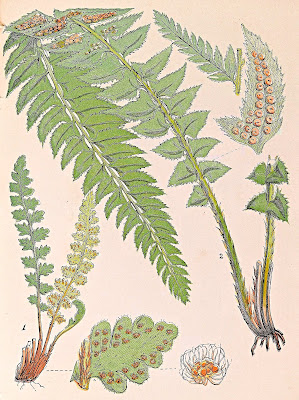
Fern Spores vs. Seeds
Spores and seeds can both help plants establish a new generation, but they are not equivalent structures. The most important difference is that a seed already contains an embryo, while a fern spore must first develop into the gametophyte stage.
| Feature | Fern spore | Seed |
|---|---|---|
| Basic structure | Usually a single reproductive cell enclosed by a spore wall | A multicellular structure containing a plant embryo |
| Contains an embryo? | No | Yes |
| Food supply | May contain limited reserves within the cell, but no substantial nutritive tissue comparable to that of a seed | Usually includes stored nutrients or nutritive tissue for the embryo |
| Protective covering | Spore wall | Seed coat |
| Produced in | Sporangia | Ovules of seed plants |
| First result of germination | A gametophyte, often called a prothallus in many ferns | A seedling, which is already a young sporophyte |
| Relationship to fertilization | The spore is produced before sperm and egg fuse; fertilization occurs later on or within the gametophyte | The seed develops after fertilization has produced an embryo |
Where Fern Spores Are Produced
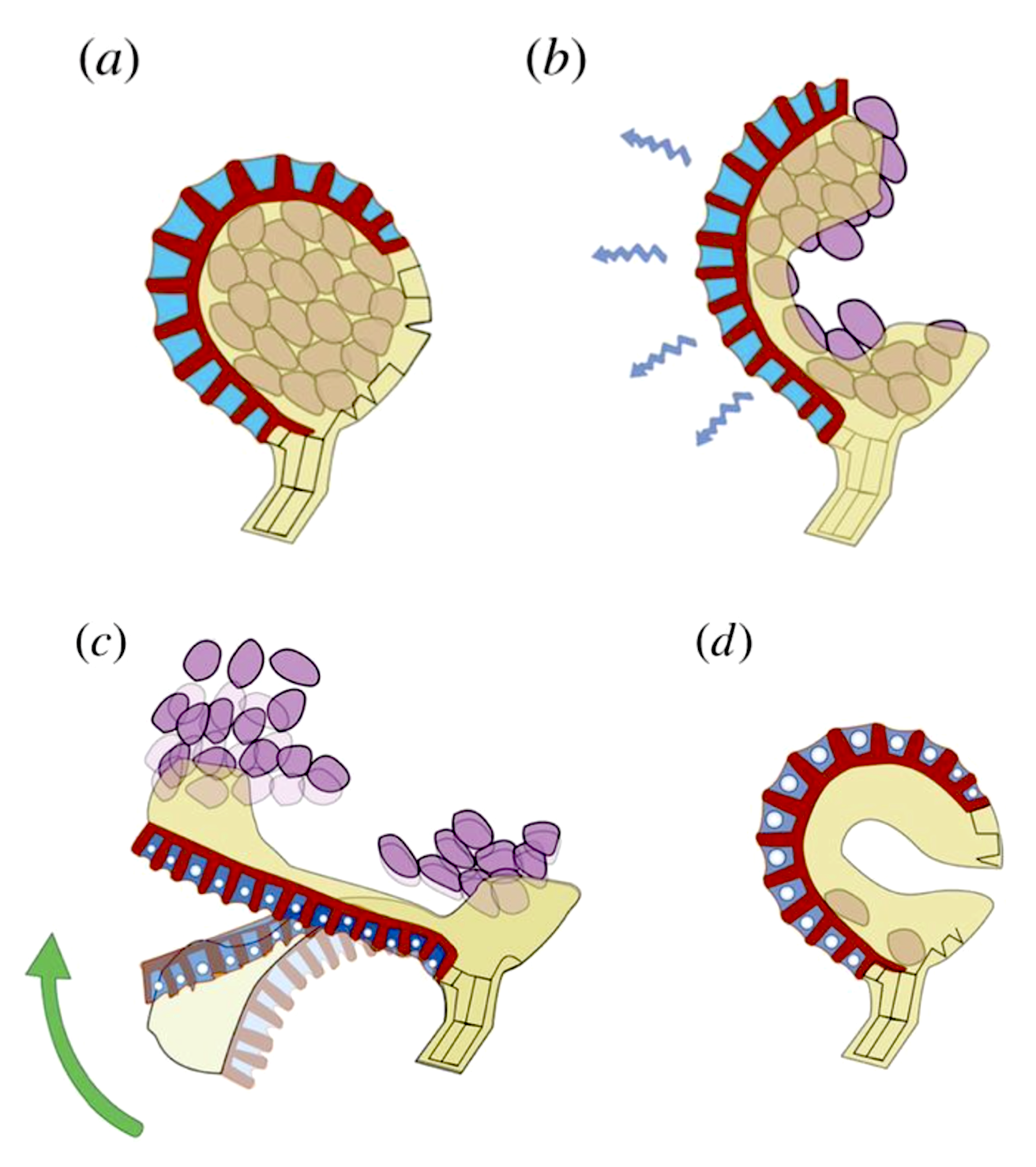
The large leafy fern that most people recognize is the sporophyte, meaning the spore-producing generation. On fertile portions of the sporophyte, spores develop inside microscopic structures called sporangia.
In many familiar ferns, numerous sporangia are grouped into visible clusters called sori. The singular form is sorus. Sori often appear as round dots, elongated lines or patches on the lower surface of a frond. Their color may change as the sporangia mature.
A spore is the reproductive cell. A sporangium is the structure in which spores are produced. A sorus is a cluster of sporangia. Therefore, the visible brown or orange spot on a frond is usually not one giant spore.
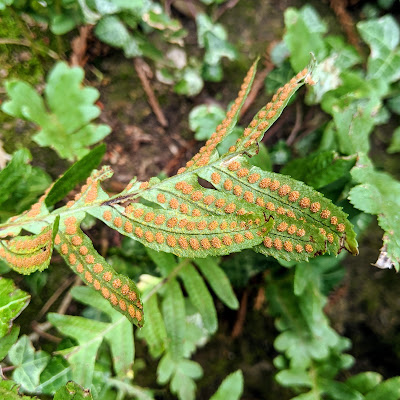
Not all ferns display sori in the same way
The familiar pattern of round sori on the underside of a frond is common, but it is not universal. Depending on the species, sporangia may be positioned along a frond margin, arranged in narrow lines, concentrated on specialized fertile fronds or enclosed in other reproductive structures.
Some sori are partly covered by a thin protective structure called an indusium. Other ferns have no true indusium. These differences in sorus position, shape and covering are useful features for fern identification.
The Fern Life Cycle in Simple Steps
Ferns alternate between two generations: a large spore-producing sporophyte and a much smaller gamete-producing gametophyte.
- The mature sporophyte forms sporangia.
Fertile parts of the leafy fern develop sporangia, which may be grouped together in sori.
- Cells inside the sporangia undergo meiosis.
This type of cell division produces spores with one set of chromosomes, beginning the gametophyte generation.
- Mature spores are released and dispersed.
Spores may be carried away by air, water or movement around the plant. Most do not land in a place suitable for further development.
- A suitable spore germinates.
Rather than becoming a leafy fern immediately, it develops into a gametophyte.
- The gametophyte produces gametes.
In the typical life cycle of many ferns, small structures produce sperm and eggs.
- Sperm reaches an egg when moisture is available.
Motile fern sperm require a thin film of water through which they can travel to the egg.
- Fertilization creates a new sporophyte.
The fertilized egg becomes a zygote, then an embryo and young sporophyte. It eventually develops into the recognizable leafy fern.
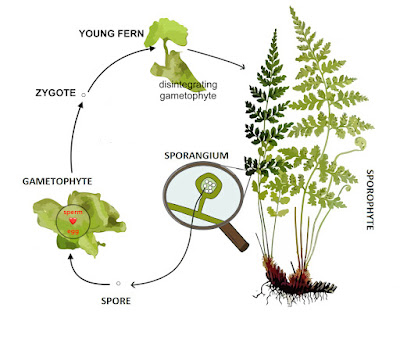
The Main Stages Explained
Sporophyte Stage
The sporophyte is the fern plant most people see: the form with roots, a stem or rhizome, and fronds. It has two sets of chromosomes and produces spores through meiosis. Once mature, fertile regions develop sporangia.
Spore Germination
A spore must reach a suitable microhabitat before it can germinate. Moisture, light, temperature, substrate and species biology can all affect whether development continues. The spore begins cell division and forms a young gametophyte rather than a fern seedling.
Gametophyte Stage
The gametophyte has one set of chromosomes and produces gametes. In many commonly illustrated ferns it is a thin, green, independently living structure often called a prothallus. Many are heart-shaped when mature, but that description should not be applied to all species.
Fertilization
The sperm-producing structures are called antheridia, while egg-containing structures are called archegonia. In plain language, these are microscopic reproductive organs on or within the gametophyte. When water is present, sperm can move toward an egg.
New Sporophyte
The fusion of sperm and egg forms a diploid zygote. The zygote develops into an embryo and then a young sporophyte. At first, the young fern is attached to and supported by the gametophyte. It later becomes an independent plant with its own roots and fronds.
A Complete Cycle Without Seeds
No seed appears at any point. The transition from sporophyte to gametophyte occurs through spores, and the return to the sporophyte generation follows fertilization.
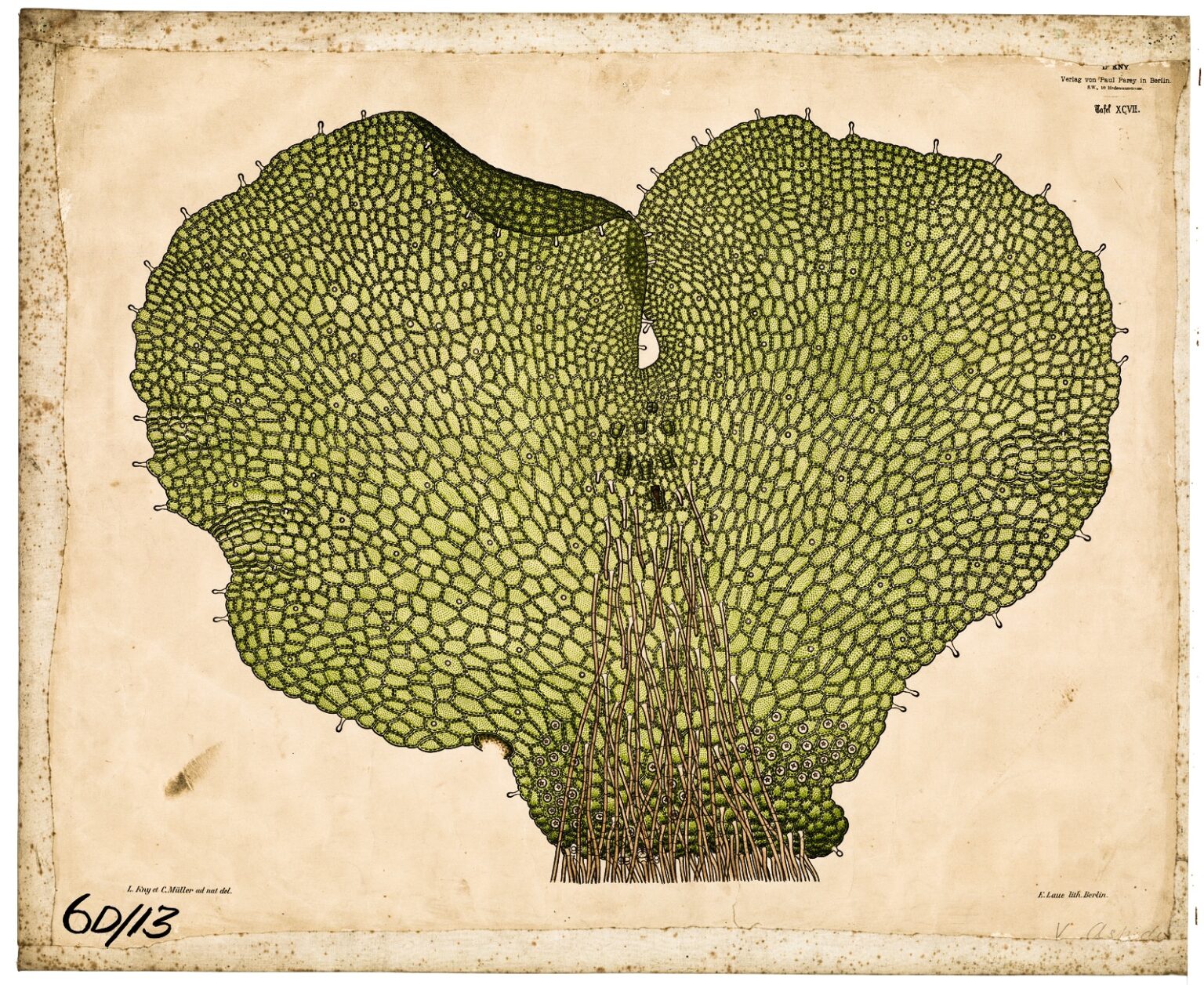
Why Water Matters in Fern Reproduction
Fern sperm are motile cells equipped with flagella. They cannot cross a dry surface to reach an egg. Successful fertilization therefore generally requires a thin, continuous film of water around the gametophyte.
Rain, dew, condensation or persistently damp substrate can provide this temporary pathway. The sperm travels through the film toward the archegonium, where an egg is retained. If fertilization succeeds, the new sporophyte begins developing there.
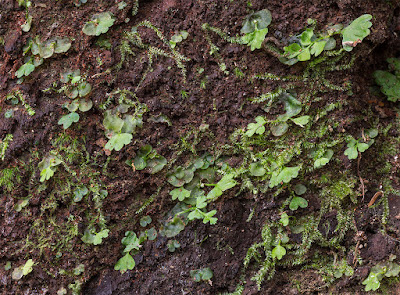
This does not mean every mature fern must grow in standing water. Some ferns live on rocks, trees or seasonally dry ground. Their gametophytes may occupy protected cracks, mossy surfaces or other humid microsites, and fertilization may occur during suitable wet periods.

Do Ferns Reproduce Asexually?
Yes. In addition to their spore-based sexual life cycle, many ferns can reproduce vegetatively. Vegetative reproduction produces a new plant from part of an existing sporophyte without fusion between sperm and egg.
The available method depends on the species and its growth structure. It is inaccurate to assume that every fern produces runners, bulbils or divisible crowns.
| Feature | Sexual reproduction | Vegetative reproduction |
|---|---|---|
| Main structures | Spores, gametophytes, sperm and eggs | Rhizomes, crowns, runners, stolons, bulbils or plantlets |
| Fertilization required? | Yes, in the typical sexual cycle | No |
| Genetic result | Can create new genetic combinations | Usually creates a clone of the parent sporophyte |
| Common examples | Spore germination followed by gametophyte fertilization | Rhizome division, rhizome fragmentation, rooting frond tips and detachable plantlets |
| Occurs in every fern? | The details vary greatly among fern lineages | No; the available structures are species-dependent |
Division and rhizome fragmentation
Many ferns grow from branching or creeping rhizomes. If a separated section contains a healthy growing point and enough roots to survive, it may develop as an independent plant. Gardeners commonly use this method for suitable clump-forming or rhizomatous species.
See the dedicated guide on how to divide ferns. Division is often coordinated with repotting, but the correct method depends on whether the plant has a divisible crown or rhizome.
Runners, stolons and spreading rhizomes
Some ferns send horizontal stems across or beneath the growing surface. New roots and shoots may develop along these structures, allowing the original plant to form a colony. These structures are not present in every fern sold as a houseplant.
Plantlets and bulbils
Certain species form small vegetative buds or young plants on their fronds. A plantlet may root while still attached, or it may detach and establish after reaching a suitable surface. “Walking ferns” can form a new plant where an extended frond tip touches the ground.
For an overview of the different practical methods, visit the fern propagation guide.
Can You Grow a Fern from a Cutting?
A detached fern frond usually does not behave like a conventional stem cutting from a flowering houseplant. A plain piece of leaf without a rhizome, growing point, naturally produced plantlet or other regenerative tissue will generally not grow into a complete new fern.
What gardeners sometimes call a “fern cutting” is more accurately one of the following:
- A rooted section of creeping rhizome
- A crown division containing roots and an active growing point
- A runner or stolon bearing a new plant
- A bulbil or plantlet naturally formed on a frond
- A rooting frond tip from a species adapted to reproduce that way
Check the identity and growth habit of the fern before removing material. A method that works for a walking fern, a hen-and-chicks fern or a fern with creeping rhizomes may fail completely on a species lacking those structures.
Want to raise ferns from spores?
This page explains the biology rather than repeating the full cultivation procedure. Spore propagation requires clean materials, controlled moisture and attention to the needs of the particular species.
Follow the separate step-by-step guide to growing ferns from spores for collection, sowing, contamination control and aftercare.
Common Misconceptions About Fern Reproduction
Frequently Asked Questions
Do any true ferns produce seeds?
No. True ferns reproduce through spores and do not form seeds. Plants with fern-like common names, such as asparagus fern, may be flowering seed plants rather than true ferns, so scientific identification matters.
Do ferns produce pollen?
No. Pollen is part of reproduction in seed plants. Ferns instead produce spores, followed by gametophytes that produce sperm and eggs.
Are sori fern eggs?
No. Sori are clusters of sporangia on the sporophyte. The eggs are produced later in archegonia associated with the gametophyte generation.
Are all brown spots under fern leaves sori?
No. Regularly arranged dots, lines or patches may be sori, especially on mature fertile fronds. Irregular damage, raised insects, sticky residue or spreading lesions may have another cause. Compare the pattern with reliable information for the particular species.
Do fern spores need water?
Appropriate moisture is usually important for spore germination and gametophyte development. More specifically, a film of water is required for motile sperm to reach an egg during the typical fertilization process.
Do ferns reproduce sexually or asexually?
They can do both. The spore–gametophyte–fertilization cycle is sexual reproduction. Rhizome division, runners, bulbils and plantlets are forms of vegetative or asexual reproduction.
Is a gametophyte a baby fern?
Not exactly. It is a separate generation of the fern life cycle, not merely a smaller version of the leafy sporophyte. It produces gametes and has a different structure and chromosome number.
Can one fern produce new ferns by itself?
A single sporophyte can produce many spores. Whether those spores complete sexual reproduction depends on germination, gametophyte development, sex expression, moisture and the biology of the species. A fern with suitable vegetative structures may also spread clonally without fertilization.
References
The explanations above describe the common fern life cycle while noting important variation among fern lineages and species.
- U.S. Forest Service. Fern Reproduction .
- University of California Botanical Garden at Berkeley. Fern Reproduction . Updated February 9, 2024.
- Royal Botanic Gardens, Kew. What Is a Seed? . Updated July 15, 2025.
- University of Georgia Cooperative Extension. Native Plants for Georgia, Part II: Ferns .
- Natural History Museum, London. Unfurl the Secrets of Ferns .
- University of Auckland. Fern Asexual Reproduction .
- Nagalingum, N. S., Schneider, H. and Pryer, K. M. Comparative Morphology of Reproductive Structures in Heterosporous Water Ferns . International Journal of Plant Sciences, 2006.
- Nitta, J. H. et al. Identifying Cryptic Fern Gametophytes Using DNA Barcoding . Applications in Plant Sciences, 2022.