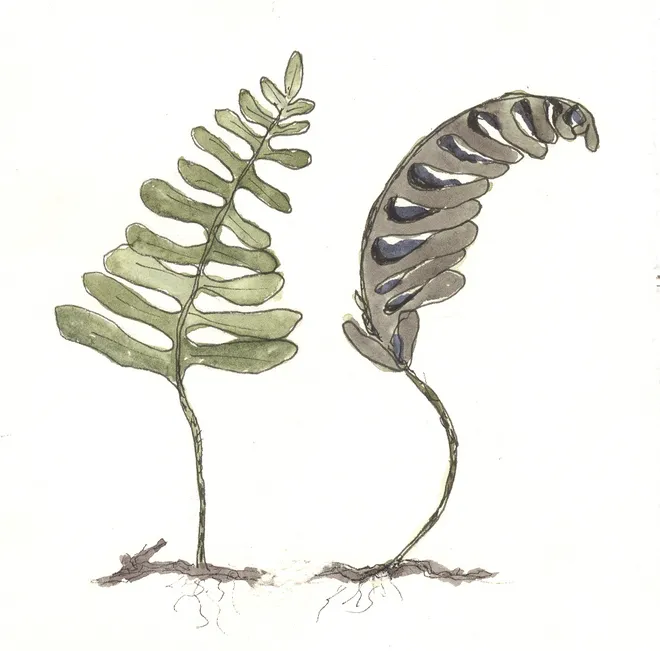
Cultivating Ferns from Spores at McAlpin Farm:It will come as no surprise to readers of this blog that I’ve developed a slight obsession with ferns of late, centred on both tracking down and identifying wild ones and growing them at home. Despite that, I hadn’t yet tackled the seemingly difficult process of growing ferns from spores. At least, not until this year.
One need not possess formal botanical training to achieve success in propagating ferns from spores. With a foundation of practical knowledge, it is entirely feasible to cultivate a diverse assemblage of ferns within the domestic setting. The process encompasses the harvesting or acquisition of spores, the preparation of an optimal growth substrate, and the vigilant management of pests, alongside the attentive care of maturing specimens.
Within the greenhouses of McAlpin Farm, ferns raised from spores flourish under carefully controlled conditions. The cultivation of these plants for our landscapes and gardens is an unhurried endeavor, commencing in autumn and, when successful, culminating in fully established specimens by July. Over successive winters, I have devoted considerable effort to refining this methodology.
1. I begin with repurposed take-out containers. While any comparable vessel may suffice, these are particularly advantageous due to their tightly fitting lids, which preserve humidity, and their transparent tops, which permit the ingress of light. Ours were sourced locally from Renys. Prior to use, all containers are meticulously cleaned and sterilized.
2. The growing medium consists of a finely textured, soilless mixture of peat and perlite, marketed by Lambert as a germination substrate and obtained through Griffins. This medium is sterilized in a microwave for three to five minutes. Once cooled, the containers are filled to approximately three-quarters of their capacity with the moistened mixture, which is then gently firmed.
3. The surface of the substrate is lightly re-moistened, after which the dust-like spores are evenly dispersed across it. These spores are procured from sources such as the American Fern Society, the Hardy Fern Foundation, and the North American Rock Garden Society; in some cases, they are collected from local fern populations. The containers are sealed and placed in a location receiving partial sunlight, maintained at an ambient temperature of approximately 70°F. The formation of condensation droplets on the interior of the lid is a favorable indicator, signifying the high humidity essential for successful spore germination.
4. After approximately three months, the spores develop into the initial juvenile stage of fern growth. At this juncture, they are ready for transplantation into cell flats.
5. Clumps of these young ferns are carefully transferred onto the surface of the same substrate mixture, maintaining the original planting depth established in the germination container.
6. The clusters are positioned centrally within each cell of the flat. Within a week of transplantation, they exhibit early signs of acclimation and growth.
7. The flats are then covered with a fitted plastic dome, such as those available from Johnny’s Seeds, and returned to a warm environment with filtered sunlight. Moisture levels are monitored daily, with misting applied as necessary, as desiccation at any stage can prove rapidly fatal.
8. By the third week following transplantation, the emergence of true fronds—such as those of the maidenhair fern—becomes evident. This represents just one among approximately thirty fern species under cultivation this year. Once the plants are thoroughly rooted within the cell flats, they are transferred to their final containers, where they will continue to mature before being introduced into the gardens and landscapes during the summer season.

Sources of Spores
Acquiring some spores to sow is the first order of business. There are two ways to obtain spores. You can join international fern societies with spore exchanges, such as the American Fern Society or the British Pteridological Society. There are also many excellent regional societies that offer spores. Members of these organizations are able to order spores for a very modest fee per packet. The listing of spores available can be quite extensive, so this is an excellent way to try new ferns or find very unusual and rare ones. Keep in mind, however, that the particular type of spore that you request may not be in the packet that arrives in the mail, even if the label says it is. These spore exchanges depend on donations from their members, and mistakes are made. Sometimes stray spores of other ferns get mixed in the packet due to poorly cleansed fronds or contamination during packaging. Always reserve a healthy bit of skepticism about any spore-grown fern until you have verified its identity by looking it up or asking an experienced grower about it. What’s more, spore-exchange packets may contain mostly sporangial debris mixed with hairs and scales from the frond, with very few spores. Sowing spores mixed with this much chaff generally leads to failure and frustration. On the other hand, when a fern is otherwise unobtainable, it may be worth risking failure on the off chance that a few spores will succeed.
If you already have a collection of ferns or have permission to gather fertile fronds from someone else’s collection or from the wild, then you don’t have to depend on spore exchanges. Gathering spores only requires patience, persistence and attention to detail. A 1OX hand lens is useful for beginner spore collectors because it enables you to determine whether the sori are immature, mature or past mature.
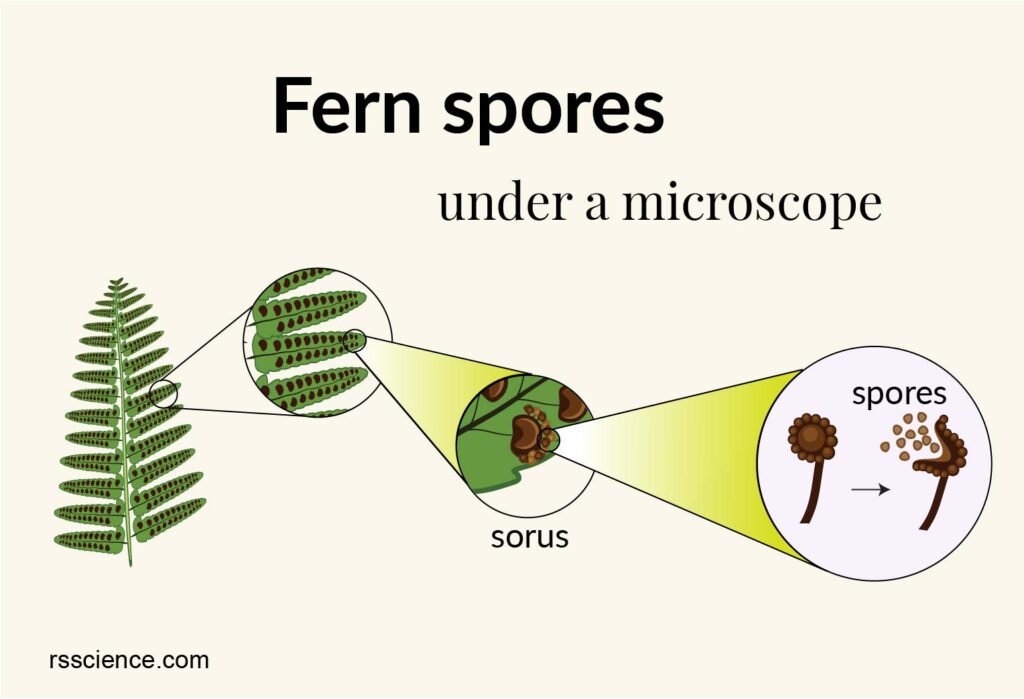
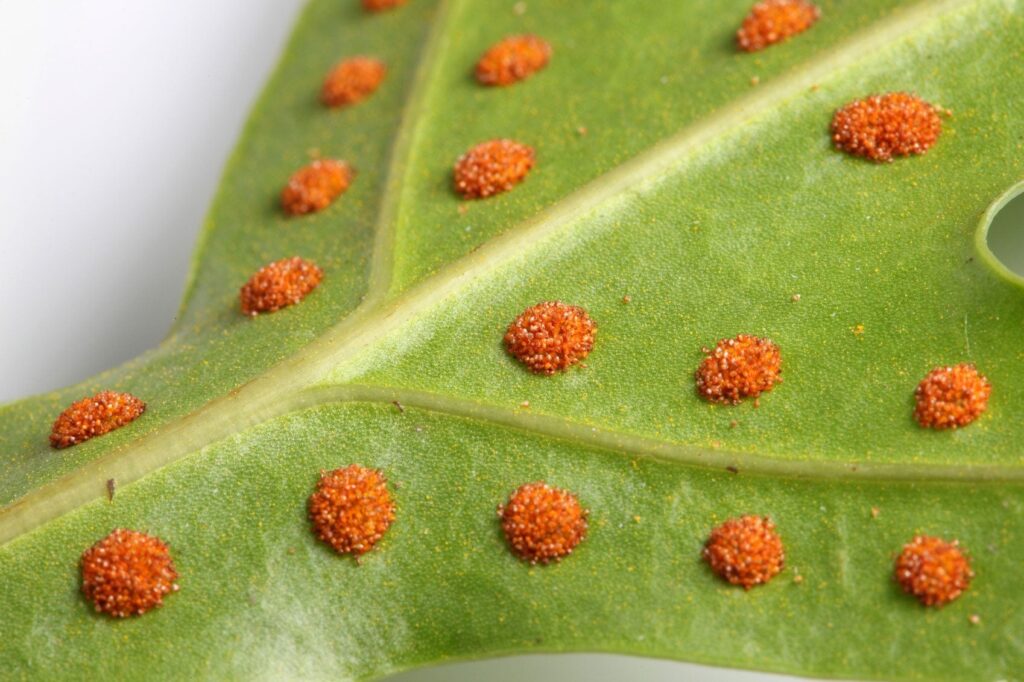
Remember that each fern genus has a distinctive soral pattern with or without distinctive indusia. For example, ferns in the genus Dryopteris have round sori protected by kidney-shaped indusia. For the most part immature sori are a pale whitish color, although there are exceptions, such as Dryopteris erythrosora, which goes through a brilliant pinkish-red to ruby-red stage before maturing. The indusium closely envelops the sporangia, leaving only a slight span between its lower edge and the surface of the pinna. As the spores inside each sporangium mature they get darker, until they are a deep brown or black. The edges of the indusium begin to lift, allowing the ripe spores to bulge out. Eventually the indusium shrivels up, and the exposed spores are ready to be catapulted into the air.
Not all spores mature to a deep brown or black, nor are all sporangia covered with an indusium. Polypodiums are ripe when they are buttercup yellow, osmundas when they are green, and both have probably been dispersed, or dehisced, when the soral remains are a deep, burnished old gold. Although the sporangia of both these genera are without indusia, they have a similar dispersal mechanism to those that do.
The Sporangia
The sporangium in most ferns is a thin-walled case, usually on a stalk, that has a ring of thick-walled cells known as the annulus, which aids in opening the sporangium when the spores are fully mature. This belt-like ring of cells encircling the sporangium resembles a medieval knight’s visor when viewed from the side. When the spores are ripe, the annulus breaks near the base of one side, tearing the sporangium apart, and arches backward. The annulus snaps forward abruptly, flinging the spores away from the frond. You can easily observe this phenomenon with a 2OX hand lens by placing a ripe pinna or frond under a bright light. The heat from the light will dry the sori and trigger the annuli into action. This is a thrilling sight but be forewarned that you’ll have thousands of spores all over yourself and the immediate vicinity!
Collecting Spores
This clever spore dispersal system works to your advantage as a spore collector. Fronds or pinnae with mature sporangia can be placed sporangia-side down on a sheet of clean paper onto which the spores will be released. If you have a large collection of different ferns growing together or your ferns grow among mosses you may want to first cleanse the fronds to cut down on foreign contaminants. Briefly soak or swish picked material in a 5 to 10 percent bleach solution, rinse with running water, shake and place the fronds, sporangia side down, on clean paper. Paper with a smooth finish is best for packaging spores. Because I harvest large quantities of spores from ferns of all sizes I use a large roll of white butcher paper from which I cut the sizes required. Each piece can be made into an origami-style envelope suitable for storing the spores until they are needed. Write the name of the fern, if known, date collected, where collected and any other information you’d like to remember.
Ripe Spores
How do you know when to pick fronds or pinnae to harvest spores? In addition to the color of ripe spores, there are other conspicuous features to look for. The most telling sign that the sporangia have dehisced are frayed, scruffy-looking sori. Whereas ripe sori are plump and firm with little brown, black, yellow or green spheres, spent sori are generally a dull cinnamon brown. If you still aren’t sure when to pick the fronds, do a little experimenting. The sporangia mature from the base to the apex of the blades, and not all blades mature at the same time. Remove the pinnae or pinnules from different sections of one or more blades. Place these in separate packets carefully labeled so you will know which fragment yielded the most spores. Don’t forget to closely observe each sample so that next time you’ll be able to recognize the ripe spores.
Cleaning Spores
Cleanliness is the key to successful propagation from spores. After you’ve cleansed the fertile frond in the 5 to 10 percent bleach solution, tap the frond to release spores still stuck to it and discard it. The spores will be mixed with sporangial debris and maybe even some scales and hairs from the frond. The debris is lighter in color or at least a slightly different color from the spores and weighs less. By carefully lifting the paper and gently tapping from underneath, you can coax this fluffy debris to slide off the paper and discard it. An even more thorough cleaning can be achieved by sifting the spores through tissue paper used for cleaning camera lenses. I use two pieces laid across one another with the grain facing in opposite directions. The spores, generally smaller and heavier than the unwanted debris, fall through, leaving the debris in the lens paper. You can also use a fine screen; however, thoroughly cleaning it between siftings is time-consuming.
Spores can be cleaned either well ahead of sowing or when you are ready to sow. I generally tap and remove fronds and do a preliminary “paper tap” cleaning before filing my spores away. I save the final operation of sifting through the lens-tissue for when I sow, as this tissue is a wonderful method for sprinkling spores evenly over the sterile medium.
Medium and Containers
There are no hard and fast rules about what kind of medium or container is best. Use what is available and works best for you. One thing is crucial, however: both the medium and the container must be as sterile as possible.
Possible containers range from disposable plastic cups to nursery flats. A tight-fitting cover is essential to maintain humidity and keep out air-borne contaminants such as the spores of other ferns, fungi and mosses. Grocery stores offer an array of containers with clear plastic lids. Plastic food wrap and rubber bands are an inexpensive way to cover almost any container. Some growers use vaseline to maintain a seal between the lid and the container. The container may or may not have drainage holes, depending on your set-up. Watering can be accomplished by misting from the top or by capillary action from the bottom. There are advantages and disadvantages to both. Every time you open the cover to mist, contaminants can enter. However, sometimes bottom watering must be supplemented with overhead misting to provide a film of water for fertilization.
A Soilless Medium for Growing Ferns from Spores
1 bale fine perlite
1/2 bale peat moss
2 cups 9 to 12 month, timed-release high-nitrogen fertilizer
1/4 cup micronutrients
Lightly moisten the mix while thoroughly combining the ingredients.
The various media used to raise ferns from spores include garden soil, well rotted and sifted compost, milled sphagnum moss, peat moss, vermiculite, perlite and assorted combinations of these. The Fern Growers Manual by Barbara Joe Hoshizaki (Knopf, 1979) thoroughly covers the various possible combinations. Soilless mixes are used by most commercial growers because they can be purchased premixed or mixed to meet specific requirements and are easily sterilized. The mix I prefer is two parts perlite to one part peat moss with micronutrients and timed release fertilizer added (see box, above).
The quickest way to sterilize the growing mix is in the microwave. Wet the medium to a sloppy mud-pie consistency in a plastic bag. (Grocery bags with handles are excellent.) Place the bag in a microwaveable dish tall enough to catch the excess water that comes out of the bag during the steaming process. (Be sure to tuck the opening of the bag down into the dish or water may come oozing out the microwave door!) You may need to experiment to find out how long to “cook” the mix as microwaves vary. I set my ten-level microwave on level 3 and cook for 50 to 60 minutes. You can also sterilize mixes in a regular oven, baking for two hours at 250 to 300° F. Two large metal mixing bowls make a nice steam chamber but any large pot with a tight-fitting lid will do. The mix should reach a temperature of 180° F for 30 minutes. Use a meat thermometer pushed in to the center of the mix to determine the total amount of time needed.
Next, pack the sterilized mix into the sterilized containers. Containers should be rinsed in a 10 percent bleach solution; rinsing is optional. Putting containers through a complete dishwashing cycle should also sterilize them sufficiently. I prefer to tamp down the mix in the containers when it is still quite warm, as the warm air that rises up through it helps prevent foreign air-borne spores from drifting down to the sterile surface. If the containers have drainage holes, you can also sprinkle the surface of the mix with very hot water before covering the containers to prevent contamination. Containers without drainage holes should be covered and sprayed with sterile water just before sowing the spores, but not too much.
Sowing Spores
Find a clean, draft-free place in which to sow your spores. I generally sow the most difficult or slowest-growing ferns first and the easiest or fastest-growing ferns last; this way, if there are any stray spores, the former will not be tainted by the latter. Sow the spores by lightly tapping them from the packet or off a flat sheet of paper, or by sifting them through lens tissue. Label the culture, making sure to note the name of the fern, date sown, source and any other information you want to remember. The label can be a piece of tape on the outside of the container or a plastic label stuck inside the container; I prefer the latter as the label can then move with the young ferns through the various transplantings.
Care of the Spore Culture
A controlled environment with even temperatures and controlled illumination will encourage faster development in many spore cultures. Place the containers under fluorescent lights (anywhere from 6 to 24 inches from the lights) or in indirect natural light. Some species require a period of darkness before being exposed to light. To be on the safe side, I usually let my cultures “rest” for a day in a dim area before transferring them to a lighted growth chamber. Most books recommend leaving artificial lights on 8 to 16 hours daily. I leave the lights on continually with no adverse effects on most of the plants that I grow.
The temperature of the growing area can range from about 55° to 75° F, but it should remain fairly stable, within five to six degrees. Some temperate species, especially some of the deciduous ones, seem to prefer the cooler end of this range.
Within four to fourteen days you should notice a translucent green film on the surface of the medium, a sign that germination has taken place. The newly emerging gametophytes, which have begun to grow from long, tongue-like threads into the heart-shaped prothalli, are too small to see without magnification. If just enough but not too many spores were sown, the culture will have a solid mat of prothalli in two to five months. In a culture that is too sparse, the growing medium is exposed to possible contamination and fertilization between prothalli is difficult. In a very crowded culture, the prothalli may not develop properly and may be more susceptible to fungal invasions.
Crowded cultures can be thinned. Remove the fingernail-sized clumps of prothalli with tweezers, forceps or your fingers. If you have lots of room you can transplant the clumps into a larger container or several small ones. Make a small indentation with a tool or your pinkie finger and gently press each clump into the medium. Sterilizing your tools, even your fingers, in a 5 to 10 percent bleach solution before and between transplantings of different ferns is highly recommended.
After transplanting, mist with distilled or cooled boiled water. The transplanted clumps will continue to grow and once again make a solid mat of prothalli. The length of time required for prothalli to produce sporophytes varies according to species and environmental conditions—it can be anywhere from six to twelve months. If sporophytes are not produced after a reasonable length of time, try flooding the entire culture with a thin film of sterile water for a few hours, then remove any excess not absorbed.
Once sporophytes begin to develop, you may have to thin again. Continue to keep the containers and the mix as sterile as possible because the growing mix will have had to be exposed during various procedures. As they develop more fronds you can gradually uncover the containers by propping open the lids to let in air. Commercial growers tend to transplant in clumps, even the larger ferns, as ferns seems to prefer the “buddy system.” Clumps of no more than two to three sporelings are most successful. Once ferns reach roughly 15 to 25 percent of their mature size they can safely be divided into single plants if you desire.
Diseases and Pests
Despite all precautions to keep the work area, tools and growing medium sterile, contaminants do sneak in. The close conditions under which spore cultures are kept favors the growth of molds and algae. Check regularly for signs of infection. Blue-green “algae” will turn the opaque prothalli a translucent sooty green that grows darker as the prothalli deteriorate. Furry, dingy white to ashen gray wisps on the prothalli or foliage are caused by gray mold. Cool moist conditions stimulate this mold and an increase in temperature, good air circulation and decrease in humidity will slow it down. As soon as you spot an infection, remove the infected area and at least 1/2 inch of plant tissue beyond that. Fungicides usually slow the progress of these infections but don’t cure them. They may also inhibit the growth of the prothalli of some ferns.
Algae, mosses and liverworts do not directly attack the prothalli or sporelings but can impede their development by crowding and shading them. Green ooze, grayish thatch or stringy green strands are probably algae. Remove the algal patches as thoroughly as possible to give the prothalli or sporelings a chance to develop without heavy competition. This procedure may have to be repeated before the sporophytes can hold their own. I have spent many hours pulling the stringy algae from cultures. Mosses and liverworts also should be removed as soon as you spot them. They favor bright light and, like algae, tend to be a problem in older cultures, particularly those with the slower-developing ferns.
Fungus gnats and shore flies are an absolute menace and can cause serious damage in a closed culture. The minute, white, worm-like larvae slither through the upper surface of the medium, destroying vital rhizoids. Adult fungus gnats have light-colored wings and adult shore flies have dark ones. It is important to distinguish between the two because fungus gnat larvae can be controlled by a biological larvicide but shore flies require a toxic treatment not recommended for use around the home. Aphids can be controlled with a mild solution of dishwashing detergent. To avoid damaging your cultures, leave the detergent solution on the fronds for about 30 to 60 minutes and then be sure to spray with sterile water to remove excess soap and aphid bodies.
Prevention is the best pest-management strategy. Use sterile containers, medium, and spores, and keep yourself and your work area free of contaminants. Wash your hands before and between handling cultures. Make sure your clothing is clean—and don’t bounce from outdoor gardening to working on your cultures because you’ll have all sorts of microscopic contaminants on your apparel. Consider chemical pesticides and fungicides only as a last resort. Your local cooperative extension agent is the best source of information on which ones to use.
True From Spores Or Not So True
Even if you’ve successfully run the course from spores to prothalli to mature sporophytes, you may have another obstacle to contend with—”rogue” spores that have produced plants that you did not intend to grow. As you become experienced you’ll be able to recognize these invaders and choose whether to keep them or discard them.
You may also be surprised to discover that some spores produce plants that do not absolutely resemble the parents. Fern species come “true” to their parentage allowing for the normal range of variation within an individual species. Some species reproduce as if they were all cut from the same cookie cutter. Others exhibit a tremendous ability to produce variations strikingly different from the parent. Some of these variations may come relatively true to type when grown from spores, but others, most notably Athyrium filix-femina, Asplenium scolopendrium and Polystichum setiferum, may produce some progeny that are not quite true to the original named variety. Even within these species there are exceptions, however. For more information on this intriguing subject, see The Cultivation and Propagation of British Ferns by James W. Dyce. Mr. Dyce has been my unflagging mentor for nearly two decades. I hope I have been able to instill in you a fraction of the passion for ferns that he has helped instill in me.
Three Easy Ways to Propagate Ferns
You don’t have to sow spores to increase your collection of ferns. Vegetative, or asexual, propagation is much simpler. It involves taking parts of a fern or young plants that have grown by a bud directly from the parent fern and planting them. The resulting new plants mature quickly. But there is one drawback to vegetative propagation—you’re limited to the plants in your own or a friend’s collection, whereas propagation by spores gives you access to a much wider array of ferns from across the country and around the world.
Creeping Rhizomes
The simplest way to propagate vegetatively is to divide branching rhizomes into separate plants. In ferns with creeping rhizomes, such as hay-scented fern (Dennstaedtia punctilobula), many divisions may be possible from a modest clump. You’re more likely to have success with a larger division, so make sure that each one has at least one or two growing tips. One notable exception to this rule is Himalayan or evergreen maidenhair fern (Adiantum venustum), which thrives when its rhizomes are ruthlessly reduced to mere fragments. Use a clean, sharp knife or pruners to cut divisions. You can also tease apart rhizomes that have become entwined, taking care to salvage as many roots as possible. I find that long creeping rhizomes do best when planted in a loose mix in a low, wide pot instead of a standard taller pot.
Proliferous Buds
In some species, buds that grow on the frond, rachis or even roots can be manipulated to produce new plants. For best success, in the case of proliferous, or bud-bearing, fronds keep these attached to the parent plant while anchoring them to the ground or a pot of soil. This ensures that the frond remains alive and healthy while the new plantlets are developing their own roots and fronds. If you remove the fronds from the parent, be sure to keep them in a humid environment, such as a covered flat or plastic container, while the plantlets develop or the fronds will dry out.
Stipe Propagation
Victorian growers were exceedingly creative and discovered some intriguing vegetative propagation techniques. Because some varieties did not produce spores or did not come “true” from spores and rhizome division yielded too limited a number of new plants, they tried potting up old stipe bases severed from the rhizome. There are some reports in the literature of the day that this technique worked with Dryopteris filix-mas and Dryopteris affinis selections, but I have not tried it. However, I have coaxed old stipe bases of Asplenium scolopendrium var. scolopendrium, the European hart’s-tongue fern, to produce plantlets. If you want to give this a try, cut the stipe bases about 1/4″ to 1/2″ in length and insert them upside down in a rooting mix. Little green pimples on the upper portion of the section above the soil will form, which will develop into plantlets. You can also lay the pieces on the soil surface, but do be sure to keep the severed stipes in a closed, humid environment. I have even seen plastic bags full of leafed-out stipe bases that never made it from the bag to the rooting container!
I like to think that this phenomenon was discovered when the stipes, lying about on a propagation tray after a prized “scolly” (the affectionate English nickname for hart’s-tongue fern) was potted or cleaned up, eventually grew into plants. Moral of the story: Sometimes dubious bits and pieces may have propagation potential and the experience gained from trial and error takes no more than a little patience and space.
Fern Biology
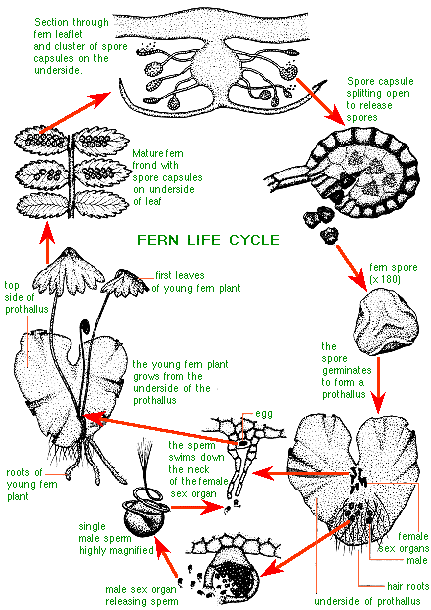
Ferns rank among the most ancient lineages of terrestrial plants, and their mode of reproduction—though intrinsically fascinating—remains comparatively unspecialised when set against that of flowering taxa. In essence, spores are produced upon the abaxial surface of the frond, borne within discrete structures known as sori (or a single sorus).
Ferns are particularly notable for their biphasic life cycle. The initial phase, the gametophyte or sexual generation, arises as spores germinate into a delicate, thalloid structure termed the prothallus. This minute, shield-shaped organism—resembling a verdant fish scale—bears a superficial likeness to bryophytes, yet is distinguished by microscopic chambers housing the gametes. Under suitably moist conditions, fertilisation ensues as motile sperm traverse films of water to reach the egg of a neighbouring prothallus. Only subsequent to this event does the familiar fern plant emerge, as the organism transitions into the sporophytic phase.
Motivated by both curiosity and a thorough engagement with a range of authoritative resources, I undertook this process myself over the summer. What follows is a progress account.
Gathering Spores
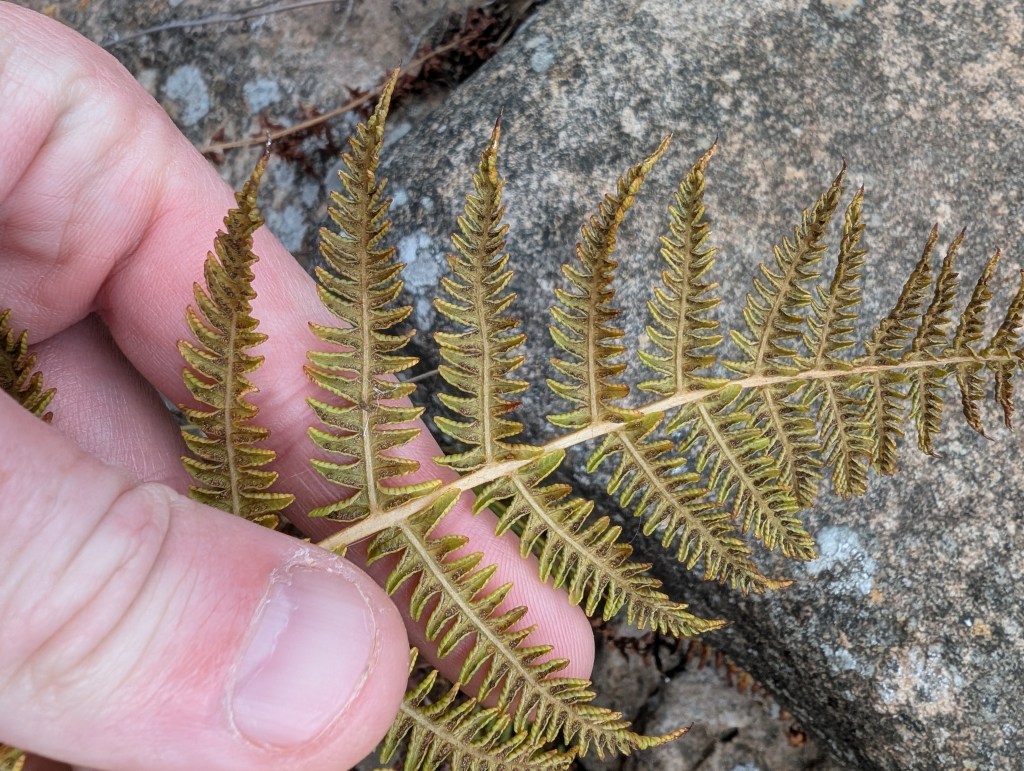
Ferns release spores at varying intervals throughout the year, though the majority reach maturity between June and September. Their readiness is readily discerned: in many species, the sporangia either reflex or abscise entirely, exposing a fine dusting of spores in hues ranging from ochre to deep umber or black. Collection is straightforward. One may gently tap a fertile frond over a paper envelope, or alternatively harvest a small segment of frond; in either case, only a modest quantity is required. If the latter method is employed, the material may be left to desiccate upon paper for several hours, after which the spores naturally dehisce and accumulate.
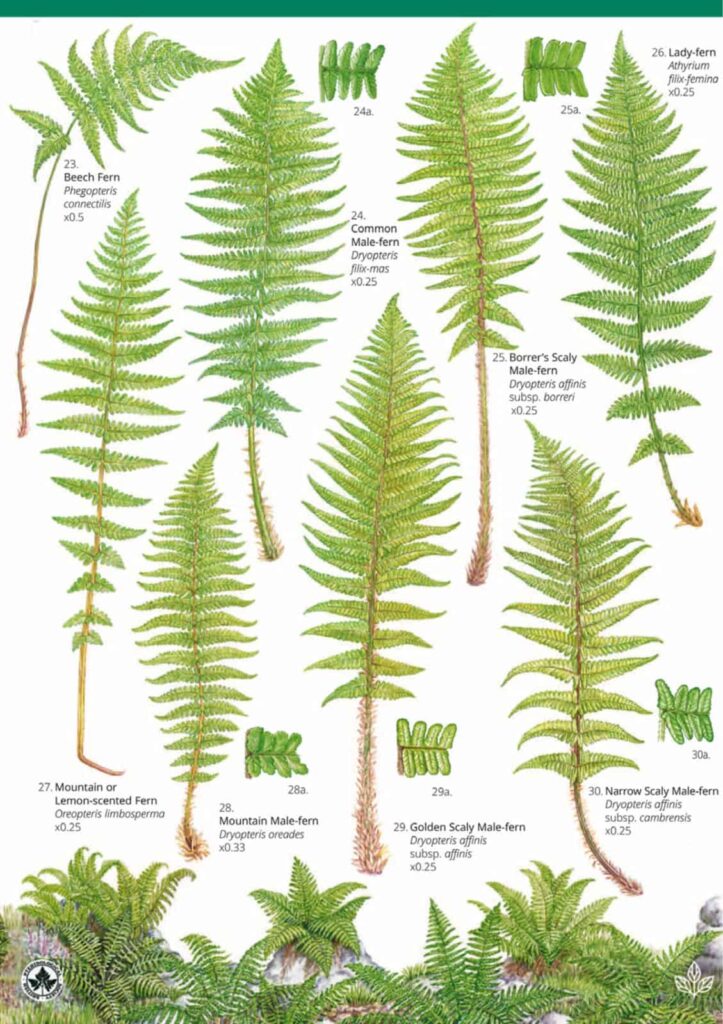
For this exploratory study, spores were gathered from a diverse assemblage of cultivated garden specimens, including Cystopteris fragilis, Asplenium ceterach, Polystichum setiferum, Dryopteris remota, and Phegopteris connectilis, alongside several ubiquitous wild species encountered in public spaces (it bears noting that permission is required before collecting any plant material from private land). Ultimately, this expanded the collection to include Dryopteris affinis subsp. affinis, Dryopteris borreri, and Asplenium trichomanes.
Sowing the Spores
With spores secured, the critical stage of sowing commenced. Success at this juncture depends upon careful control of environmental parameters. An airtight container is essential, serving to retain moisture and sustain the elevated humidity required for germination; inexpensive plastic containers proved entirely adequate. Equally important is the preparation of a fine, sterile substrate. A sieved seed compost, sterilised via microwave treatment for approximately three minutes to eliminate microbial contaminants, was employed. Alternative sterilisation methods—such as scalding with boiling water or thermal treatment in an oven—are reported to yield comparable results.
Once prepared, the spores are lightly dispersed across the substrate surface, misted to ensure adequate hydration, and the container sealed and labelled. It is then placed in a well-lit environment, allowing natural processes to proceed uninterrupted; in this instance, fluorescent grow lights provided consistent illumination.
Observation and Patience
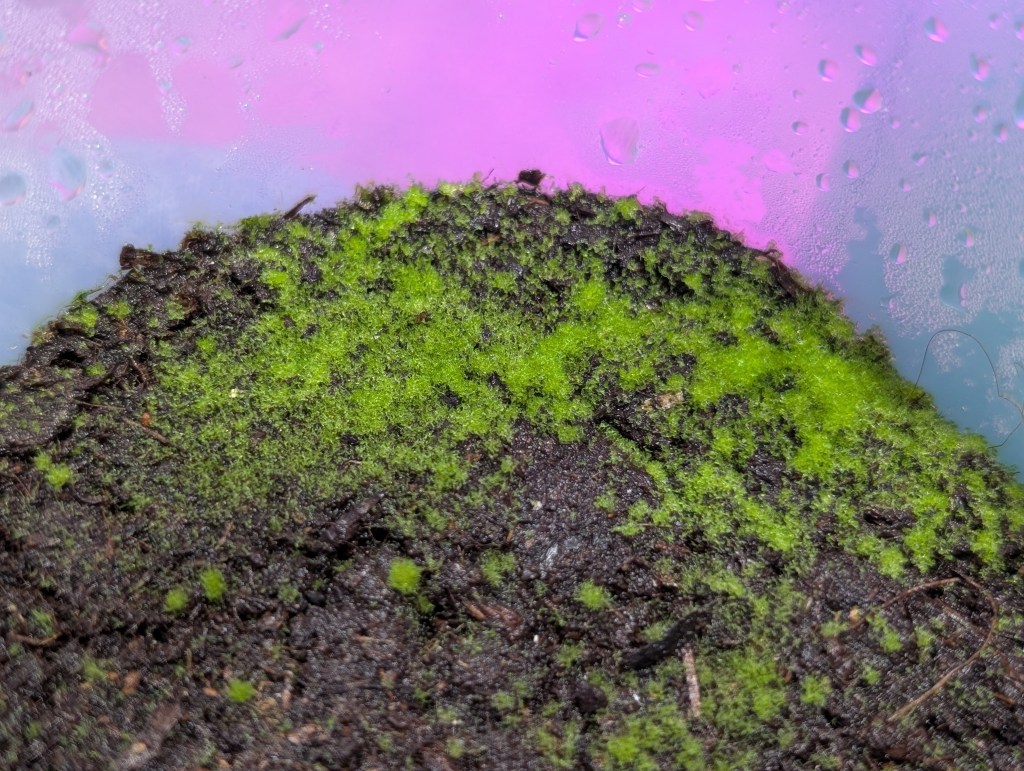
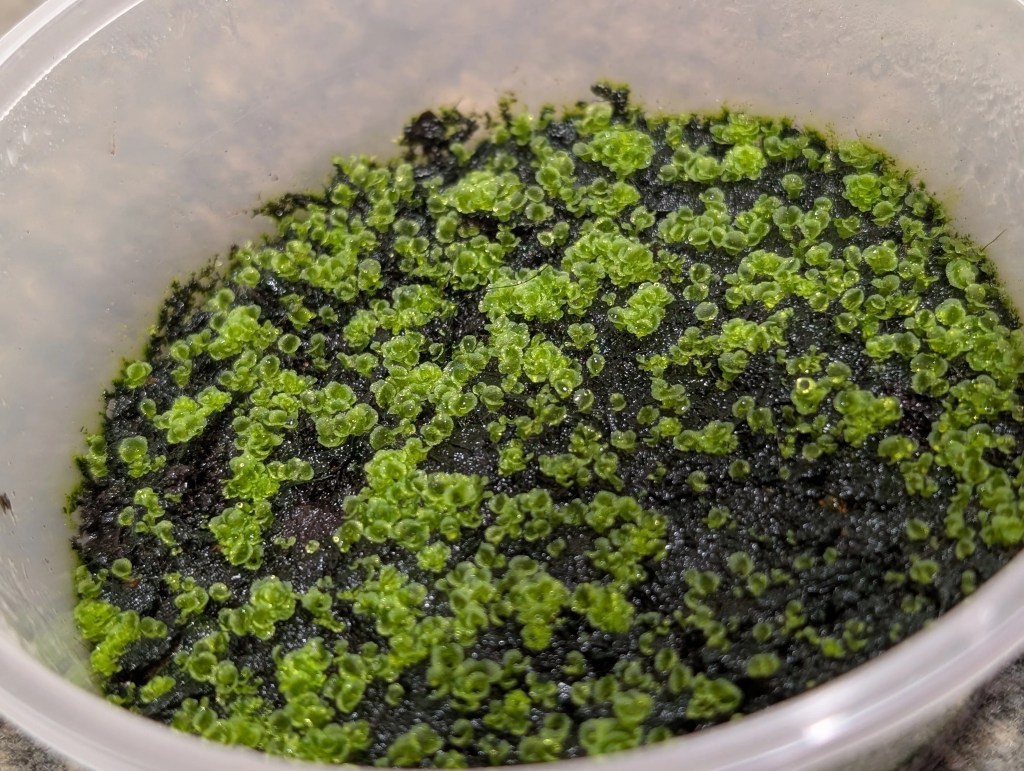
The subsequent phase demands restraint: the containers are best left undisturbed until visible signs of development emerge. My own vigilance was imperfect, a factor that likely contributed to complications described later. In general, germination timelines vary considerably among species. Encouragingly, within a month, each container exhibited a fine, green, filamentous film spreading across the substrate—an early indication of prothallial development.
Development of the Prothalli
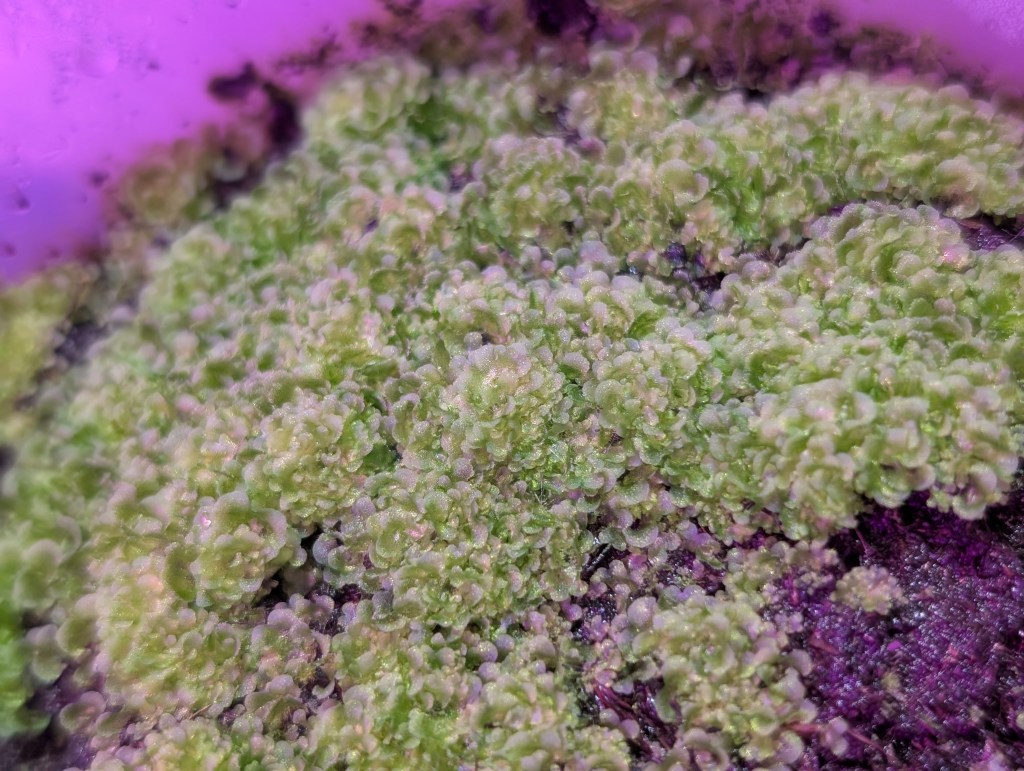
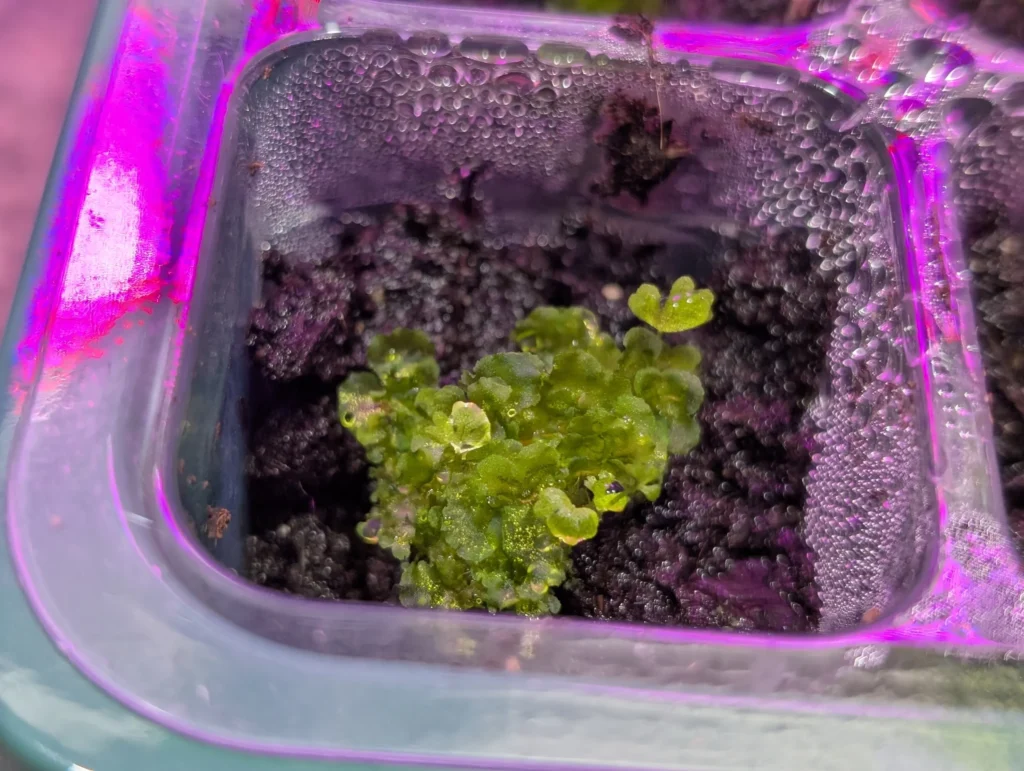
Over the ensuing months—typically three to four in this study—the initial algal-like growth differentiated into the characteristic, cordate structures of the prothalli. At this stage, the organism establishes its first rhizoids and becomes photosynthetically active. Crucially, this is also the phase during which fertilisation occurs. To facilitate this process, periodic misting is recommended, simulating the role of rainfall in enabling gamete mobility. The images below illustrate a range of more advanced prothallial forms.
In due course, these structures give rise to the sporophyte generation—the familiar fern morphology.
Signs of Emergence
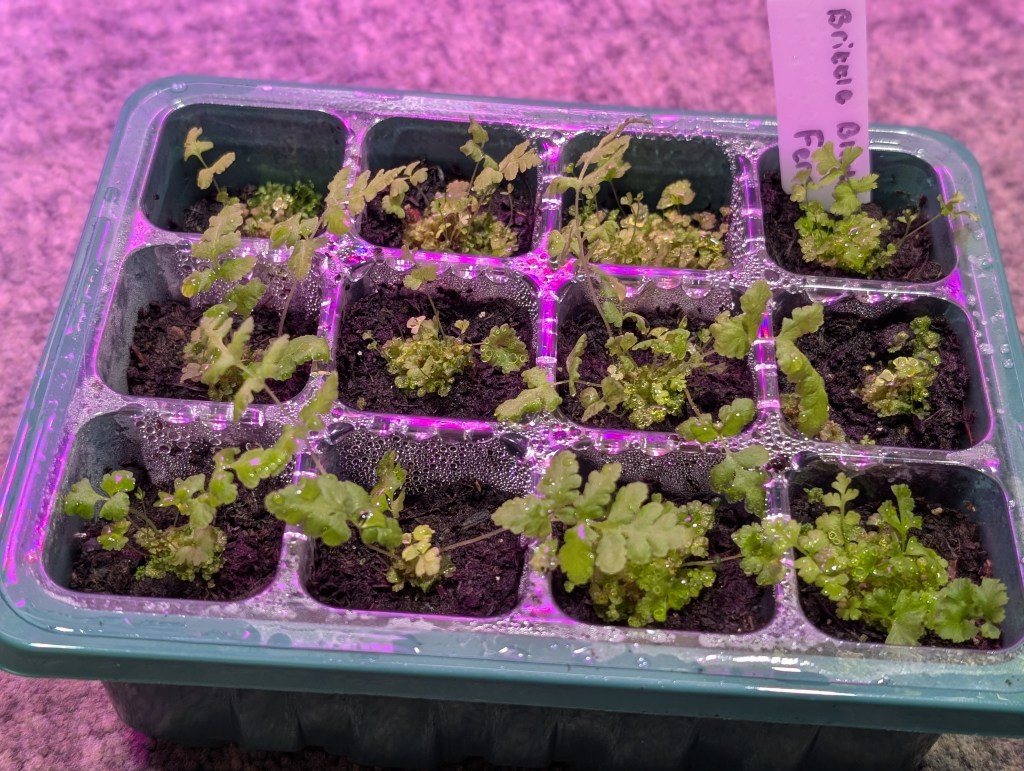
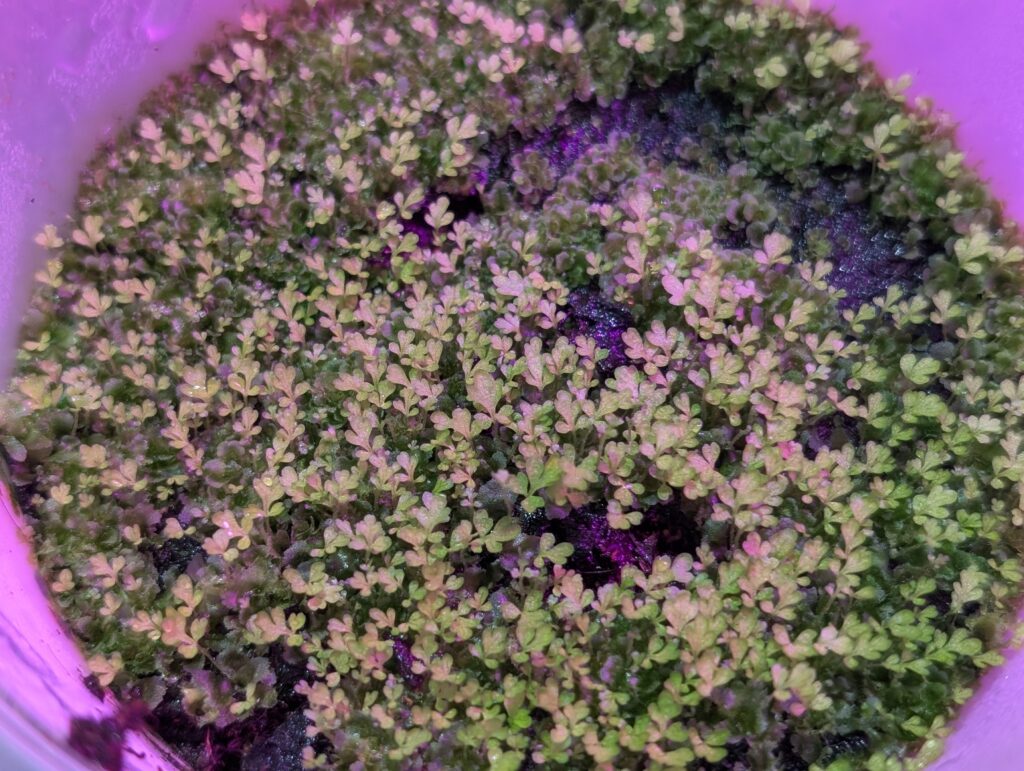
By early winter, the majority of specimens had initiated their transition into the sporophytic phase. Certain taxa, including Phegopteris connectilis and the more robust Dryopteris species, progressed more slowly, with only the faintest emergence of juvenile fronds. Others exhibited markedly vigorous growth, most notably Cystopteris fragilis, which had already necessitated transplantation into individual containers—again maintained under sealed conditions—for overwintering. Polystichum setiferum likewise demonstrated commendable development.
Given the proliferation of young plants, conventional guidance—advocating minimal disturbance until sporlings reach a manageable size—was partially set aside. Instead, batches were subdivided, with some retained in situ and others carefully transferred as small clumps of prothalli into separate containers, in an effort to evaluate whether reduced competition might yield more robust growth. All specimens were maintained under plastic to preserve humidity, though larger individuals have gradually been acclimated through intermittent lid removal, with the intention of eventual outdoor establishment in spring.
The accompanying images depict various species as of 20 November 2026—an encouraging outcome for spores sown in early summer.
Challenges Encountered
While many specimens thrived, others failed entirely, largely owing to procedural shortcomings. Foremost among these was excessive interference; repeated opening of containers introduced contaminants, fostering fungal growth that rapidly overwhelmed delicate prothalli. This proved particularly detrimental to Asplenium ceterach, though some material was salvaged through careful transfer to sterile conditions.
Insufficient sterilisation of the substrate may also have contributed to the proliferation of competing algae and bryophytes in several containers. However, the most significant impediment was overcrowding. It is deceptively easy to oversow spores, and excessive density can inhibit proper development through intensified competition. This issue is currently evident in the Dryopteris affinis cultures, though it may yet be mitigated through selective thinning, analogous to standard horticultural practice.
Conclusion and Prospects
With this, the initial phase of the experiment draws to a close. Further updates will follow as the plants are progressively potted on and, ultimately, established outdoors. The results thus far have exceeded expectations: the process has proven not only accessible but, arguably, more expeditious than anticipated. For those inclined toward botanical experimentation, the cultivation of ferns from spores is both rewarding and quietly compelling—though it may well lead to an abundance of plants beyond immediate capacity.
As a brief addendum, subsequent sowings have been undertaken using spores from additional cultivated species, including Gymnocarpium dryopteris and Gymnocarpium robertianum, as well as Dryopteris cambrensis collected from an unassuming roadside habitat. Extending the scope further, an experimental hybridisation between Dryopteris filix-mas and Dryopteris borreri has been initiated, with the aim of producing Dryopteris × critica—an outcome that remains, for now, an open question.