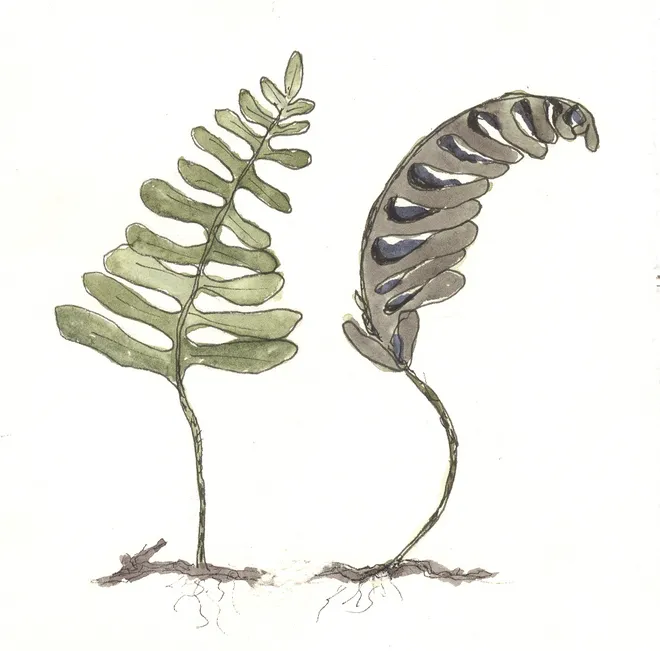
Pteridomania (Fern Fever) seems to have returned with the recent boom in indoor plant popularity. Ferns can be seen on every corner, but somehow they still carry the reputation of being hard to keep alive. Ferns are definitely not invincible but sticking to the following few guidelines can make sure your ferns thrive for many years.
Ancient history
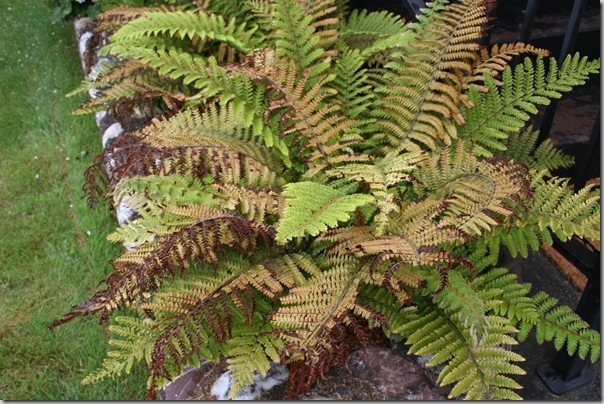
Ferns accompany mosses on the short list of ancient plants called Pteridophyta, going back millions of years (over 350 million) and even predating the dinosaurs. Their abundance made them central to the diet of many herbivores, and it turns out you can eat them too. Considered a gourmet delicacy in some parts of the world, ‘fern fiddleheads’ are the edible parts of some species of ferns harvested when they are shoots, with curled tips that look just like the top of a fiddle. Not all ferns are edible though, and some can be quite toxic, so don’t go foraging in your garden for just any frond. Some say fiddleheads taste like a mix between asparagus and spinach but have their own distinct flavour profile you just have to try for yourself.
Placement
Since ferns are typically known to come from dark jungle floors, it would follow that your indoor fern would thrive in the darkest corner of the room. This is not the case. In the wild, ferns get dappled light, so will struggle without a good amount of light in your home. Avoid direct sunlight to prevent burnt leaves. Avoid placing near drafts or aircon as that tends to dry them out quickly and prevent the humid environment that ferns desperately need. .
Humidity
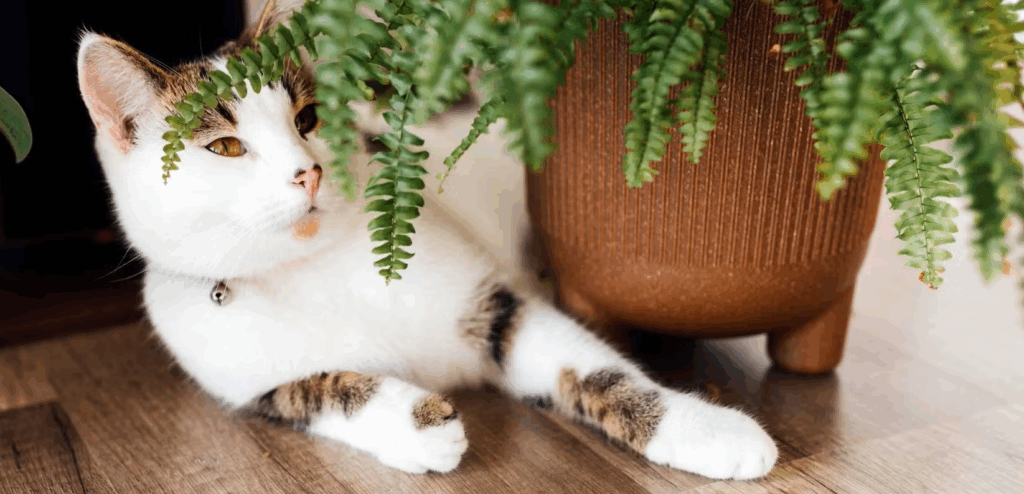
Ferns love moisture and need a humid environment to thrive. Bathrooms and kitchens are therefore perfect, but there are a few ways to increase the humidity yourself. Instead of investing in a humidifier (unless you already own one), place your fern on a tray filled with pebbles and fill with water to create a humid environment around the plant. Make sure the water does not touch the bottom of the pot, as ferns do not like sitting in water. Alternatively, place your fern in a spot you pass often and leave a decorative misting bottle nearby to quickly spray once every day or two.
Watering
Ferns need to be watered often as they like moisture, but be sure not to overwater or leave the pot sitting in water or the roots will rot. In summer, water thoroughly every 3 – 5 days and every 7 – 10 days in winter. To avoid forgetting to water your ferns, place them near a sink and quickly run the pot under some water after washing the dishes or brushing your teeth. When using a watering can, make sure to get through the bushy leaves to the soil to soak it.
Fern Care
Feed your ferns liquid fertiliser every two weeks by adding fertiliser to your watering can according to package instructions, and watering normally.
Dust off the leaves often by running them under the shower or wiping them down to keep them clean and clear the soil of any debris or dead leaves.
Regularly remove any dead leaves to promote new growth, and if the fern is really struggling, cut back all the leaves to the same height to keep the new growth uniform.
Indoor Ferns
Join in the Fern Fever this year by collecting a few, mastering fern care, and perhaps attempting to grow a few of your own. Look out for these ferns at your local garden centre:
Asparagus plumosa (asparagus fern)
Asplenium nidus (bird’s nest fern)
Adiantum (maindenhair fern)
Pteris cretica (ribbon fern)
Pteris straminea
Davalia fejeensis (rabbit’s foot fern)
Did you know?
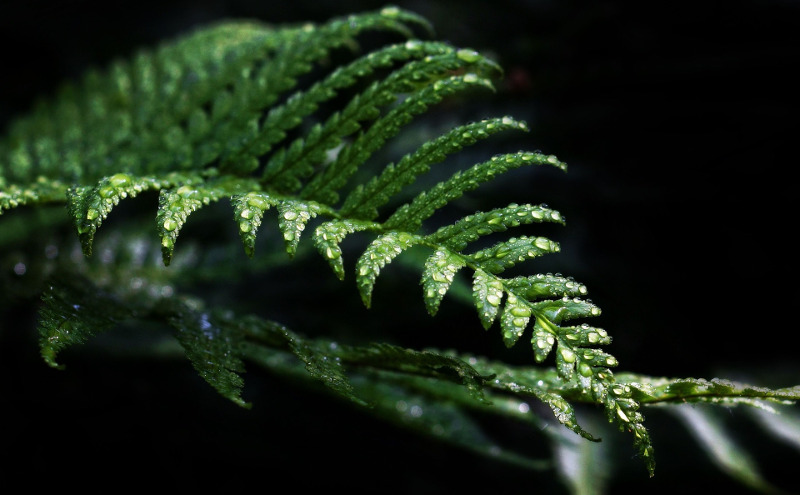
Before microscopes, the reproductive cycle of the fern was a mystery because it produced no flowers. It was only once ferns were closely studied under microscopes that the tiny spores were discovered. Each spore is a single-cell organism, and each fern has millions of spores that have to go through a few other life-cycle stages before forming leaves and becoming true ferns.
Your Guide to Caring for Indoor Ferns
Ferns: Easy elegance for plant lovers.
Ferns are not really difficult to grow in the modern home, but they will not tolerate neglect. The soil must never be allowed to dry out, and the surrounding air needs to be kept moist. Few ferns can tolerate hot dry air, so air humidity has to be artificially increased.
There is a bewildering choice of varieties. Nearly two thousand are suitable to growing indoors, but comparatively few are available commercially. There is also a wide choice of ways to display your collection. Many of them are ideal for a hanging basket and some, such as Boston fern and Bird’s Nest Fern, are large enough and bold enough to be displayed as specimen plants on their own. Delicate ferns, such as Delta Maidenhair, are best planted in a terrarium. When grouping ferns with other plants make sure that they are not crushed – the fronds are fragile and need room to develop. In addition ensure that all dead and damaged fronds are removed so that new ones can grow.
Indoor Ferns like a comfortable temperature, moist soil, and a decent amount of light.
Ferns require average warmth – cool but not cold nights are desirable. The best temperature range is 60°-70°F – the minimum for most types is about 50°F and ferns may suffer at more than 75°F.
Despite popular opinion, ferns are not shade lovers indoors as most varieties originated in the dappled brightness of tropical woodland. Good indirect light is the proper location – an east- or north-facing windowsill is ideal.
Compost must be kept moist at all times and never allowed to dry out for an extended period of time. This does not mean constantly soggy compost – waterlogging will lead to rotting. Reduce watering in winter. Moist air is necessary for nearly all ferns. Mist fronds regularly.
Repotting & Propagating.
Repot in spring when the roots fill the pot – most specimens will probably require annual repotting. Do not bury the crown of the plant.
The simplest way to propagate ferns is to divide the plant into 2 or 3 pieces in early spring if it produces rhizomes. Some ferns produce young plants at the ends of runners or on fronds. It is possible, but not always easy, to raise plants from spores obtained from the underside of mature fronds.
Special problems to look out for:
- Brown dots or lines regularly arranged on underside of fronds are spore cases, an indication that the frond is mature and healthy. The spores produced inside these spore cases can be used for propagation.
- Brown shells irregularly scattered on fronds is caused by scale, the Bird’s Nest Fern is particularly susceptible to this pest.
- Yellowing fronds, beginning at the base of plant or mature fronds develop brown spots and fall is due to the air being too warm-a common complaint when ferns are stood too close to radiators. Few ferns can tolerate very high temperatures. If the plant is also limp and wilting, then the cause is incorrect watering.
- Yellowing fronds, brown tips or no new growth is caused by the air being too dry.
- Pale fronds or scorch marks on surface is caused by too much sunlight. Ferns must be protected from midday sunshine in the summer.
- Pale fronds, weak growth is due to not enough fertilizer. Ferns need feeding, little and often, during the growing season.
- Fronds dying back either old age or the two most likely culprits are dry air and dry compost.
There’s something quite magical about the calming effect ferns have when we enter a room. Foliage plants soften and compliment any room decor and invite us to remember the natural world and pause for a moment. Whether you incorporate ferns in a greenery type environment or add them to a terrarium display, there is a fern for every purpose.
Selecting Indoor Ferns
When selecting ferns, consider not only their aesthetic appeal but what you want to use them for and where you are going to put them. Hanging baskets demand soft, floppy foliage that will cascade out over the sides and maidenhair ferns (Adiantum spp.) are ideal for this. If you are creating a terrarium, use smaller compact varieties to fit your display. A pteris fern in a beautiful ceramic pot will grace any indoor living area, from a formal office to a cosy sunroom. Elkhorns and staghorns make a stunning display mounted on verandah and patio walls. Birds nest fern, Blechnum Silver Fern and Asplenium are bigger ferns and suit more open spaces like lounge and entertaining rooms.
Indoor plants to create an indoor garden sanctuary
Light requirements
When choosing your fern, it is important to position the plants in the right lighting conditions. Check the label when buying your fern for the amount of light required. If your plant doesn’t respond well to its new spot in the house, consider changing light conditions for a few weeks and observe. Ferns vary in lighting, humidity and frequency of watering, so check the label to see if it is the right fit. Keep ferns away from heaters and air-conditioners that will dry the air.
Potting Indoor Ferns
Ferns prefer a slightly acid potting mix with pH ranging from 5.5 to 6.0. The mix must be able to hold moisture and so it is essential to use one which contains a large percentage of peat moss. Searles Terrarium & Fern Mix is ideal to foster the lush healthy growth and prevent dryout of the soil. When potting up ferns, bear in mind that they prefer to have their roots crowded into a pot rather than being planted into a larger container where the rootball must expand. Pack the mix firmly around the roots to provide the plant with a strong anchor and to reduce water evaporation.
Repotting every two to three years ensures the mix is kept fresh and provides the opportunity to remove dead roots and fronds.
Watering
Ferns insist on being kept moist at all times but their type, position and container size determines, to a large extent, how often they will need to be watered.
Plants growing in hanging baskets have more air circulating round them than indoor plants do, and will need more frequent watering. If in doubt, feel the mix and if the surface is moist to the touch, don’t water as too much moisture is almost as harmful to ferns as too little. Never let a potted fern sit in a saucer of water and make sure the pot has adequate drainage to prevent the mix becoming waterlogged. Ferns flourish in a humid environment and regular misting with a fine hand-held puffer, especially if the plants are growing indoors, will help keep the foliage green and lush.
Fertilising Indoor Ferns
Ferns can be fertilised with either a liquid, such as Searles Flourish, or a slow release fertiliser. If using the former remember that they prefer being given small amounts of fertiliser regularly rather than concentrated doses occasionally.