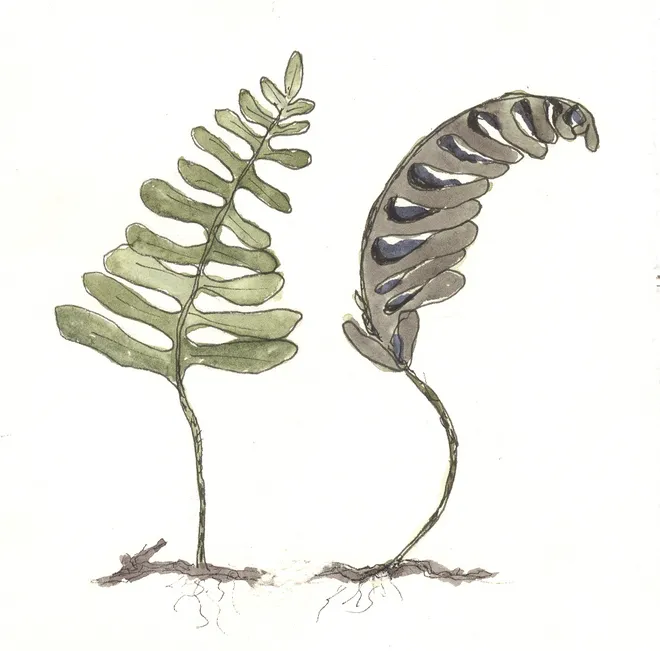
Like a yogic gesture rendered in exquisite slow motion, the Boston fern’s frond unfurls into a graceful green plume, imparting a quiet, restorative elegance to the interior landscape.
Renowned for its resilience and ease of cultivation, the Boston fern serves equally well as a solitary statement specimen or as a harmonious counterpart within mixed plantings. Nephrolepis exaltata is distinguished by its long, arching fronds, composed of symmetrically arranged leaflets that are broader at the base and taper delicately toward the apex. Their finely serrated margins lend a subtle intricacy, while the vivid, luminous green hue enhances the plant’s luxuriant visual appeal.
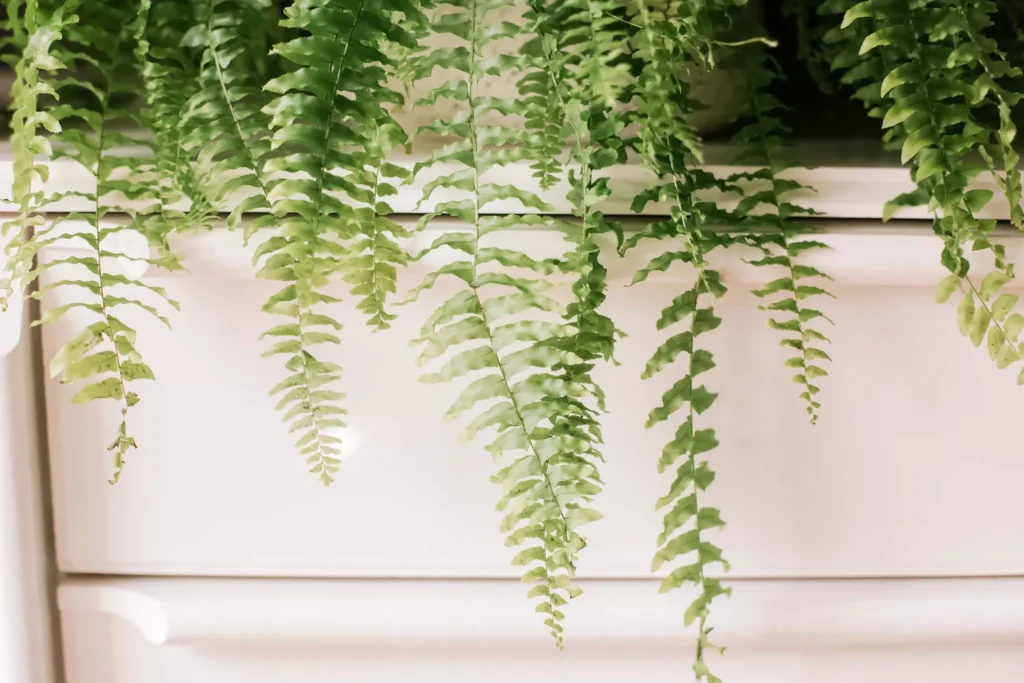
This fern propagates gradually via subterranean runners, or stolons, allowing it to colonize and soften surrounding spaces with time. Its upright, arching habit introduces both texture and chromatic richness to any setting. It is equally suited to mixed borders or expansive mass plantings, where its verdant presence can be fully appreciated. In containers, Boston ferns function as exceptional fillers, and they are particularly striking when displayed in hanging baskets. Suspended along a sheltered porch, they evoke a timeless, classical charm, while in mixed arrangements they contribute a lush, refreshing vitality.
Colours and Shapes
The Boston fern—formally known as Nephrolepis—is a dense, exuberant plant characterized by its plume-like fronds, which may emerge singly or in profusion. These fronds extend with a certain tenacity in all directions, necessitating ample სივრც to achieve their full architectural expression. The emergence of new shoots and aerial roots imparts a distinctly untamed, almost primordial aesthetic reminiscent of tropical understories. When properly maintained, this fern can thrive for many years, offering not only enduring beauty but also functional benefit: it possesses notable air-purifying qualities that contribute to a healthier indoor environment. Its affinity for humidity makes it particularly well-suited to bathrooms, where it can even tolerate the occasional placement beneath a gentle shower.
Symbolism
The Boston fern is traditionally associated with sincerity, and, according to enduring folklore, its presence is said to herald the proximity of fairies.
Origin
The Boston fern belongs to a venerable lineage of foliage plants whose evolutionary history extends back to the Devonian period, approximately 400–350 million years ago. The genus comprises 44 species, predominantly distributed across the (sub)tropical regions of Southeast Asia and South America. The name Nephrolepis is derived from the Greek nephros (“kidney”) and lepis (“scale”), alluding to the kidney-shaped protective coverings of the spores located on the undersides of the fronds.
How to Grow and Care for Boston Fern
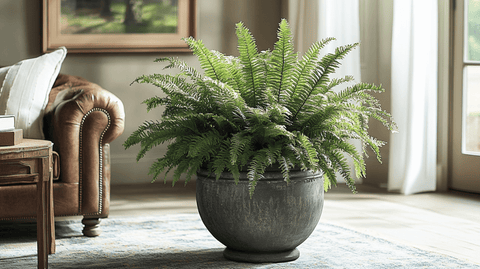
The Boston fern (Nephrolepis exaltata), often referred to as the sword fern, is a tropical perennial esteemed for its luxuriant, arching fronds and notably undemanding disposition. A longstanding classic among North American houseplants, it flourishes in low-light environments, contributes to ambient humidity, and is reputed to enhance indoor air quality.
In outdoor settings, Boston ferns attain optimal growth in warm, humid climates under conditions of partial shade, rendering them particularly well-suited to regions such as Southern California and Florida. Their blue-green fronds, composed of delicate, finely divided leaflets, may extend up to four feet in length—initially emerging in an upright posture before gradually assuming a graceful, pendulous arc with maturity.
Common Names
Boston fern, sword fern, ladder fern, boss fern
Botanical Name
Nephrolepis exaltata
Family
Lomariopsidaceae
Plant Type
Herbaceous perennial
Mature Size
2–3 ft. in height and spread
Sun Exposure
Partial
Soil Type
Moist, well-drained
Soil pH
Acidic
Hardiness Zones
9–11 (USDA)
Native Range
Central America, North America, South America, Africa, Pacific Islands
Boston Fern Care
The principal cultural requirements for Nephrolepis exaltata are as follows:
- The species exhibits a marked preference for warm, humid conditions; periodic misting is recommended to elevate ambient moisture levels.
- Position the plant in bright, filtered light.
- Utilize a loamy substrate with excellent drainage capacity.
- Maintain consistent soil moisture, preventing desiccation, and apply fertilizer regularly during the active growing season.
- Incorporate approximately one inch of compost and mulch annually to sustain soil fertility.
Light
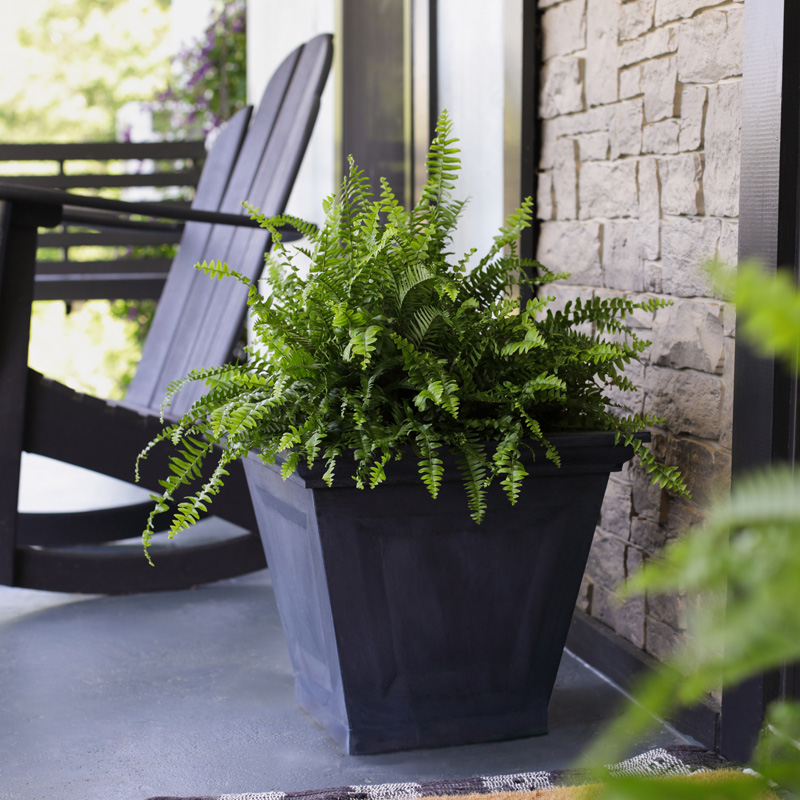
Boston fern performs best under conditions of bright, indirect illumination. Excessive shade may result in sparse, lackluster frond development, whereas direct solar exposure can induce foliar scorch. It thrives particularly well in porch environments that provide gentle morning light followed by afternoon shade.
Soil
Optimal growth is achieved in organically rich, loamy soils with effective drainage. For outdoor cultivation, amend the soil with compost and peat prior to planting. Container-grown specimens benefit from a peat-based potting medium supplemented with perlite to enhance aeration and drainage.
Water
During the spring and summer growing season, maintain the substrate in a consistently, lightly moist state—typically requiring weekly irrigation for indoor plants and more frequent watering for outdoor specimens in warmer climates. In autumn and winter dormancy, reduce watering to approximately biweekly intervals. Fronds may exhibit drooping under conditions of insufficient moisture.
Temperature and Humidity
This species favors temperatures ranging from 65 to 75°F (18–24°C). Exposure to temperatures exceeding 95°F (35°C) or falling below 35°F (1.5°C) can be deleterious. Boston fern thrives in relative humidity levels above 80%, achievable through misting or the use of pebble trays. Insufficient humidity often manifests as browning at the frond tips. Indoors, the plant should be shielded from temperature extremes and drafts produced by heating or air-conditioning systems.
Fertilizer
For outdoor specimens, annual top-dressing with approximately one inch of compost and mulch sustains favorable growth conditions. Indoor plants should be fertilized monthly during spring and summer using a balanced 20-10-20 liquid fertilizer diluted to half strength. Fertilization should be suspended during late autumn and winter.
Types of Boston Fern
Several cultivars of Boston fern are available, including compact and dwarf forms:
- Nephrolepis cordifolia ‘Duffii’: Commonly known as the lemon button fern, this diminutive cultivar is well-suited to indoor cultivation and emits a subtle citrus fragrance when its foliage is crushed. It is comparatively robust and less exacting than many other ferns.
- Nephrolepis exaltata ‘Compacta’: A shorter, more compact, and upright form noted for its enhanced tolerance to moderate heat and occasional dryness.
- Nephrolepis exaltata ‘Florida Ruffle’: A medium-sized cultivar distinguished by densely clustered, finely ruffled fronds; it prospers in environments of exceptionally high humidity.
- Nephrolepis exaltata ‘Golden Boston’: Characterized by golden-toned foliage, this cultivar adapts well to container culture and can be overwintered indoors before reintroduction outdoors. It is regarded as relatively low-maintenance.
- Nephrolepis exaltata ‘Rita’s Gold’: Bearing yellow to chartreuse fronds, this variety exhibits a luminous quality in sunlight and pairs attractively with flowering container plants such as impatiens and begonias.
- Nephrolepis exaltata ‘Fluffy Duffy’: A compact, densely textured form with finely divided fronds, particularly well-suited to hanging baskets; it benefits from consistent, year-round misting.
Pruning
Boston fern responds favorably to assertive pruning, which promotes denser, more compact growth and mitigates legginess. The optimal time for pruning indoor specimens coincides with repotting. Remove all senescent or browning foliage and trim back bare runners. Shape the plant by cutting lateral fronds at the base with sharp shears, while preserving the central crown and refining the overall outline as desired.
Potting and Repotting
This species favors containers that retain moisture for extended periods, such as plastic or glazed terracotta pots equipped with adequate drainage. Repotting is best undertaken in spring, particularly when roots become visible at the soil surface. Mature specimens may be divided into multiple containers.
Select a vessel slightly larger than the existing root mass—typically increasing the diameter by approximately two inches. Carefully extract the plant, reestablish it at the same depth in fresh substrate, and ensure complete root coverage. Water thoroughly and position the plant in a warm location away from direct sunlight.
Propagation
Boston fern is readily propagated through division, particularly when specimens have become root-bound or overly expansive. This process is best conducted in spring:
- Assemble appropriate tools, including sharp shears, a trowel or spade, containers, and potting medium.
- Separate a section of the plant bearing healthy roots.
- Replant the division in prepared soil, ensuring thorough root coverage.
- Maintain consistent moisture and place indoor divisions in a warm, stable environment protected from drafts and direct sunlight.
- Successful establishment is indicated by resistance when gently tugging the fronds after several weeks.
Propagation from Spores
As with all ferns, reproduction occurs via spores rather than seeds. Spores may be collected from mature plants or obtained commercially.
- Shake spores from the undersides of fronds onto a sheet of paper and transfer them to a container.
- Prepare a moist substrate of potting mix (indoors) or compost and peat (outdoors).
- Evenly distribute the spores across the surface and maintain consistent moisture through misting.
- Within approximately one week, a fine green film (prothallia) will develop, containing reproductive structures.
- Continued misting facilitates fertilization, after which young sporophytes emerge and can be cultivated under stable moisture conditions.
Overwintering
For container-grown specimens, reduce the plant to approximately four inches above the soil line and store in a cool, dry environment such as a basement or garage. Water sparingly—about once monthly—until spring, then gradually reintroduce the plant to outdoor conditions.
For garden specimens in zones 9–11, perform a late-autumn cutback and suspend fertilization. Apply a light layer of compost and mulch at the base and maintain minimal soil moisture throughout winter.
Common Pests and Diseases
Outdoor plants may be susceptible to whiteflies, mealybugs, snails, slugs, and caterpillars. Sap-sucking insects can leave behind a sticky residue conducive to mold growth, while chewing pests cause foliar damage. Management includes rinsing with water and manual removal of larger pests.
Both indoor and outdoor specimens may also be affected by blight, a fungal condition characterized by brown, web-like mycelial growth. Treatment involves repotting in sterile media and discarding contaminated soil; fungicides should be employed only as a last resort.
Common Problems
Excessive watering may induce root rot, evidenced by greying fronds and browning roots. The most effective remedy is repotting in fresh, well-drained soil. Preventative measures include ensuring adequate drainage and aeration around the root system.
FAQ
What are the benefits of growing Boston ferns indoors?
Boston fern is widely regarded as an effective air-purifying plant, capable of reducing indoor pollutants such as formaldehyde and airborne residues from synthetic materials, while also enhancing humidity levels.
Where should a Boston fern be placed?
Whether indoors or outdoors, it should be situated in a location receiving abundant morning light and partial afternoon shade to prevent foliar damage.
What are the drawbacks of Boston ferns?
The principal challenges lie in maintaining appropriate moisture and humidity levels. Suboptimal conditions may lead to desiccation, browning, excessive frond drop, or conversely, root rot resulting from waterlogged substrates.