Indoor Fern Care: Cultivating Ferns as Houseplants
At present, I sit in my office, contemplating the lifeless form of a fern upon my desk—a testament to my unfortunate proficiency in their demise. The principal offender is the desiccating air of winter. What follows is a guide designed to spare you the errors I have made.
Ferns remain a favored choice for indoor cultivation, lending verdant vitality and an organic elegance to interior spaces. Yet their care indoors can prove exacting, as they demand a precise convergence of environmental conditions to flourish. In this discussion, we examine the essential principles governing successful indoor fern care.
Foremost, ferns require bright, indirect, or filtered illumination. Direct sunlight is intolerable to them, scorching their delicate fronds upon exposure. An optimal placement would be within a room oriented toward the north or east, or adjacent to a window softened by a sheer curtain. In the absence of natural light, fluorescent illumination offers a viable substitute.
Equally critical is atmospheric humidity. Native to shaded, moisture-laden habitats, ferns depend upon a consistently humid environment. To augment ambient moisture, one may position a tray of water in proximity to the plant, employ a humidifier, or intermittently mist the foliage.
The growing medium should be maintained in a state of consistent moisture without becoming waterlogged. Ferns favor well-draining substrates; thus, containers must permit adequate drainage, and excessive watering should be avoided. Allow the soil surface to dry slightly between successive irrigations.
Temperature regulation is likewise essential. Ferns thrive within a range of 60 to 75 degrees Fahrenheit and should be shielded from drafts or the desiccating currents of air conditioning systems. Temperatures descending below 55 degrees Fahrenheit may induce wilting.
Nutritional supplementation should be administered every four to six weeks using a balanced, water-soluble fertilizer, thereby promoting robust and sustained growth.
In summary, while ferns offer a distinctive and graceful addition to interior environments, their successful cultivation necessitates attentive care. By providing appropriate light, humidity, and hydration, one may sustain their vitality for years.
What accounts for the enduring appeal of ferns? Though they neither bloom nor bear fruit, nor exude intoxicating fragrance, they remain indispensable in outdoor landscapes, where they are typically effortless to cultivate.
Yet their transition indoors presents a paradox. In the garden, they demand little intervention; within the home, however, they reveal a fastidious nature, responding poorly to neglect. Nevertheless, enthusiasts remain captivated, tending innumerable specimens upon windowsills, within bathrooms and kitchens, and throughout domestic spaces where the delicate tracery of fronds lends a softening effect.
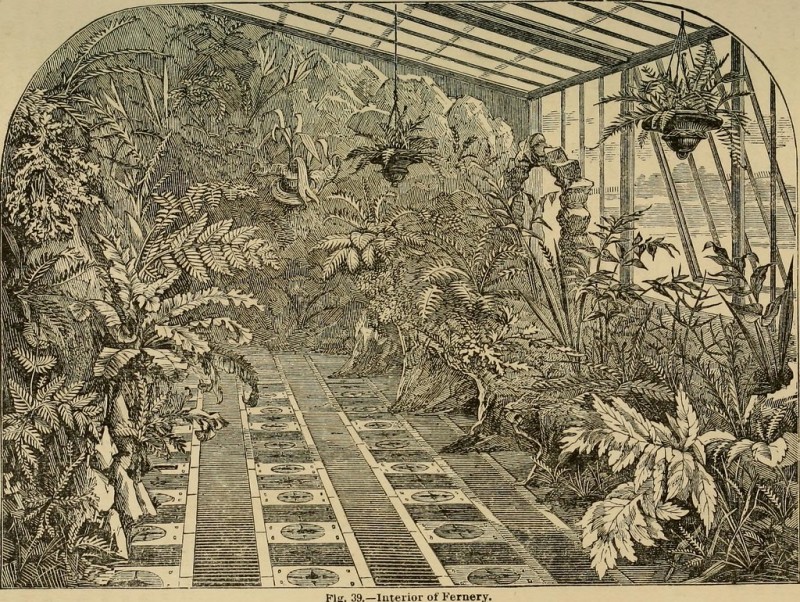
The Victorian era played a pivotal role in the domestication of ferns. An intense cultural fascination—so widespread as to earn the designation pteridomania—saw collectors amassing and displaying these plants with fervor. Specimens were often housed in urns or early terraria known as Wardian cases, while the affluent cultivated them within elaborate glass conservatories. The aesthetic permeated decorative arts, with fern motifs appearing across textiles, ceramics, and jewelry. Concurrently, devoted hybridizers introduced hundreds of new varieties, many of which persist in cultivation today.
Although Victorian enthusiasm eventually yielded to an obsession with orchids, the practice of indoor fern cultivation endured. Today, a remarkable diversity of species remains available, rendering it possible to grow a fern in nearly any domestic setting—save, perhaps, the confines of a closet or beneath a bed.
Caring for Ferns
Ferns are often reputed to be temperamental, and their horticultural requirements are indeed exacting. Nevertheless, with informed consideration and attentive management, they can be cultivated successfully indoors. Experts recommend first evaluating one’s environmental conditions, then selecting species well suited to those parameters.
In general, optimal growth and health depend upon elevated humidity, consistent watering, ample spatial allowance, sufficient yet indirect illumination, and nutrient-rich, well-drained soil.
Moisture
Maintaining adequate humidity presents one of the greatest challenges, particularly in temperate regions where central heating systems markedly reduce indoor moisture. Relative humidity within homes may fall to desert-like levels of 5 to 10 percent, far below the 40–50 percent range preferred by ferns.
Several practical measures may mitigate this dryness. Regular watering contributes modestly, while placing potted ferns atop trays filled with water and lined with pebbles or shards of crockery effectively elevates local humidity. Care must be taken to ensure that pot bases remain above the waterline, as saturated roots are prone to rot and premature decline. Another method involves situating clay pots within larger plastic containers filled with a damp, absorbent medium such as peat moss; the porous clay facilitates moisture transfer, helping to prevent desiccation of the root zone.
Should additional humidity be required, a humidifier may be employed. Devices designed for human use may suffice, though certain features are desirable: extended operation without frequent refilling—ideally no less than twelve hours—and ease of cleaning to prevent the dispersal of salts, mold, or microbial contaminants.
While fern fronds are often used as decorative fillers in floral arrangements, this should not suggest tolerance for crowded conditions. Their fragile foliage is readily damaged, and they require unobstructed circulation of moist air to remain hydrated and intact. When using a humidifier, a nearby fan can aid in dispersing moisture evenly and preventing water droplets from settling on leaves, which may otherwise encourage blight and disease.
Light
Light management remains a frequent source of difficulty. Many a fern has perished under the mistaken assumption that it would thrive in dim corners. While ferns flourish in shaded outdoor environments, indoor specimens require abundant bright, indirect light. Direct solar exposure will desiccate and scorch their foliage, rendering it brittle and discolored, particularly along the margins. Southern exposures, with their intense sunlight, should therefore be avoided.
Soil Mix and Containers
When potting ferns, select a light, friable substrate rich in organic matter yet sufficiently porous to ensure proper drainage. Commercial houseplant mixes are generally suitable, provided they contain materials such as peat moss or leaf mold. Incorporation of coarse sand or perlite enhances drainage and aeration.
Both plastic and clay containers are appropriate, though plastic retains moisture longer and thus necessitates less frequent watering. Containers should accommodate the root system with modest additional space—approximately one inch—to allow for growth. As fern roots are typically shallow, broader, shallower pots are preferable. Although most ferns exhibit slow growth, repotting becomes necessary once roots begin to crowd the container, ideally before they become root-bound.
Indoor Fern Plant Care
Indoor fern plants are a popular choice for adding a touch of greenery to any indoor space. With their delicate fronds and lush foliage, ferns can create a calming and natural atmosphere in your home or office. They also need less light, making them great for a shadier spot.
Need an Indoor Fern plant care kit? It includes everything you need to keep your Fern plant roots, leaves and soil in top condition so your plant will look great!
Let’s take a look at some popular indoor fern plant varieties and essential tips and tricks for keeping your fern indoor plant healthy and thriving.
Fern Indoor Plant Varieties
There are several popular varieties of indoor fern plants to choose from, you are spoilt for choice when you are considering what types of indoor ferns are right for you. Here are a few indoor ferns types that we think you should consider:
Asparagus Plumosus Fern (Asparagus Setaceous)
With its fluffy appearance and easy care requirements, this stunning but small plant is a great option for a desk, shelf or terrarium.
Blue Star Fern (Phlebodium aureum)
With its striking appearance and easy care requirements, this stunning plant is a great option.
Boston Fern (Nephrolepis exaltata)
Known for its graceful arching fronds, the Boston Fern is a classic choice for indoor gardens.
Maidenhair Fern (Adiantum spp.)
With its delicate, fan-shaped fronds, the Maidenhair Fern adds an elegant touch to any space.
Bird’s Nest Fern (Asplenium nidus)
This fern has broad, wavy fronds that resemble a bird’s nest, hence its name. It is a great choice for low-light areas.
Kimberly Queen Fern (Nephrolepis obliterata)
This fern has upright fronds and is known for its tolerance to lower light conditions.